


Secondary organizing pneumonia following viral pneumonia caused by severe influenza B: a case report and literature reviews
- PMID: 28810835
- PMCID: PMC5558726
- DOI: 10.1186/s12879-017-2677-1
Secondary organizing pneumonia following viral pneumonia caused by severe influenza B: a case report and literature reviews
Abstract
Background: Some reported that organizing pneumonia (OP) may occur after influenza A infections including swine-origin influenza A (H1N1). However, OP associated with influenza B infection has never been reported. We report the first case of secondary OP associated with viral pneumonia caused by influenza B.
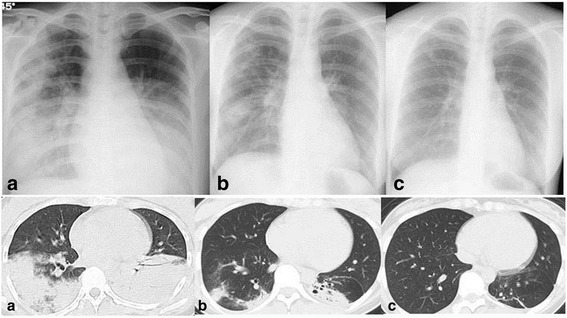
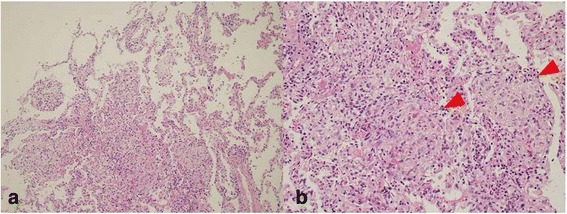
Case presentation: A 23-year old woman was diagnosed as viral pneumonia caused by type B influenza. Despite of antiviral therapy, abnormal chest shadows were not improved. Bronchoscopy and transbronchial lung biopsy showed organizing pneumonia due to viral pneumonia caused by influenza B. Corticosteroid therapy was started at 30 mg daily (0.5 mg/kg), and the dose was reduced to 25, 20, 15 or 10 mg per day every month with symptomatic and radiological resolution. Even after corticosteroid therapy was discontinued, we did not confirm disease recurrence.
Conclusions: Physicians should be aware of the possibility for SOP and severe viral pneumonia even in case of type B as well as type A influenza infections.
Keywords: Influenza pneumonia; Organizing pneumonia; Type B influenza virus.
Conflict of interest statement
Ethics approval and consent to participate
Not applicable.
Consent for publication
Written informed consent was obtained from the patient for publication of this report.
Competing interests
The authors declare that they have no competing interests.
Publisher’s Note
Springer Nature remains neutral with regard to jurisdictional claims in published maps and institutional affiliations.
Figures
References
-
- Vasu TS, Cavallazzi R, Hirani A, Sharma D, Weibel SB, Kane GC. Clinical and radiologic distinctions between secondary bronchiolitis obliterans organizing pneumonia and cryptogenic organizing pneumonia. Respir Care. 2009;54:1028–1032. - PubMed
Publication types
MeSH terms
Substances
LinkOut - more resources
Full Text Sources
Other Literature Sources
Medical
Miscellaneous
