


Red blood cells in thrombosis
- PMID: 28811305
- PMCID: PMC5649548
- DOI: 10.1182/blood-2017-03-745349
Red blood cells in thrombosis
Abstract
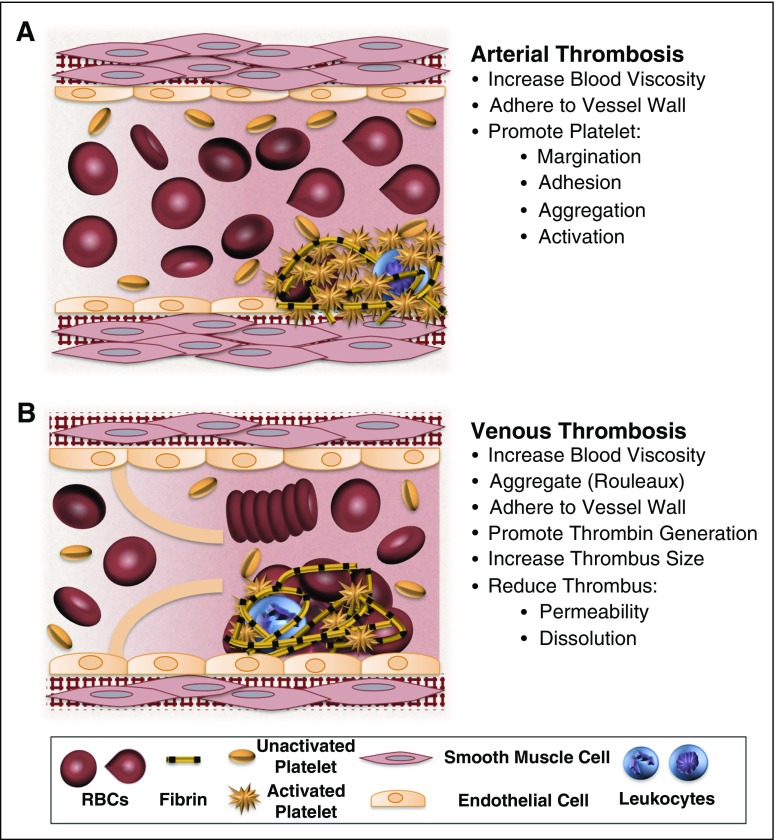
Red blood cells (RBCs) have historically been considered passive bystanders in thrombosis. However, clinical and epidemiological studies have associated quantitative and qualitative abnormalities in RBCs, including altered hematocrit, sickle cell disease, thalassemia, hemolytic anemias, and malaria, with both arterial and venous thrombosis. A growing body of mechanistic studies suggests that RBCs can promote thrombus formation and enhance thrombus stability. These findings suggest that RBCs may contribute to thrombosis pathophysiology and reveal potential strategies for therapeutically targeting RBCs to reduce thrombosis.
© 2017 by The American Society of Hematology.
Conflict of interest statement
Conflict-of-interest: The authors declare no competing financial interests.
Figures
References
-
- Burch GE, Depasquale NP. The hematocrit in patients with myocardial infarction. JAMA. 1962;180:62-63. - PubMed
-
- Sorlie PD, Garcia-Palmieri MR, Costas R Jr, Havlik RJ. Hematocrit and risk of coronary heart disease: the Puerto Rico Health Program. Am Heart J. 1981;101(4):456-461. - PubMed
-
- Erikssen G, Thaulow E, Sandvik L, Stormorken H, Erikssen J. Haematocrit: a predictor of cardiovascular mortality? J Intern Med. 1993;234(5):493-499. - PubMed
-
- Toss F, Nordström A, Nordström P. Association between hematocrit in late adolescence and subsequent myocardial infarction in Swedish men. Int J Cardiol. 2013;168(4):3588-3593. - PubMed
Publication types
MeSH terms
Grants and funding
LinkOut - more resources
Full Text Sources
Other Literature Sources
Medical
