


Colorectal cancer screening: An updated review of the available options
- PMID: 28811705
- PMCID: PMC5537177
- DOI: 10.3748/wjg.v23.i28.5086
Colorectal cancer screening: An updated review of the available options
Abstract
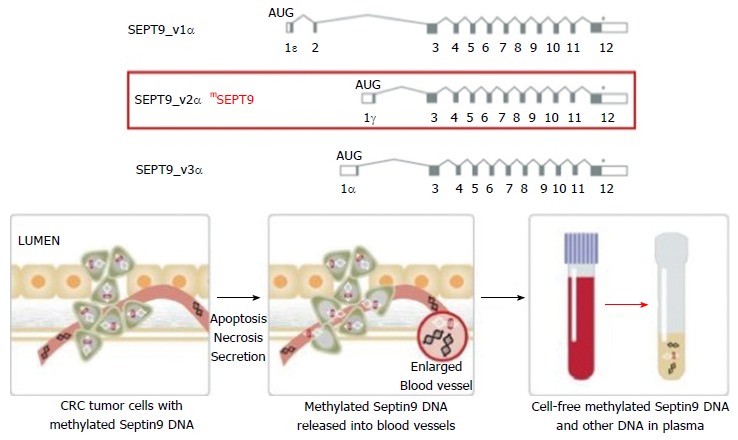
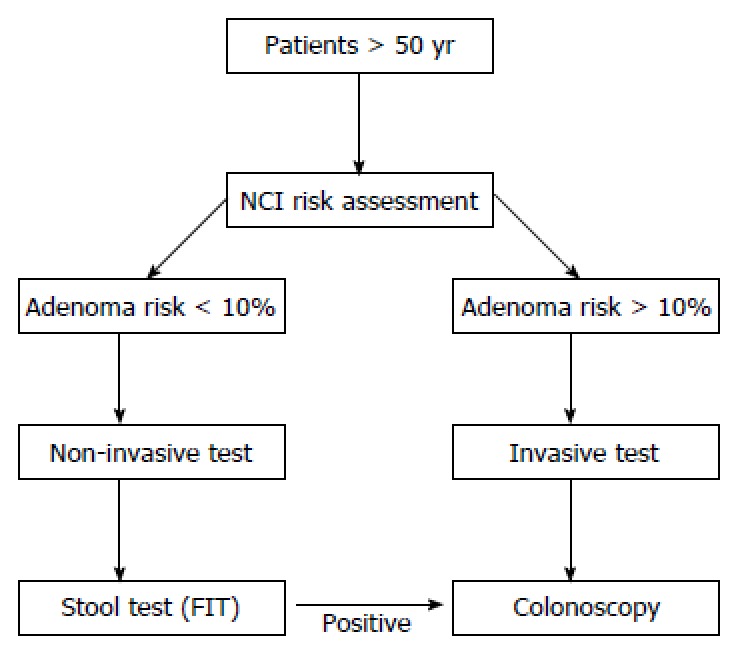
Colorectal cancer (CRC) is a significant cause of morbidity and mortality worldwide. However, colon cancer incidence and mortality is declining over the past decade owing to adoption of effective screening programs. Nevertheless, in some parts of the world, CRC incidence and mortality remain on the rise, likely due to factors including "westernized" diet, lifestyle, and lack of health-care infrastructure and resources. Participation and adherence to different national screening programs remain obstacles limiting the achievement of screening goals. Different modalities are available ranging from stool based tests to radiology and endoscopy with varying sensitivity and specificity. However, the availability of these tests is limited to areas with high economic resources. Recently, FDA approved a blood-based test (Epi procolon®) for CRC screening. This blood based test may serve to increase the participation and adherence rates. Hence, leading to increase in colon cancer detection and prevention. This article will discuss various CRC screening tests with a particular focus on the data regarding the new approved blood test. Finally, we will propose an algorithm for a simple cost-effective CRC screening program.
Keywords: Blood DNA test; Colonoscopy; Colorectal cancer; Fecal DNA test; Guidelines; Occult blood; Screening.
Conflict of interest statement
Conflict-of-interest statement: No potential conflicts of interest.
Figures
References
-
- Torre LA, Bray F, Siegel RL, Ferlay J, Lortet-Tieulent J, Jemal A. Global cancer statistics, 2012. CA Cancer J Clin. 2015;65:87–108. - PubMed
-
- Ferlay J, Soerjomataram I, Dikshit R, Eser S, Mathers C, Rebelo M, Parkin DM, Forman D, Bray F. Cancer incidence and mortality worldwide: sources, methods and major patterns in GLOBOCAN 2012. Int J Cancer. 2015;136:E359–E386. - PubMed
-
- Siegel R, Desantis C, Jemal A. Colorectal cancer statistics, 2014. CA Cancer J Clin. 2014;64:104–117. - PubMed
-
- Bond JH. Fecal occult blood test screening for colorectal cancer. Gastrointest Endosc Clin N Am. 2002;12:11–21. - PubMed
-
- Jemal A, Bray F, Center MM, Ferlay J, Ward E, Forman D. Global cancer statistics. CA Cancer J Clin. 2011;61:69–90. - PubMed
Publication types
MeSH terms
LinkOut - more resources
Full Text Sources
Other Literature Sources
Medical
Miscellaneous
