


Circadian and Feeding Rhythms Orchestrate the Diurnal Liver Acetylome
- PMID: 28813682
- PMCID: PMC5568034
- DOI: 10.1016/j.celrep.2017.07.065
Circadian and Feeding Rhythms Orchestrate the Diurnal Liver Acetylome
Abstract
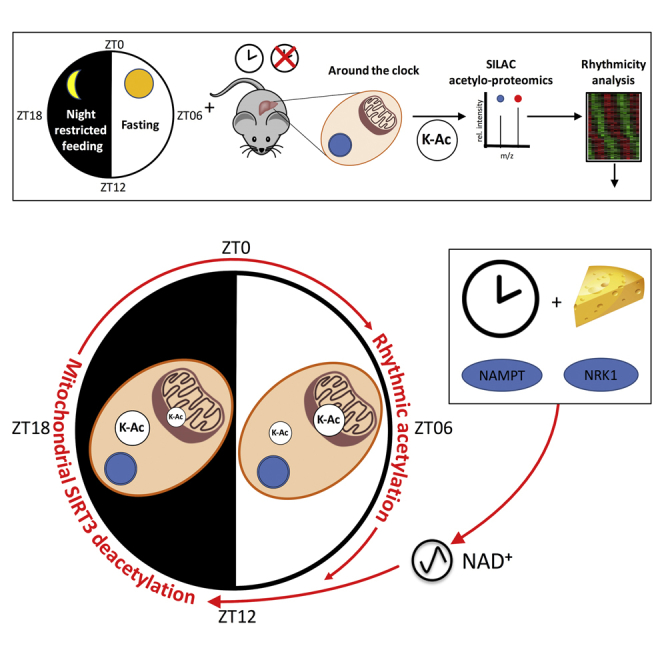
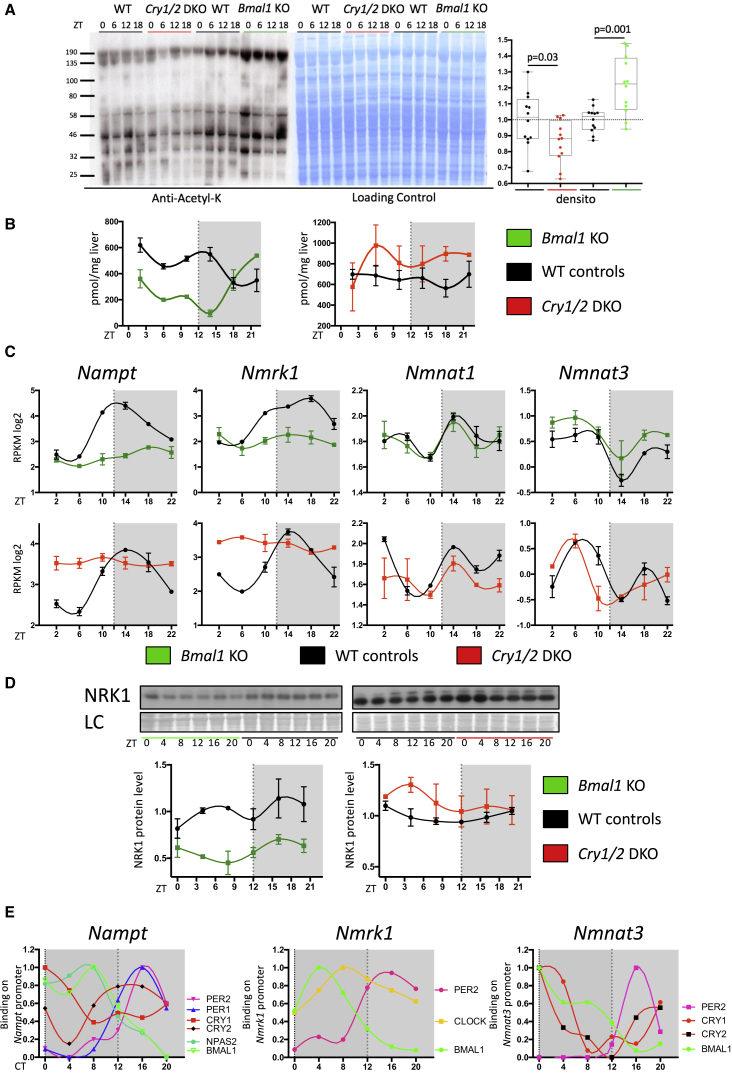
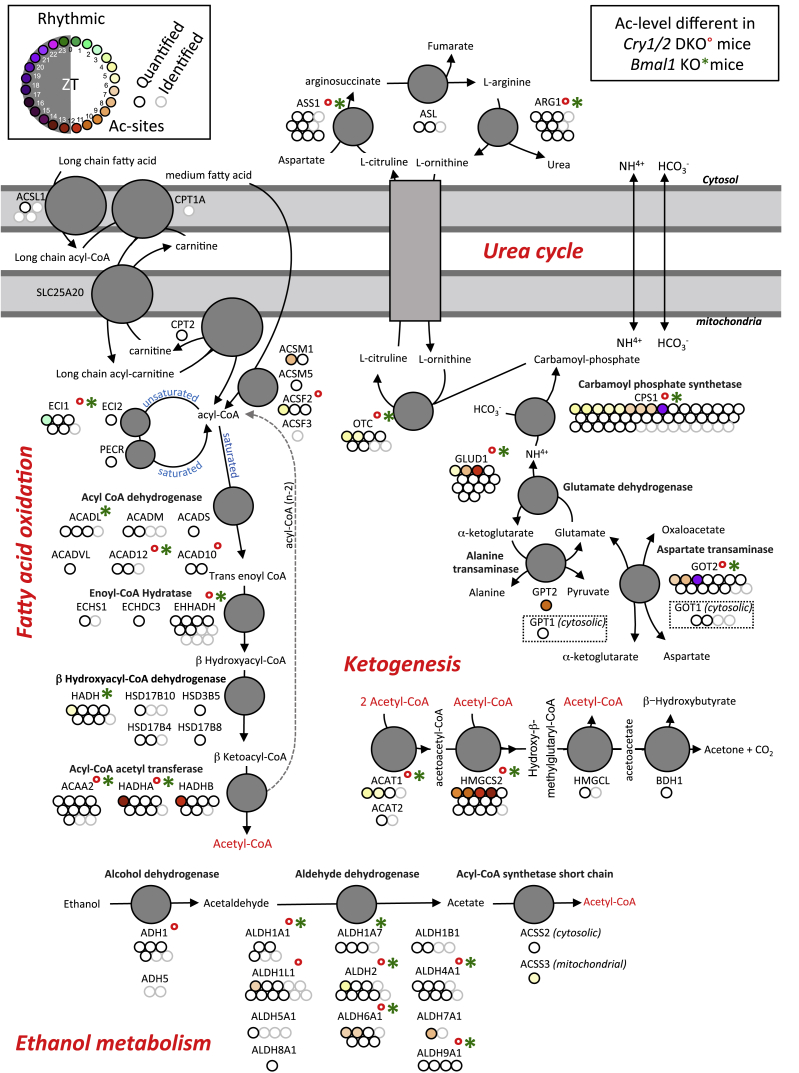
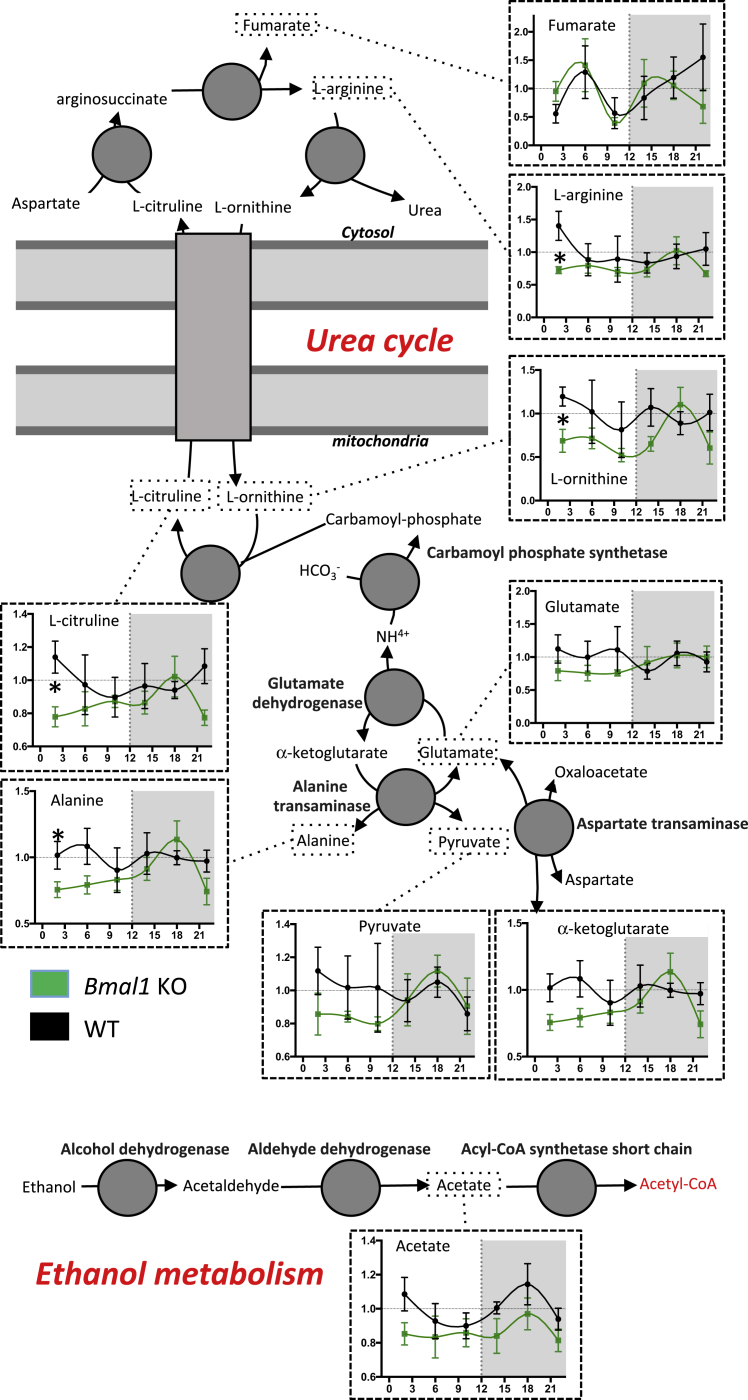
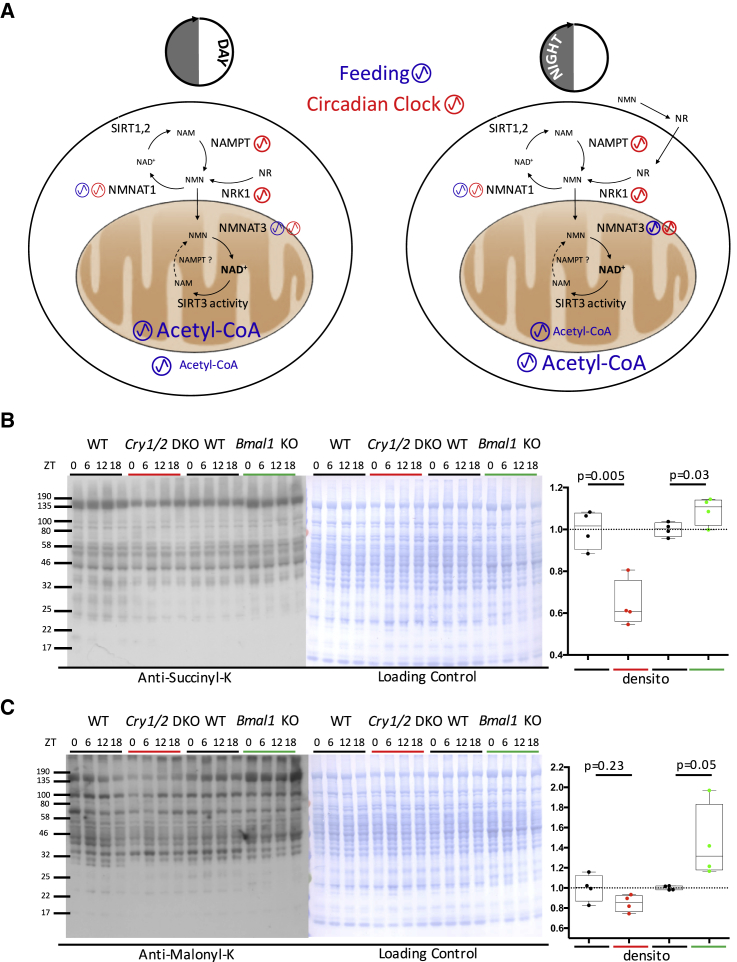
Lysine acetylation is involved in various biological processes and is considered a key reversible post-translational modification in the regulation of gene expression, enzyme activity, and subcellular localization. This post-translational modification is therefore highly relevant in the context of circadian biology, but its characterization on the proteome-wide scale and its circadian clock dependence are still poorly described. Here, we provide a comprehensive and rhythmic acetylome map of the mouse liver. Rhythmic acetylated proteins showed subcellular localization-specific phases that correlated with the related metabolites in the regulated pathways. Mitochondrial proteins were over-represented among the rhythmically acetylated proteins and were highly correlated with SIRT3-dependent deacetylation. SIRT3 activity being nicotinamide adenine dinucleotide (NAD)+ level-dependent, we show that NAD+ is orchestrated by both feeding rhythms and the circadian clock through the NAD+ salvage pathway but also via the nicotinamide riboside pathway. Hence, the diurnal acetylome relies on a functional circadian clock and affects important diurnal metabolic pathways in the mouse liver.
Keywords: NAD(+); SILAC proteomics; SIRT3; acetylation; circadian clock; liver metabolism.
Copyright © 2017 The Author(s). Published by Elsevier Inc. All rights reserved.
Figures
References
-
- Asher G., Gatfield D., Stratmann M., Reinke H., Dibner C., Kreppel F., Mostoslavsky R., Alt F.W., Schibler U. SIRT1 regulates circadian clock gene expression through PER2 deacetylation. Cell. 2008;134:317–328. - PubMed
-
- Bur I.M., Cohen-Solal A.M., Carmignac D., Abecassis P.-Y., Chauvet N., Martin A.O., van der Horst G.T.J., Robinson I.C.A.F., Maurel P., Mollard P., Bonnefont X. The circadian clock components CRY1 and CRY2 are necessary to sustain sex dimorphism in mouse liver metabolism. J. Biol. Chem. 2009;284:9066–9073. - PMC - PubMed
Publication types
MeSH terms
Substances
Grants and funding
LinkOut - more resources
Full Text Sources
Other Literature Sources
Molecular Biology Databases
