


Texture-modified food and fluids in dementia and residential aged care facilities
- PMID: 28814845
- PMCID: PMC5546786
- DOI: 10.2147/CIA.S140581
Texture-modified food and fluids in dementia and residential aged care facilities
Abstract
Introduction: Dysphagia is common in people living with dementia and associated with increased risk of aspiration pneumonia, dehydration, malnutrition, and death. Treatment options are limited and the use of texture-modified food and fluids (TMF) is a widespread clinical practice. This review aimed to evaluate the evidence for TMF in dementia.
Methods: A literature search using terms "dysphagia," "texture-modified food and fluids," "dementia," and "aged care" was performed by using three electronic databases from 1990 to March 2017. Studies were assessed for suitability, then reviewed with data extracted, and grouped by categories of outcome measures.
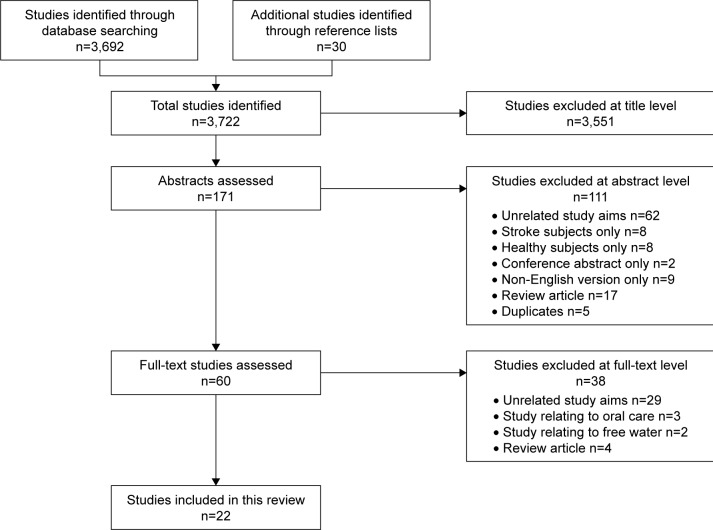
Results: A total of 3,722 publications were identified, and 22 studies met the inclusion criteria. Studies were heterogeneous in design and methodology. There were no publications examining dementia exclusively; however, many subjects with dementia were included in studies of residential aged care facilities. TMF reduced the risk of aspiration seen on videofluoroscopy but not clinical aspiration and pneumonia. TMF was associated with lower daily energy and fluid intake and variable adherence.
Conclusion: There is a lack of evidence for people living with dementia and in residential care facilities that TMF improves clinical outcomes such as aspiration pneumonia, nutrition, hydration, morbidity, and mortality. Adverse effects including poorer energy and fluid intake were identified.
Keywords: aged care; aspiration; dehydration; dysphagia; modified diet; nursing homes; nutrition.
Conflict of interest statement
Disclosure The authors report no conflicts of interest in this work.
Figures
References
-
- Dietitians Association of Australia, Speech Pathology Association of Australia Limited Texture-modified foods and thickened fluids as used for individuals with dysphagia: Australian standardised labels and definitions. Nutr Diet. 2007;64(S2):S53–S76.
-
- Castellanos VH, Butler E, Gluch L, Burke B. Use of thickened liquids in skilled nursing facilities. J Am Diet Assoc. 2004;104(8):1222–1226. - PubMed
-
- Cormier D, Harper DW, O’Hara PA, et al. Pureed diet: prevalence and reported reasons for use in a long-term care hospital. J Can Diet Assoc. 1994;55(3):121–124. - PubMed
-
- Groher ME, McKaig TN. Dysphagia and dietary levels in skilled nursing facilities. J Am Geriatr Soc. 1995;43(5):528–532. - PubMed
-
- Keller HH, Chambers LW, Fergusson DA, et al. A mix of bulk and ready-to-use modified-texture food: impact on older adults requiring dysphagic food. Can J Aging. 2012;31(3):335–348. - PubMed
Publication types
MeSH terms
LinkOut - more resources
Full Text Sources
Other Literature Sources
Medical
Miscellaneous
