. 2017 Jul 31:9:81-91.
doi: 10.2147/JEP.S141807. eCollection 2017.

Ixeris dentata extract regulates salivary secretion through the activation of aquaporin-5 and prevents diabetes-induced xerostomia

Affiliations

Ixeris dentata extract regulates salivary secretion through the activation of aquaporin-5 and prevents diabetes-induced xerostomia

Kashi Raj Bhattarai et al. J Exp Pharmacol. .

Abstract

The aim of this study was to investigate the effects of Ixeris dentata (IXD) extract to improve the salivation rate in dry mouth induced by diabetes. Both control and diabetic rats were treated with a sublingual spray of either water or IXD extract to determine the effects of IXD on salivation. During the study, we observed that IXD extract treatment increased the salivary flow rate in diabetic rats. The expression of α-amylase was increased significantly in both saliva and glandular tissue lysates of IXD-treated diabetic rats. Aquaporin-5 protein expression was abnormally low in the salivary glands of diabetic rats, which increased hyposalivation and led to salivary dysfunction. However, a single oral spray of IXD extract drastically increased the expression of aquaporin-5 in salivary gland acinar and ductal cells in diabetic rats. Moreover, IXD extract induced expression of Na+/H+ exchangers in the salivary gland, which suggests that Na+/H+ exchangers modulate salivary secretions and aid in the fluid-secretion mechanism. Furthermore, transient treatment with IXD extract increased the intracellular calcium in human salivary gland cells. Taken together, these results suggest the potential value of an IXD extract for the treatment of diabetes-induced hyposalivation and xerostomia.

Keywords: Ixeris dentata; amylase; aquaporin-5; diabetes; hyposalivation; xerostomia.


Conflict of interest statement

Disclosure The authors report no conflicts of interest in this work.

Figures
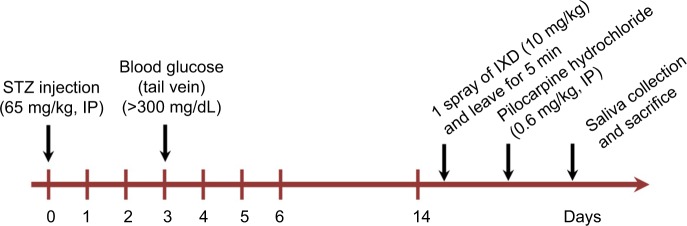
Figure 1
Figure 1
Schematic diagram of the experimental design. Abbreviations: IP, intraperitoneal, IXD, Ixeris dentata; STZ, streptozotocin.
Figure 2
Figure 2
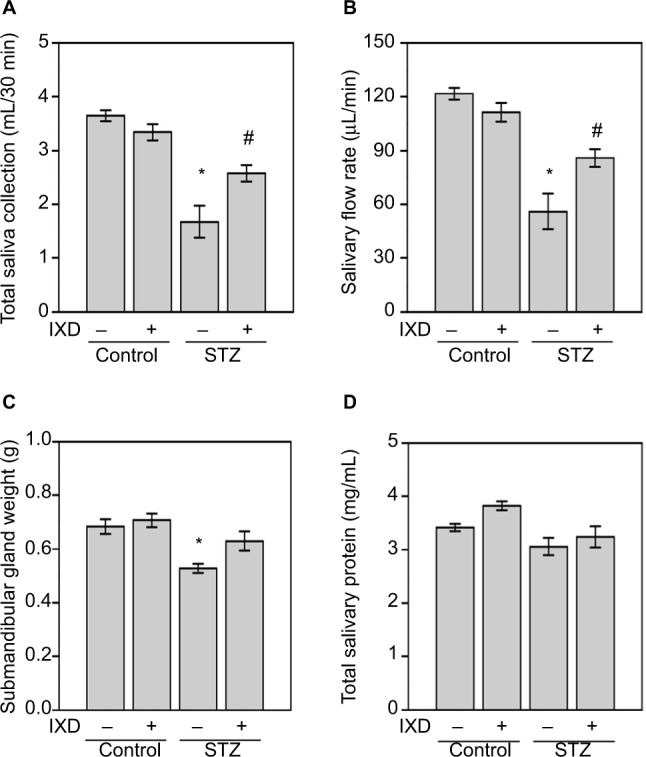
Effects of IXD extract on salivary parameters. Notes: Saliva was collected for up to 30 min after pilocarpine injection and the salivary parameters were measured. (A) Total saliva collected in 30 min (mL). (B) Salivary flow rate (μL/min). (C) Bilateral submandibular gland weight (g). (D) Total salivary protein concentration (mg/mL). *significant difference vs vehicle-treated control rats ; #significant difference vs STZ-induced diabetic control rats (p<0.05). Values are represented as mean ± SEM (n=10 rats per group). Abbreviations: IXD, Ixeris dentata; SEM, standard error mean; STZ, streptozotocin.
Figure 3
Figure 3
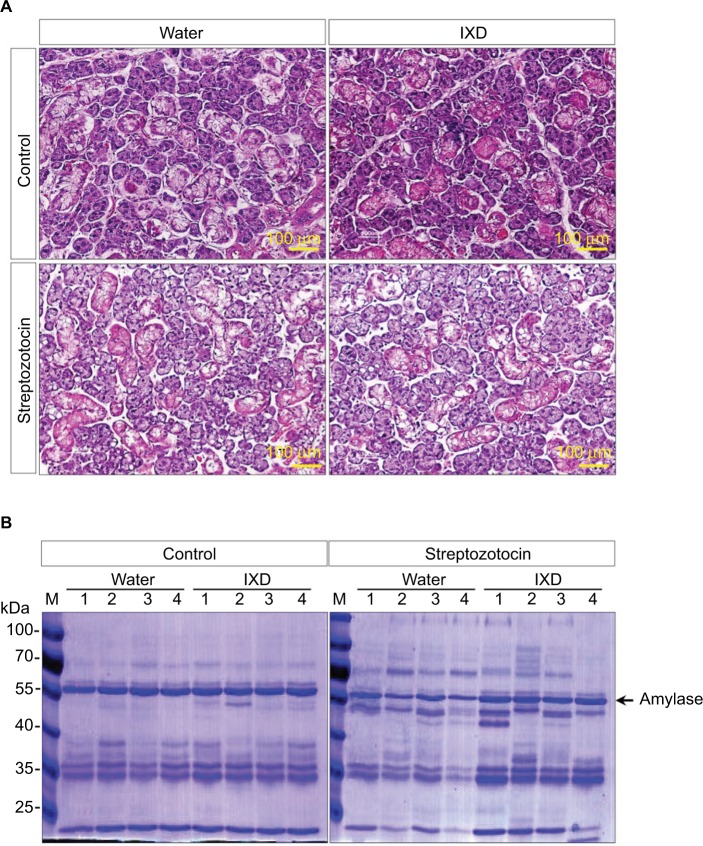
Effects of IXD extract on the morphology of submandibular glands and in salivary total protein expression. Notes: (A) Hematoxylin and eosin staining was performed on paraffin-embedded submandibular gland tissues from normal and diabetic rats, either treated with water or IXD extract. Magnification=20×, scale bar=100 μm. (B) CBB staining showing total protein expression in the saliva of control and diabetic rats, either treated with water or IXD extract. The same volume of saliva was loaded in each well of a 10% SDS-PA gel, and the gel was stained with CBB. The black arrow indicates the molecular size of amylase (55 kDa) present in the saliva. Abbreviations: CBB, Coomassie Brilliant Blue; IXD, Ixeris dentata; SDS-PAGE, sodium dodecyl sulfate polyacrylamide gel electrophoresis.
Figure 4
Figure 4
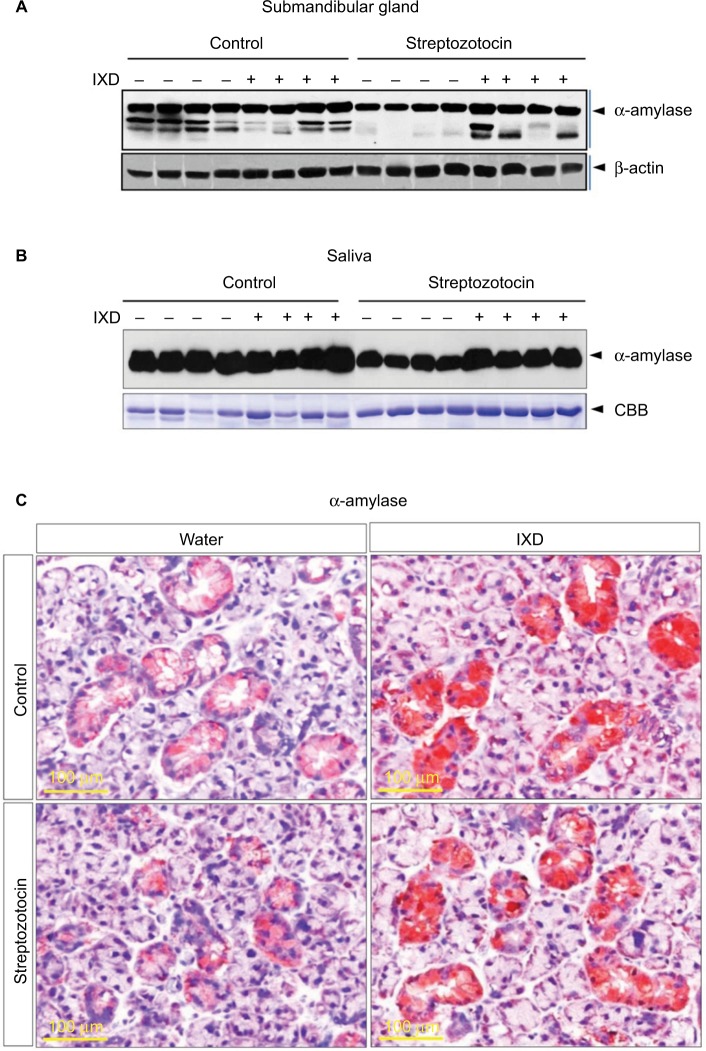
α-amylase protein expression was increased in IXD-treated diabetic rats Notes: (A) Representative Western blot showing α-amylase expression in submandibular gland tissue homogenates. (B) Western blot showing α-amylase expression in saliva. (C) Immunohistochemical characterization showing the expression of α-amylase in submandibular gland tissue. The red/brown color indicates positive expression of α-amylase. Magnification=40×, scale bar=100 μm. Abbreviations: IXD, Ixeris dentata; CBB, Coomassie Brilliant Blue.
Figure 5
Figure 5
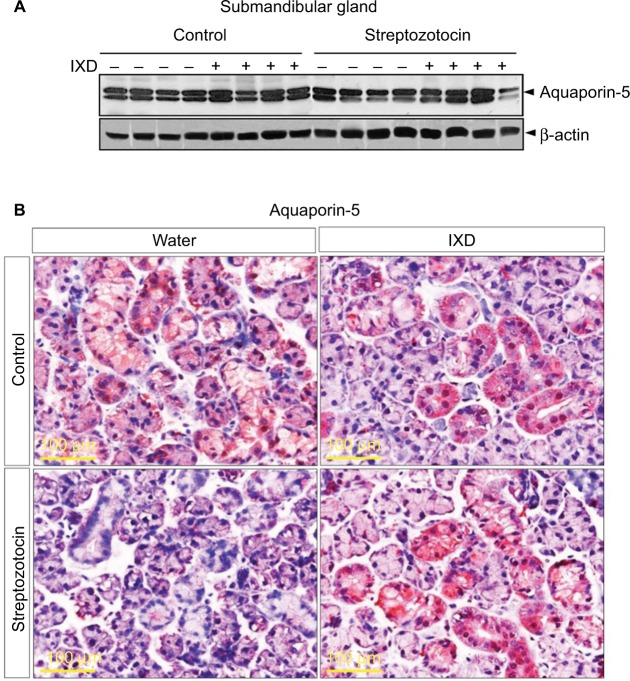
IXD extract increased AQP5 protein expression in submandibular gland tissue Notes: (A) Representative Western blot showing AQP5 protein expression in SMG tissue homogenates. (B) Immunohistochemical analysis was performed on SMG tissue using anti-AQP5 antibody. The red/brown color indicates positive expression of AQP5. Magnification=40×, scale bar=100 μm. Abbreviations: AQP5, aquaporin-5; IXD, Ixeris dentata; SMG, submandibular gland.
Figure 6
Figure 6
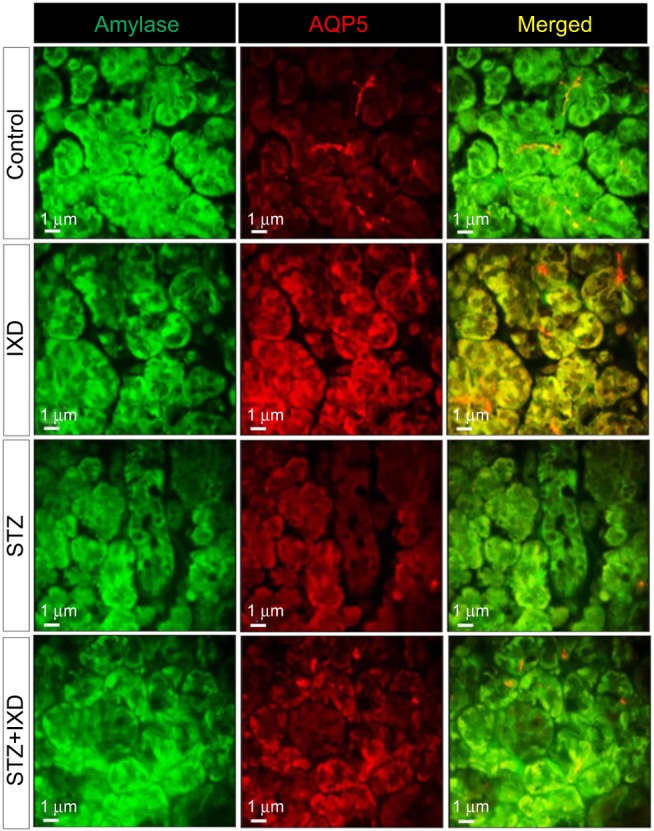
Confocal microscope images of immunofluorescence-detected α-amylase and AQP5 expression Notes: Vehicle-or STZ-injected rats were treated with either water or IXD extract to observe the expression and localization of amylase and AQP5 in the submandibular gland. Double immunofluorescence staining was done using anti-amylase and anti-AQP5 antibodies. Green fluorescence indicates α-amylase expression, red fluorescence indicates AQP5 expression, and yellow fluorescence indicates co-localization of both proteins. Treatment with IXD extract produced a high intensity of amylase and AQP5 fluorescence compared with the controls. Magnification=40×, scale bar=1 μm. Abbreviations: AQP5, aquaporin-5; STZ, streptozotocin; IXD, Ixeris dentata.
Figure 7
Figure 7
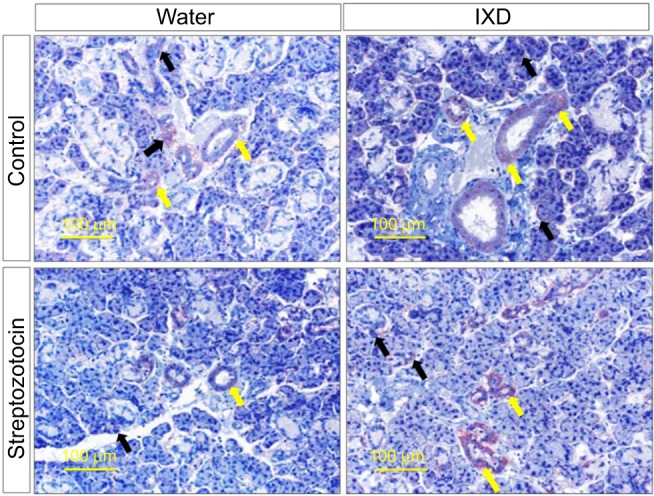
IXD extract treatment increased NHE1 expression in rat submandibular glands Notes: Representative immunohistochemical detection of NHE1 in submandibular gland tissue from normal and diabetic rats, which were treated with either water or IXD extract. The yellow arrows indicate NHE1 expression in duct cells and the black arrows indicate NHE1 expression in acinar cells. Magnification=20×, scale bar=100 μm. Abbreviations: NHE1, sodium/hydrogen exchanger-1; IXD, Ixeris dentata.
Figure 8
Figure 8
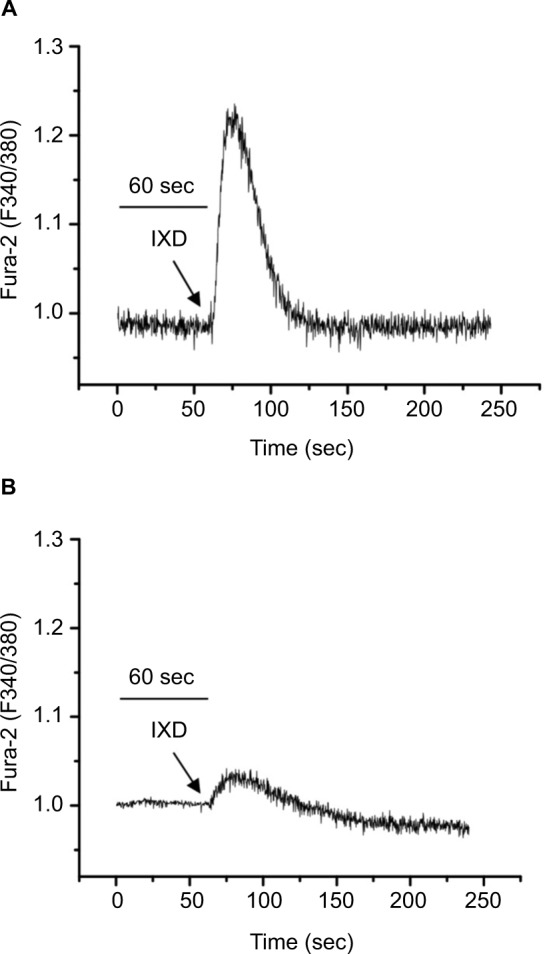
IXD extract increases intracellular calcium release in the HSG cells Notes: (A) Fura-2-loaded HSG cells were promptly treated with IXD extract (0.02 mg/mL) and changes in F340/F380 were monitored. (B) The effect of 10 μM BAPTA-AM in IXD induced Ca2+ release. The figures represent the typical Ca2+ transients from more than three experiments. Abbreviations: BAPTA-AM, 1, 2-Bis (2-aminophenoxy) ethane-N, N, N′, N′-tetraacetic acid tetrakis (acetoxymethyl ester); Ca2+, calcium; HSG, human salivary gland; IXD, Ixeris dentata.

References

    1. Yi JM, Hong SH, Lee HJ, et al. Ixeris dentata green sap inhibits both compound 48/80-induced aanaphylaxis-like response and IgE-mediated anaphylactic response in murine model. Biol Pharm Bull. 2002;25(1):5–9. - PubMed
    1. Lee MR, Lee HY, Lee GH, et al. Ixeris dentata decreases ER stress and hepatic lipid accumulation through regulation of ApoB secretion. Am J Chin Med. 2014;42(3):639–649. - PubMed
    1. Choi JS, Young HS, Kim BW. Hypoglycemic and hypolipemic effects ofIxeris dentata in diabetic rats. Archiv Pharm Res. 1990;13(3):269–273.
    1. Oh SH, Sung TH, Kim MR. Ixeris dentata extract maintains glutathione concentrations in mouse brain tissue under oxidative stress induced by kainic acid. J Med Food. 2003;6(4):353–358. - PubMed
    1. Sreebny LM, Yu A, Green A, Valdini A. Xerostomia in diabetes mellitus. Diabetes Care. 1992;15(7):900–904. - PubMed

LinkOut - more resources