


Characterization of opioid use in sickle cell disease
- PMID: 28815799
- PMCID: PMC5815963
- DOI: 10.1002/pds.4291
Characterization of opioid use in sickle cell disease
Abstract
Purpose: Opioid analgesics are commonly used to treat vaso-occlusive pain episodes in sickle cell disease (SCD), but comprehensive evidence characterizing opioid use in this patient population is limited. Our objective was to characterize opioid use patterns among SCD patients using a large nationwide database.
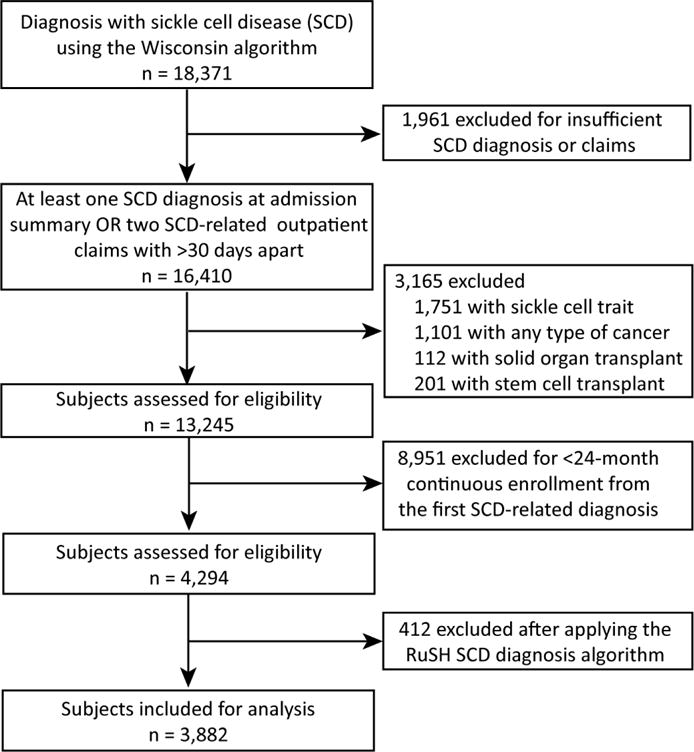
Methods: A large, US medical claims database was utilized to identify a cohort of 3882 SCD patients, and characteristics of opioid use were analyzed. Clinical variables including age, gender, medication use, health care utilization, and medical history were evaluated for correlations with opioid use.
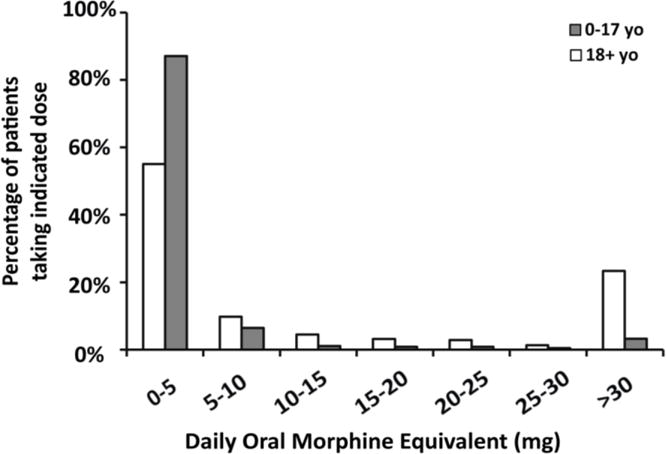
Results: Forty percent of patients took opioid medications during a 12-month span, and the prevalence of any opioid use was highest for 20 to 29-year-old patients (58%). The median daily opioid dose was 1.85 mg (interquartile range: 0.62-10.68 mg) oral morphine equivalents (OME). While most opioid users took between 0 and 5 mg OME daily, 3% of pediatric patients and 23% of adult patients used more than 30-mg OME daily. High-dose opioid use was associated with older age, hydroxyurea therapy, nonsteroidal anti-inflammatory drug (NSAID) use, and frequent inpatient hospitalizations. In multivariable-adjusted analyses, patients with vaso-occlusive complications such as pain crisis (OR = 3.8, 95% CI 2.7-5.3) and avascular necrosis (AVN) (OR = 3.7, 95% CI 2.7-5.1) were associated with high-dose opioid use.
Conclusions: Our study showed that only 40% SCD patients were on opioid analgesics during a 12-month span. However, a non-trivial number of patients used a much higher dose of opioids despite a relatively low average daily opioid dose among SCD patients, particularly with vaso-occlusive complications.
Keywords: avascular necrosis; opioid use; pain crisis; sickle cell disease; vaso-occlusive complications.
Copyright © 2017 John Wiley & Sons, Ltd.
Conflict of interest statement
Figures
References
Publication types
MeSH terms
Substances
Grants and funding
LinkOut - more resources
Full Text Sources
Other Literature Sources
Medical
