


The curative effect of liposuction curettage in the treatment of bromhidrosis: A meta-analysis
- PMID: 28816985
- PMCID: PMC5571722
- DOI: 10.1097/MD.0000000000007844
The curative effect of liposuction curettage in the treatment of bromhidrosis: A meta-analysis
Abstract
Background: We aimed to understand the curative effect of liposuction curettage (LC) in the treatment of bromhidrosis.
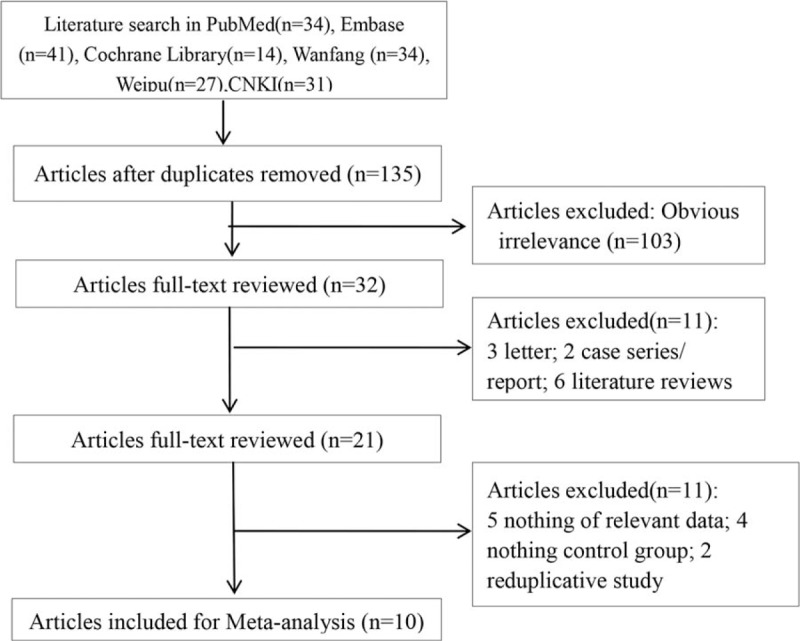
Methods: Relevant studies published before January 2017were searched from the PubMed, Embase, Cochrane Library, Wanfang, VIP, and China National Knowledge Infrastructure databases. Parameters including recurrence, complications, complete response, and overall response were assessed. Meta-analysis was performed using the R 3.12 statistical package. Odds ratio (OR) and 95% confidence interval (95% CI) were used for dichotomous data. Heterogeneity was assessed using Cochran's Q-statistic and I test. In addition, Egger's test was conducted to detect publication bias.
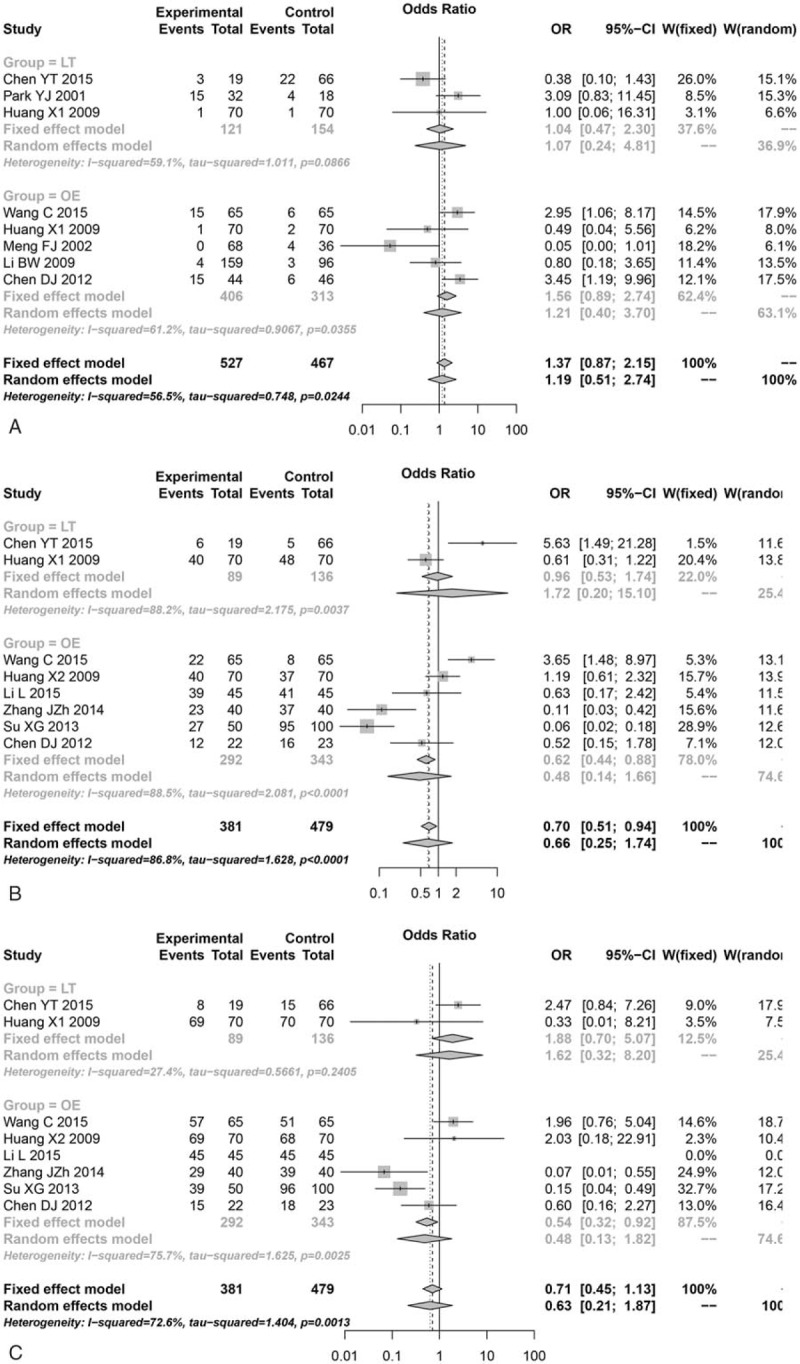
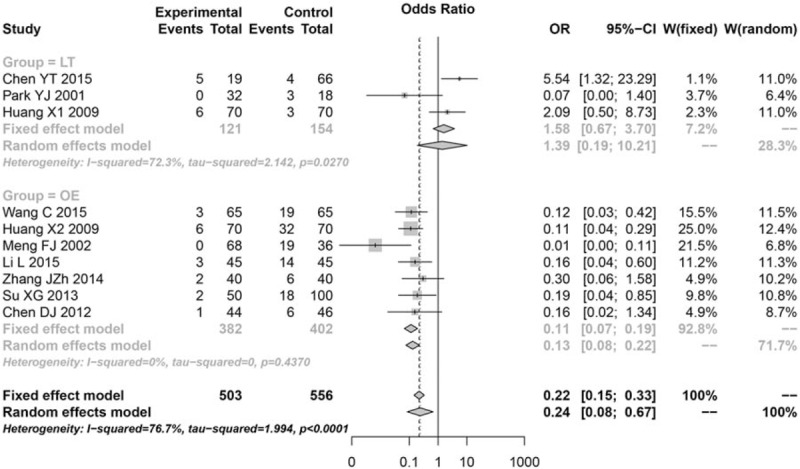
Results: Ten studies with a total of 1124 participants (545 cases and 579 controls) were included. There was no statistical difference in recurrence (OR = 1.19, 95% CI: 0.51-2.74), complete response (OR = 0.66, 95% CI: 0.25-1.74), or overall response (OR = 0.63, 95% CI: 0.21-1.87) between the case and control groups. The incidence of complications in the case group was lower than that in the control group (OR = 0.24, 95% CI: 0.08-0.67) and open excision group (OR = 0.11, 95% CI: 0.07-0.19). Publication bias existed for the recurrence index in the open excision group (t = 3.3979, P = .04), but no publication bias was found in other subgroups, indicating stable results.
Conclusions: LC, which has fewer complications, can be considered the primary choice in the treatment of patients with bromhidrosis compared with other surgical procedures.
Conflict of interest statement
The authors have no conflicts of interest to disclose.
Figures
References
-
- Guillet G, Zampetti A, Aballaincolloc ML. Correlation between bacterial population and axillary and plantar bromidrosis: study of 30 patients. Eur J Dermatol 2000;10:41. - PubMed
-
- Li Z-R, Sun C-W, Zhang J-Y, et al. Excision of apocrine glands with preservation of axillary superficial fascia for the treatment of axillary bromhidrosis. Dermatol Surg 2015;41:640–4. - PubMed
-
- Chen YT, Shih PY, Chen HJ, et al. Treatment of axillary osmidrosis: a comparison between subcutaneous laser and superficial liposuction curettage. J Eur Acad Dermatol Venereol 2015;29:2019–23. - PubMed
-
- Park YJ. What is the best method for treating osmidrosis? Ann Plast Surg 2001;47:303. - PubMed
-
- Glaser DA, Galperin TA. Local procedural approaches for axillary hyperhidrosis. Dermatol Clin 2014;32:533–40. - PubMed
Publication types
MeSH terms
LinkOut - more resources
Full Text Sources
Other Literature Sources
