


Clinical signs, profound acidemia, hypoglycemia, and hypernatremia are predictive of mortality in 1,400 critically ill neonatal calves with diarrhea
- PMID: 28817693
- PMCID: PMC5560544
- DOI: 10.1371/journal.pone.0182938
Clinical signs, profound acidemia, hypoglycemia, and hypernatremia are predictive of mortality in 1,400 critically ill neonatal calves with diarrhea
Abstract
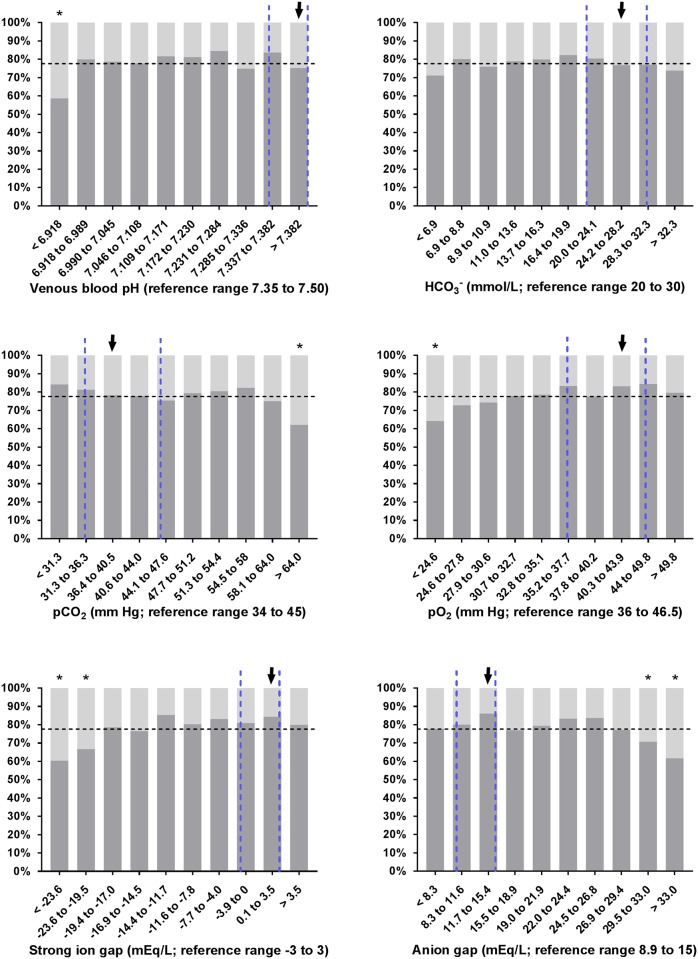
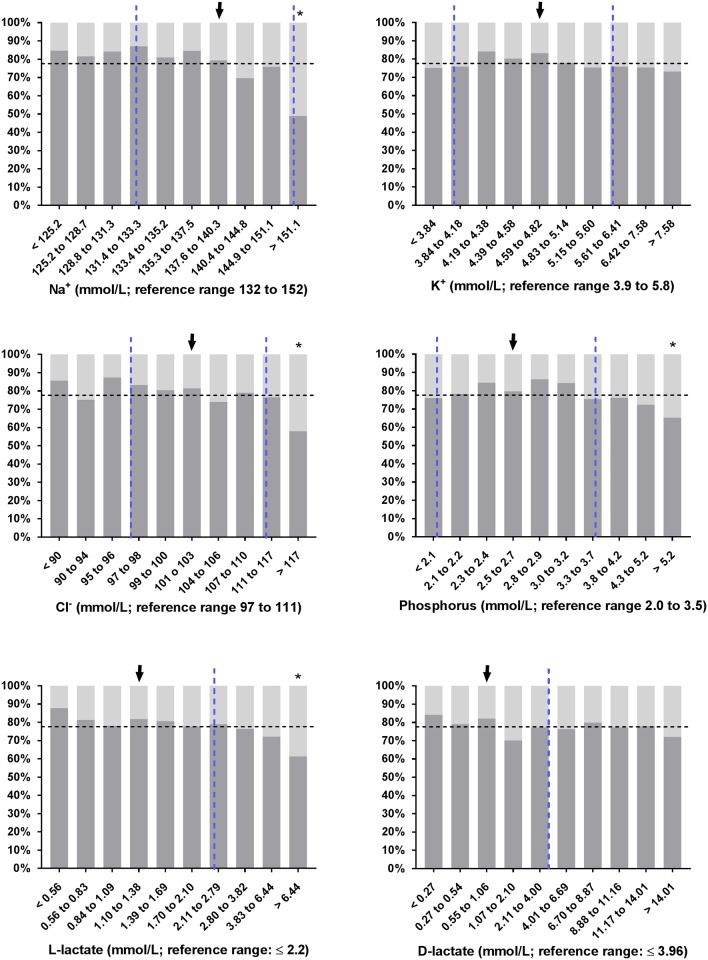
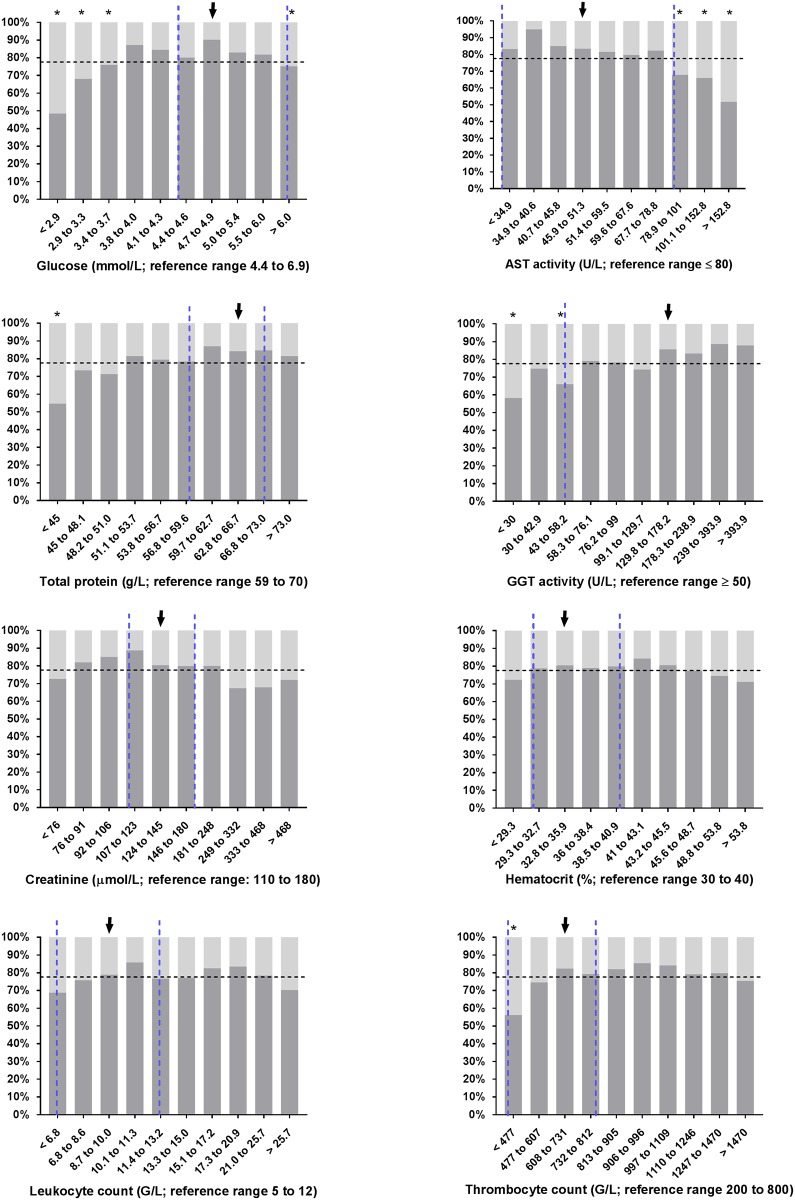
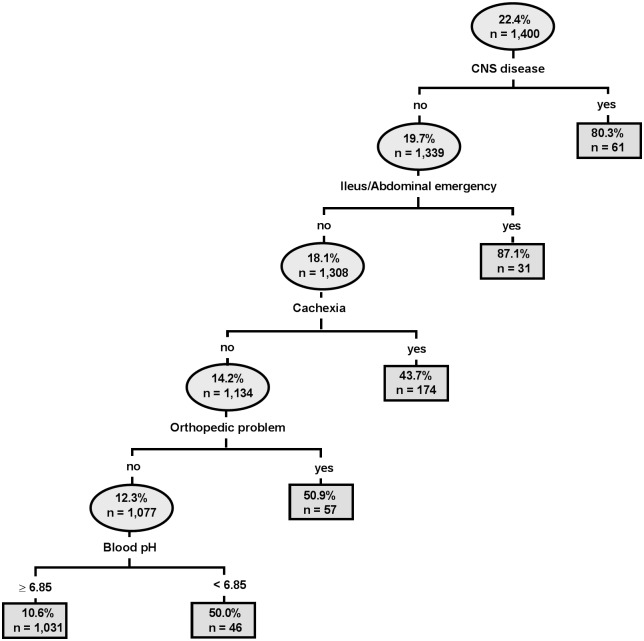
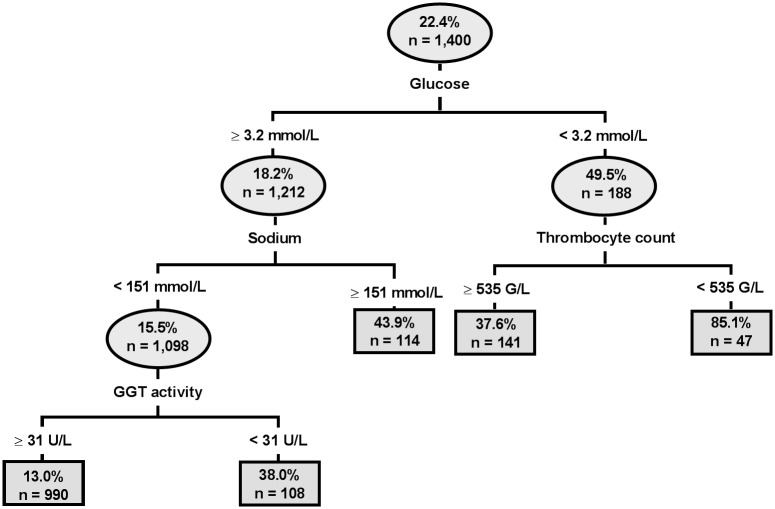
Profound acidemia impairs cellular and organ function and consequently should be associated with an increased risk of mortality in critically ill humans and animals. Neonatal diarrhea in calves can result in potentially serious metabolic derangements including profound acidemia due to strong ion (metabolic) acidosis, hyper-D-lactatemia, hyper-L-lactatemia, azotemia, hypoglycemia, hyperkalemia and hyponatremia. The aim of this retrospective study was to assess the prognostic relevance of clinical and laboratory findings in 1,400 critically ill neonatal calves with diarrhea admitted to a veterinary teaching hospital. The mortality rate was 22%. Classification tree analysis indicated that mortality was associated with clinical signs of neurologic disease, abdominal emergencies, cachexia, orthopedic problems such as septic arthritis, and profound acidemia (jugular venous blood pH < 6.85). When exclusively considering laboratory parameters, classification tree analysis identified plasma glucose concentrations < 3.2 mmol/L, plasma sodium concentrations ≥ 151 mmol/L, serum GGT activity < 31 U/L and a thrombocyte count < 535 G/L as predictors of mortality. However, multivariable logistic regression models based on these laboratory parameters did not have a sufficiently high enough sensitivity (59%) and specificity (79%) to reliably predict treatment outcome. The sensitivity and specificity of jugular venous blood pH < 6.85 were 11% and 97%, respectively, for predicting non-survival in this study population. We conclude that laboratory values (except jugular venous blood pH < 6.85) are of limited value for predicting outcome in critically ill neonatal calves with diarrhea. In contrast, the presence of specific clinical abnormalities provides valuable prognostic information.
Conflict of interest statement
Figures
References
-
- Jung B, Rimmele T, Le Goff C, Chanques G, Corne P, Jonquet O, et al. Severe metabolic or mixed acidemia on intensive care unit admission: incidence, prognosis and administration of buffer therapy. A prospective, multiple-center study. Critical Care. 2011;15(5):R238 doi: 10.1186/cc10487 . - DOI - PMC - PubMed
-
- Kaplan LJ, Kellum JA. Initial pH, base deficit, lactate, anion gap, strong ion difference, and strong ion gap predict outcome from major vascular injury. Critical Care Medicine. 2004;32(5):1120–4. . - PubMed
-
- Kim HJ, Son YK, An WS. Effect of sodium bicarbonate administration on mortality in patients with lactic acidosis: a retrospective analysis. PloS One. 2013;8(6):e65283 doi: 10.1371/journal.pone.0065283 . - DOI - PMC - PubMed
-
- Kraut JA, Madias NE. Lactic acidosis: current treatments and future directions. American Journal of Kidney Diseases. 2016;68(3):473–82. doi: 10.1053/j.ajkd.2016.04.020 . - DOI - PubMed
-
- Kiran HS, Anil GD, Murthy KAS, Gowdapa HB. Severe metabolic acidosis in critically ill patients and its impact on the outcome; a prospective observational study. International Journal of Scientific Study. 2015;3(8):168–71.
MeSH terms
Substances
LinkOut - more resources
Full Text Sources
Other Literature Sources
Medical
Miscellaneous
