


Metabolomics of biomarker discovery in ovarian cancer: a systematic review of the current literature
- PMID: 28819352
- PMCID: PMC5557039
- DOI: 10.1007/s11306-016-0990-0
Metabolomics of biomarker discovery in ovarian cancer: a systematic review of the current literature
Abstract
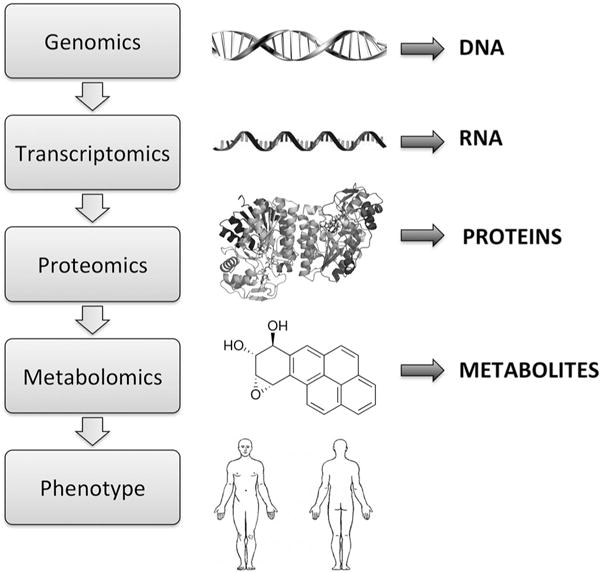
Introduction: Metabolomics is the emerging member of "omics" sciences advancing the understanding, diagnosis and treatment of many cancers, including ovarian cancer (OC).
Objectives: To systematically identify the metabolomic abnormalities in OC detection, and the dominant metabolic pathways associated with the observed alterations.
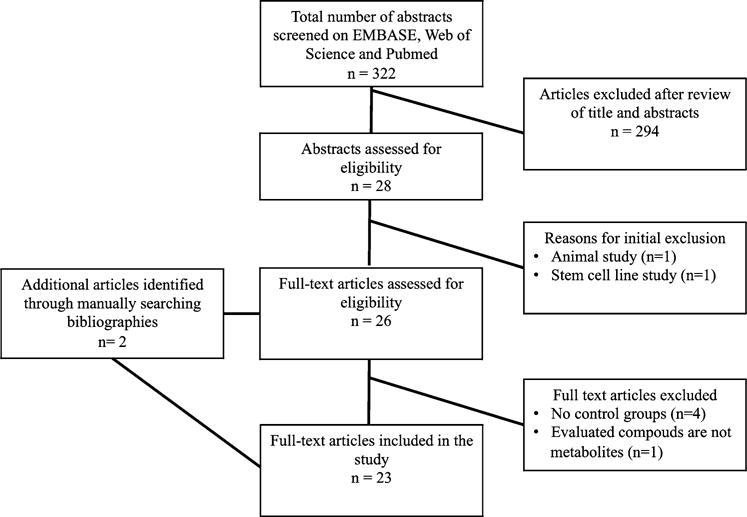
Methods: An electronic literature search was performed, up to and including January 15th 2016, for studies evaluating the metabolomic profile of patients with OC compared to controls. QUADOMICS tool was used to assess the quality of the twenty-three studies included in this systematic review.
Results: Biological samples utilized for metabolomic analysis include: serum/plasma (n = 13), urine (n = 4), cyst fluid (n = 3), tissue (n = 2) and ascitic fluid (n = 1). Metabolites related to cellular respiration, carbohydrate, lipid, protein and nucleotide metabolism were significantly altered in OC. Increased levels of tricarboxylic acid cycle intermediates and altered metabolites of the glycolytic pathway pointed to perturbations in cellular respiration. Alterations in lipid metabolism included enhanced fatty acid oxidation, abnormal levels of glycerolipids, sphingolipids and free fatty acids with common elevations of palmitate, oleate, and myristate. Increased levels of glutamine, glycine, cysteine and threonine were commonly reported while enhanced degradations of tryptophan, histidine and phenylalanine were found. N-acetylaspartate, a brain amino acid, was found elevated in primary and metastatic OC tissue and ovarian cyst fluid. Further, elevated levels of ketone bodies including 3-hydroxybutyrate were commonly reported. Increased levels of nucleotide metabolites and tocopherols were consistent through out the studies.
Conclusion: Metabolomics presents significant new opportunities for diagnostic biomarker development, elucidating previously unknown mechanisms of OC pathogenesis.
Keywords: Biomarker; Metabolites; Metabolomics; Ovarian cancer; Systematic review.
Conflict of interest statement
Conflict of Interest Onur Turkoglu, Amna Zeb, Stewart Graham, Thomas Szyperski, J Brian Szender, Kunle Odunsi and Ray Bahado-Singh declare that they have no conflict of interest.
Figures
References
-
- Baslow MH. Evidence supporting a role for N-acetyl-L-aspartate as a molecular water pump in myelinated neurons in the central nervous system. An analytical review. Neurochemistry International. 2002;40(4):295–300. - PubMed
-
- Baslow MH. N-acetylaspartate in the vertebrate brain: Metabolism and function. Neurochemical Research. 2003;28(6):941–953. - PubMed
-
- Boss EA, Moolenaar SH, Massuger LF, Boonstra H, Engelke UF, de Jong JG, et al. High-resolution proton nuclear magnetic resonance spectroscopy of ovarian cyst fluid. NMR in Biomedicine. 2000;13(5):297–305. - PubMed
-
- Buas MF, Gu H, Djukovic D, Zhu J, Drescher CW, Urban N, et al. Identification of novel candidate plasma metabolite biomarkers for distinguishing serous ovarian carcinoma and benign serous ovarian tumors. Gynecologic Oncology. 2016;140(1):138–144. doi: 10.1016/j.ygyno.2015.10.021. - DOI - PMC - PubMed
Grants and funding
LinkOut - more resources
Full Text Sources
Other Literature Sources