


Association Between Patient Satisfaction and Short-Term Outcomes After Major Cancer Surgery
- PMID: 28819930
- PMCID: PMC5780185
- DOI: 10.1245/s10434-017-6049-2
Association Between Patient Satisfaction and Short-Term Outcomes After Major Cancer Surgery
Abstract
Objective: The aim of this study was to investigate whether patient satisfaction, as measured by the Hospital Consumer Assessment of Healthcare Providers and Systems (HCAHPS) survey, is associated with short-term outcomes after major cancer surgery.
Materials and methods: We first used national Medicare claims to identify patients who underwent a major extirpative cancer surgery from 2011 to 2013. Next, we used Hospital Compare data to assign the HCAHPS score to the hospital where the patient underwent surgery. We then performed univariate statistical analyses and fit multilevel logistic regression models to evaluate the relationship between excellent patient satisfaction and short-term cancer surgery outcomes for all surgery types combined and then by each individual surgery type.
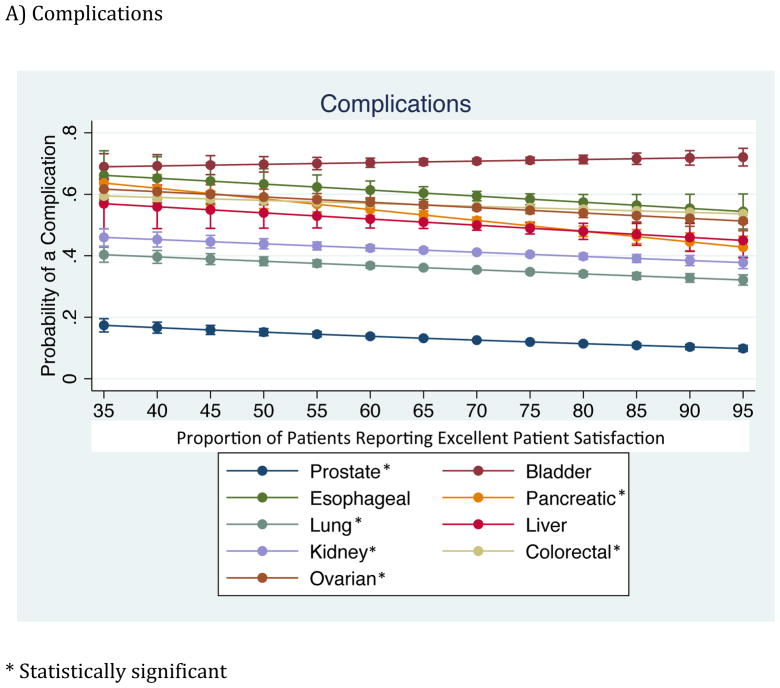
Results: We identified 373,692 patients who underwent major cancer surgery for one of nine cancers at 2617 hospitals. In both unadjusted and adjusted analyses, hospitals with higher proportions of patients reporting excellent satisfaction had lower complication rates (p < 0.001), readmissions (p < 0.001), mortality (p < 0.001), and prolonged length of stay (p < 0.001) than hospitals with lower proportions of satisfied patients, but with modest differences. This finding held true broadly across individual cancer types for complications, mortality, and prolonged length of stay, but less so for readmissions.
Conclusions: Hospital-wide excellent patient satisfaction scores are associated with short-term outcomes after major cancer surgery overall, but are modest in magnitude.
Figures




References
-
- CMS. Hospital Value Based Purchasing. 2015.
-
- CMS.gov. HCAHPS: Patients’ Perspectives of Care Survey. Sep 25, 2014.
-
- hcahpsonline. The HCAHPS Survery - Frequently Asked Questions.
-
- Shirk JD, et al. Patient experience and quality of urologic cancer surgery in US hospitals. Cancer. 2016;122(16):2571–8. - PubMed
-
- Gurland BH, et al. Surgical Complications Impact Patient Perception of Hospital Care. Journal of the American College of Surgeons. 2013;217(5):843–849. - PubMed
MeSH terms
Grants and funding
LinkOut - more resources
Full Text Sources
Other Literature Sources
Medical
