


Efficacy and Safety of Letibotulinum Toxin A for the Treatment of Dynamic Equinus Foot Deformity in Children with Cerebral Palsy: A Randomized Controlled Trial
- PMID: 28820439
- PMCID: PMC5577586
- DOI: 10.3390/toxins9080252
Efficacy and Safety of Letibotulinum Toxin A for the Treatment of Dynamic Equinus Foot Deformity in Children with Cerebral Palsy: A Randomized Controlled Trial
Abstract
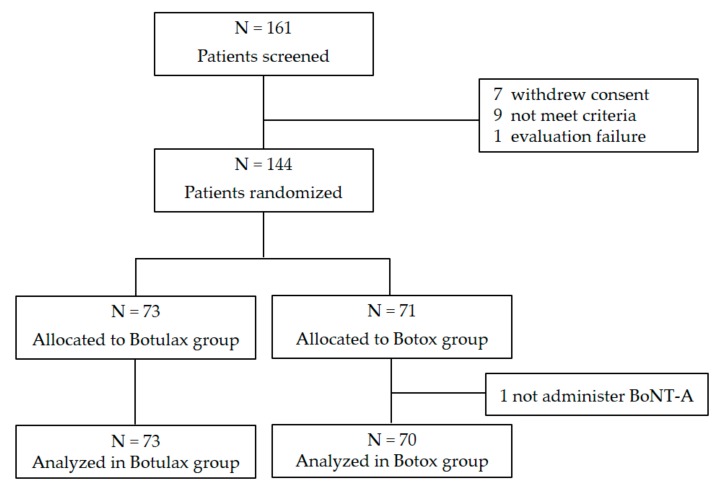
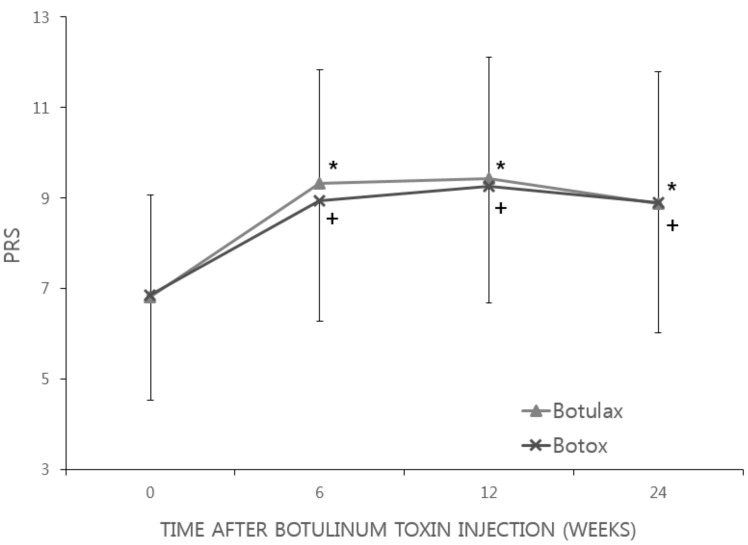
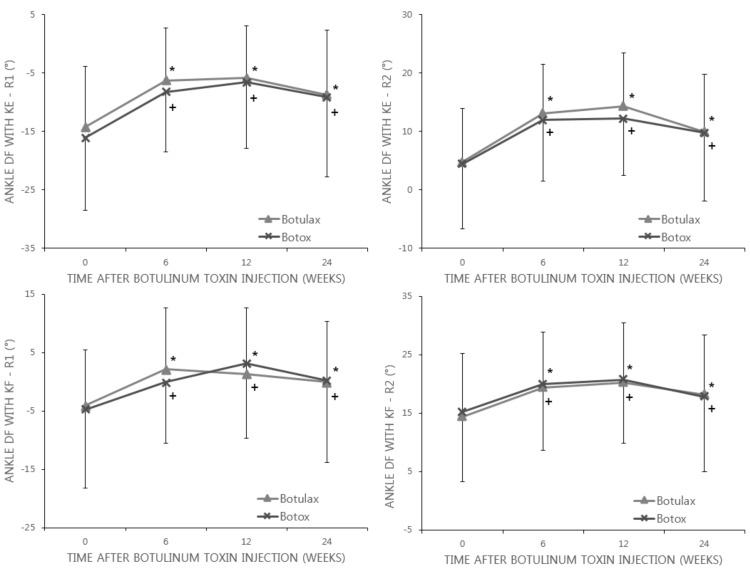
The objective of this clinical trial was to compare the efficacy and safety of letibotulinum toxin A and onabotulinum toxin A for improving dynamic equinus foot deformity in children with cerebral palsy (CP). In total, 144 children with spastic CP who had dynamic equinus foot deformity were assigned randomly to the Botulax group (injection of letibotulinum toxin A) or the Botox group (injection of onabotulinum toxin A). The Physician's Rating Scale (PRS), ankle plantar flexor spasticity using the Modified Tardieu Scale, the Gross Motor Function Measure (GMFM)-88, and the GMFM-66 were completed before injection and at 6, 12, and 24 weeks after injection. The PRS responder rate was 60.27% in the Botulax group and 61.43% in the Botox group at 12 weeks after treatment, and the lower limit of the 95% confidence interval for the between-group difference in responder rates was -17.16%, higher than the non-inferiority margin of -24.00%. The clinical efficacy and the safety profiles of the groups did not significantly differ. The results suggest that injection of letibotulinum toxin A is as effective and safe as that of onabotulinum toxin A for the treatment of dynamic equinus foot deformity in children with spastic CP.
Keywords: botulinum toxin; cerebral palsy; letibotulinum toxin; onabotulinum toxin; spasticity.
Conflict of interest statement
The authors declare no conflict of interest with respect to the research, authorship, and/or publication of this article.
Figures
References
-
- Rosenbaum P., Paneth N., Leviton A., Goldstein M., Bax M., Damiano D., Dan B., Jacobsson B. A report: The definition and classification of cerebral palsy April 2006. Dev. Med. Child Neurol. Suppl. 2007;109:8–14. - PubMed
Publication types
MeSH terms
Substances
LinkOut - more resources
Full Text Sources
Other Literature Sources
Medical
Miscellaneous
