


Targets of Neuroprotection in Glaucoma
- PMID: 28820649
- PMCID: PMC5963639
- DOI: 10.1089/jop.2017.0041
Targets of Neuroprotection in Glaucoma
Abstract
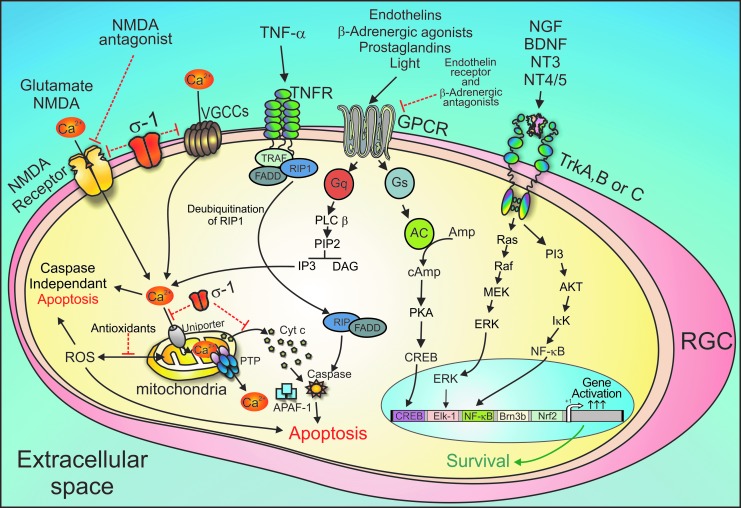
Progressive neurodegeneration of the optic nerve and the loss of retinal ganglion cells is a hallmark of glaucoma, the leading cause of irreversible blindness worldwide, with primary open-angle glaucoma (POAG) being the most frequent form of glaucoma in the Western world. While some genetic mutations have been identified for some glaucomas, those associated with POAG are limited and for most POAG patients, the etiology is still unclear. Unfortunately, treatment of this neurodegenerative disease and other retinal degenerative diseases is lacking. For POAG, most of the treatments focus on reducing aqueous humor formation, enhancing uveoscleral or conventional outflow, or lowering intraocular pressure through surgical means. These efforts, in some cases, do not always lead to a prevention of vision loss and therefore other strategies are needed to reduce or reverse the progressive neurodegeneration. In this review, we will highlight some of the ocular pharmacological approaches that are being tested to reduce neurodegeneration and provide some form of neuroprotection.
Keywords: drug targets; glaucoma; neuroprotection.
Conflict of interest statement
No competing financial interests exist.
Figures
References
-
- Rudnicka A.R., Mt-Isa S., Owen C.G., Cook D.G., and Ashby D. Variations in primary open-angle glaucoma prevalence by age, gender, and race: a Bayesian meta-analysis. Invest. Ophthalmol. Vis. Sci. 47:4254–4261, 2006 - PubMed
-
- Fredriksson R., Lagerstrom M.C., Lundin L.G., and Schioth H.B. The G-protein-coupled receptors in the human genome form five main families. Phylogenetic analysis, paralogon groups, and fingerprints. Mol. Pharmacol. 63:1256–1272, 2003 - PubMed
Publication types
MeSH terms
Substances
Grants and funding
LinkOut - more resources
Full Text Sources
Other Literature Sources
Medical
