


Who and where are the uncounted children? Inequalities in birth certificate coverage among children under five years in 94 countries using nationally representative household surveys
- PMID: 28821291
- PMCID: PMC5562988
- DOI: 10.1186/s12939-017-0635-6
Who and where are the uncounted children? Inequalities in birth certificate coverage among children under five years in 94 countries using nationally representative household surveys
Abstract
Background: Birth registration, and the possession of a birth certificate as proof of registration, has long been recognized as a fundamental human right. Data from a functioning civil registration and vital statistics (CRVS) system allows governments to benefit from accurate and universal data on birth and death rates. However, access to birth certificates remains challenging and unequal in many low and middle-income countries. This paper examines wealth, urban/rural and gender inequalities in birth certificate coverage.
Methods: We analyzed nationally representative household surveys from 94 countries between 2000 and 2014 using Demographic Health Surveys and Multiple Indicator Cluster Surveys. Birth certificate coverage among children under five was examined at the national and regional level. Absolute measures of inequality were used to measure inequalities in birth certificate coverage by wealth quintile, urban/rural residence and sex of the child.
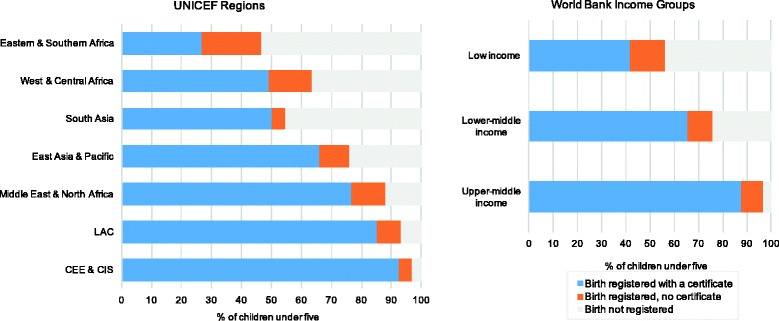
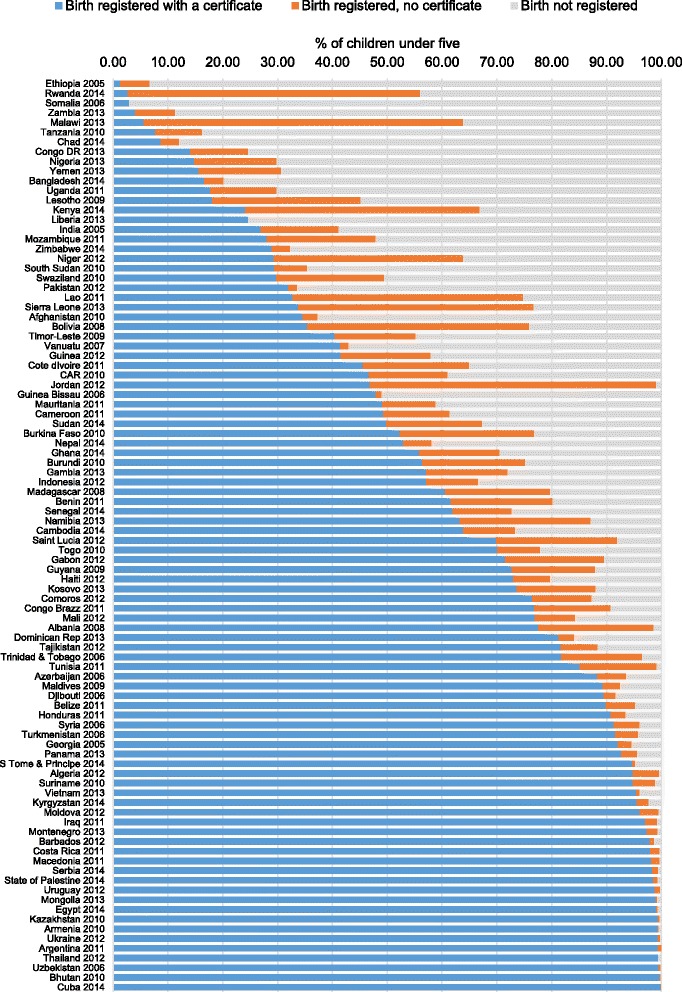
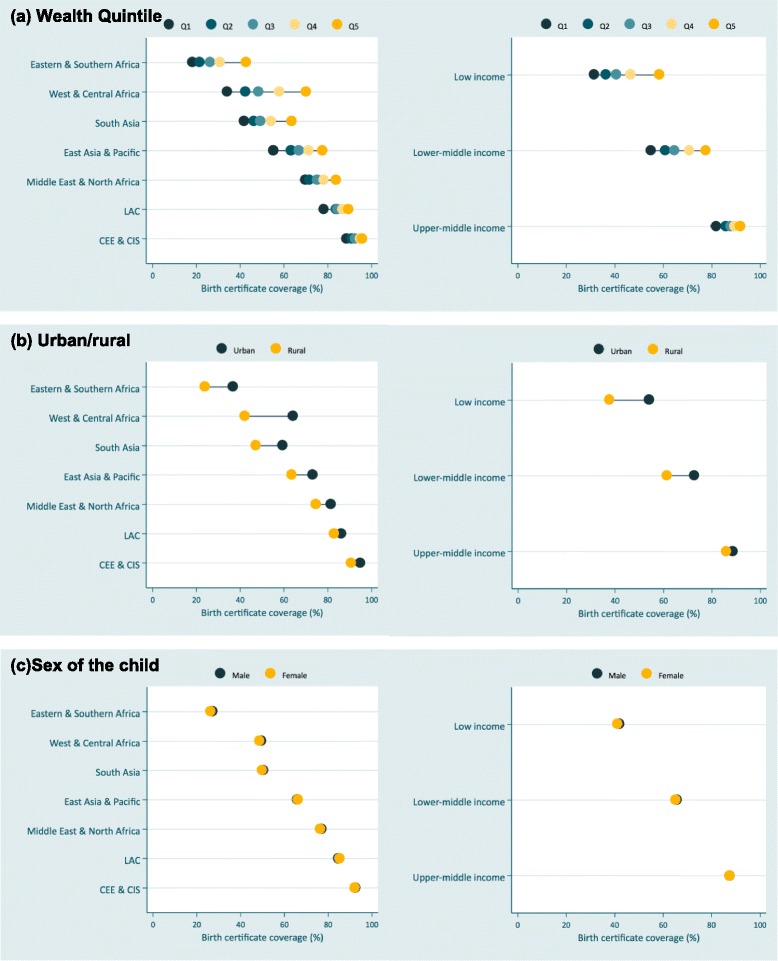
Results: Over four million children were included in the analysis. Birth certificate coverage was over 90% in 29 countries and below 50% in 36 countries, indicating that more than half the children under five surveyed in these countries did not have a birth certificate. Eastern & Southern Africa had the lowest average birth certificate coverage (26.9%) with important variability among countries. Significant wealth inequalities in birth certificate coverage were observed in 74 countries and in most UNICEF regions, and urban/rural inequalities were present in 60 countries. Differences in birth certificate coverage between girls and boys tended to be small.
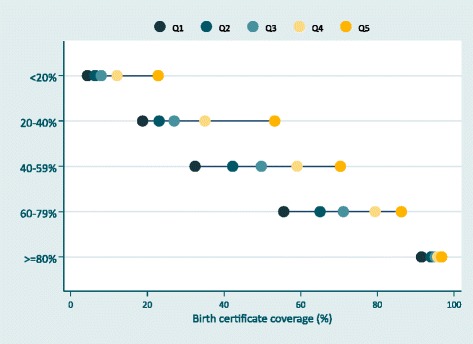
Conclusions: We show that wealth and urban/rural inequalities in birth certificate coverage persist in most low and middle income countries, including countries where national birth certificate coverage is between 60 and 80%. Weak CRVS systems, particularly in South Asia and Africa lead rural and poor children to be systematically excluded from the benefits tied to a birth certificate, and prevent these children from being counted in national health data. Greater funding and attention is needed to strengthen CRVS systems and equity analyses should inform such efforts, especially as data needs for the Sustainable Development Goals expand. Monitoring disaggregated data on birth certificate coverage is essential to reducing inequalities in who is counted and registered. Strengthening CRVS systems can enable a child's right to identity, improve health data and promote equity.
Keywords: Birth certificates; Child health surveys; Global health; Health equity; Socioeconomic factors; Vital statistics.
Conflict of interest statement
Ethics approval and consent to participate
Ethical approval was the responsibility of the institution that conducted or commissioned the survey. All datasets used in this paper were de-identified.
Consent for publication
Not applicable.
Competing interests
The authors declare that they have no competing interests.
Publisher’s Note
Springer Nature remains neutral with regard to jurisdictional claims in published maps and institutional affiliations.
Figures
References
-
- Dunning C, Gelb A, Raghavan S. Birth Registration, Legal Identity, and the Post-2015 Agenda. Washington, DC: Center for Global Development; 2014.
-
- Plan International . Count every child: the right to birth registration. 2009.
-
- World Bank and WHO, Global Civil Registration and Vital Statistics. Scaling up investment plan 2015-2024. p. 2014.
-
- United Nations . The convention on the rights of the child. 1990. - PubMed
-
- United Nations News Service. UN News - UN lauds Somalia as country ratifies landmark children’s rights treaty. 2015. http://www.un.org/apps/news/story.asp?NewsID=49845#.WT7bhBPyuRs. Accessed 12 Jun 2017.
MeSH terms
Grants and funding
LinkOut - more resources
Full Text Sources
Other Literature Sources
