


Global methylation correlates with clinical status in multiple sclerosis patients in the first year of IFNbeta treatment
- PMID: 28821874
- PMCID: PMC5562733
- DOI: 10.1038/s41598-017-09301-2
Global methylation correlates with clinical status in multiple sclerosis patients in the first year of IFNbeta treatment
Abstract
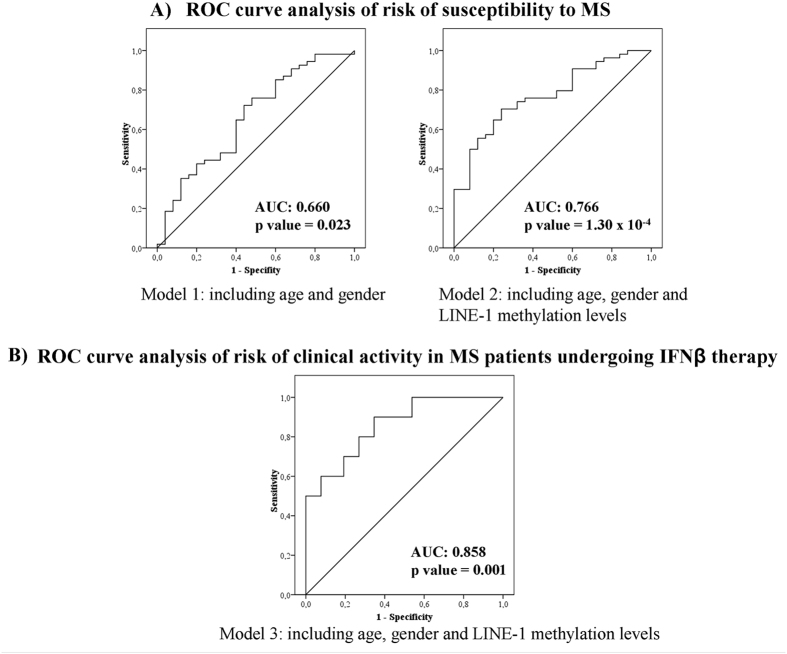
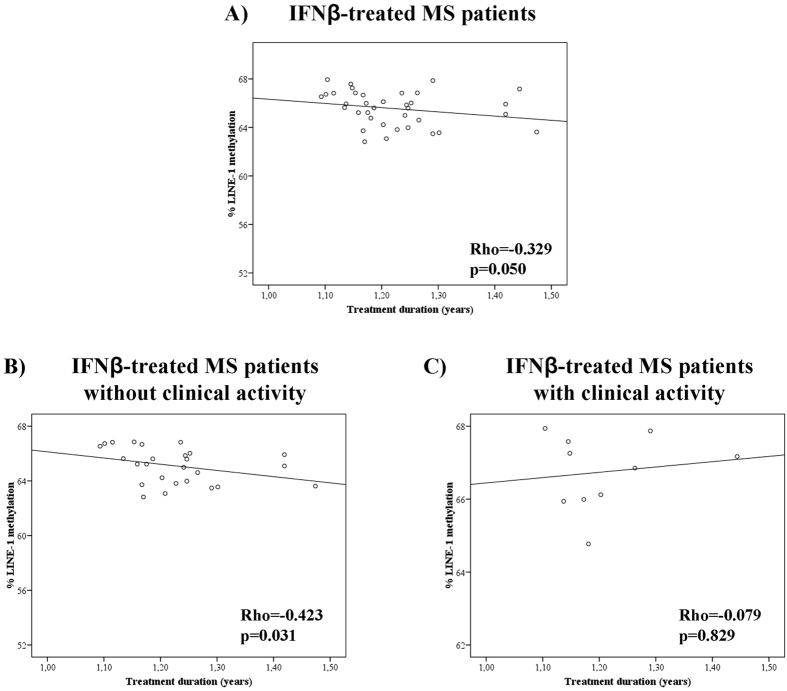
The alteration of DNA methylation patterns are a key component of disease onset and/or progression. Our objective was to evaluate the differences in Long Interspersed Nuclear Element-1 (LINE-1) methylation levels, as a surrogate marker of global DNA methylation, between multiple sclerosis (MS) patients and healthy controls. In addition, we assessed the association of LINE-1 methylation with clinical disease activity in patients treated with IFNbeta (IFNβ). We found that individuals with high levels of LINE-1 methylation showed 6-fold increased risk of suffering MS. Additionally, treated MS patients who bear high LINE-1 methylation levels had an 11-fold increased risk of clinical activity. Moreover, a negative correlation between treatment duration and percentage of LINE-1 methylation, that was statistically significant exclusively in the group of patients without clinical activity, was observed. Our data suggest that in MS patients, a slight global DNA hypermethylation occurs that may be related to the pathophysiology of the disease. In addition, global DNA methylation levels could play a role as a biomarker for the differential clinical response to IFNβ.
Conflict of interest statement
PSC has received honoraria or served as a paid consultant for BIAL, EISAI, ESTEVE, Juste, UCB-Pharma, Sanofi and Shire. OF reports receiving honoraria as a consultant in advisory boards, as chair/lecturer in meetings, from participation in clinical trials and other research projects promoted by Actelion, Allergan, Almirall, Bayer-Schering, Biogen, Merck Serono, Novartis, Sanofi Genzyme, and Teva, and research support from the Hospital Foundation FIMABIS; he also serves as editor of the Revista Española de Esclerosis Múltiple. The other authors declare that they have no competing interests.
Figures
References
Publication types
MeSH terms
Substances
LinkOut - more resources
Full Text Sources
Other Literature Sources
Medical
