


Epidemiology of Esophageal Squamous Cell Carcinoma
- PMID: 28823862
- PMCID: PMC5836473
- DOI: 10.1053/j.gastro.2017.08.023
Epidemiology of Esophageal Squamous Cell Carcinoma
Erratum in
-
Correction.Gastroenterology. 2018 Oct;155(4):1281. doi: 10.1053/j.gastro.2018.09.048. Epub 2018 Sep 27. Gastroenterology. 2018. PMID: 30268378 No abstract available.
Abstract
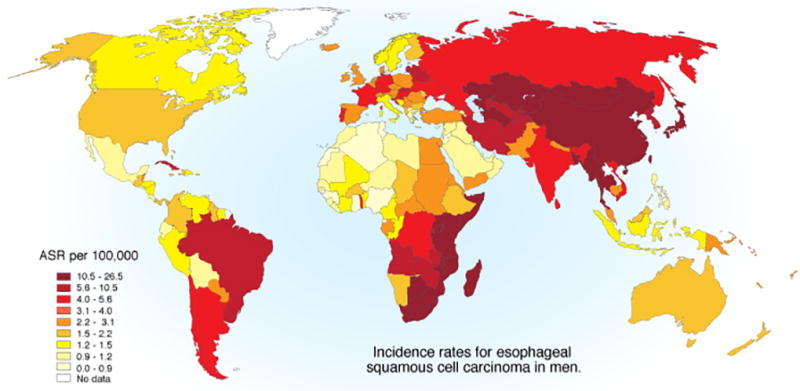
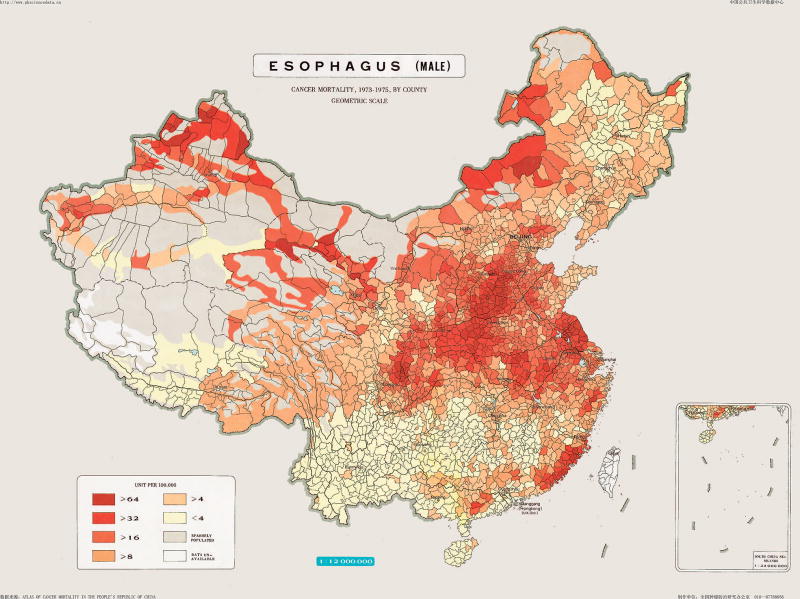
Esophageal squamous cell carcinoma (ESCC) accounts for about 90% of the 456,000 incident esophageal cancers each year. Regions of high incidence include Eastern to Central Asia, along the Rift Valley in East Africa, and into South Africa. There are many causes of ESCC, which vary among regions. Early studies in France associated smoking cigarettes and heavy alcohol consumption with high rates of ESCC, but these factors cannot explain the high incidence in other regions. We discuss other risk factors for ESCC, including polycyclic aromatic hydrocarbons from a variety of sources, high-temperature foods, diet, and oral health and the microbiome-all require further research. A growing list of defined genomic regions affects susceptibility, but large genome-wide association studies have been conducted with ethnic Chinese subjects only; more studies are called for in the rest of Asia and Africa. ESCC has been understudied, but growing infrastructure in more high-incidence countries will allow rapid progress in our understanding.
Keywords: Epidemiology; Esophageal Cancer; Genetic Epidemiology; Squamous Cell Carcinoma.
Copyright © 2018 AGA Institute. Published by Elsevier Inc. All rights reserved.
Figures
References
-
- Ferlay JSI, Ervik M, Dikshit R, Eser S, Mathers C, Rebelo M, Parkin DM, Forman D, Bray F. GLOBOCAN 2012 v1.0, Cancer Incidence and Mortality Worldwide: IARC CancerBase No. 11. Lyon, France: International Agency for Research on Cancer; 2013.
-
- Arnold M, Soerjomataram I, Ferlay J, et al. Global incidence of oesophageal cancer by histological subtype in 2012. Gut. 2015;64:381–7. - PubMed
-
- Chen W, Zheng R, Baade PD, et al. Cancer statistics in China, 2015. CA Cancer J Clin. 2016;66:115–32. - PubMed
-
- Blot WJ, Li JY. Some considerations in the design of a nutrition intervention trial in Linxian, People's Republic of China. Natl Cancer Inst Monogr. 1985;69:29–34. - PubMed
Publication types
MeSH terms
Substances
Grants and funding
LinkOut - more resources
Full Text Sources
Other Literature Sources
Medical
