


Urokinase vs Tissue-Type Plasminogen Activator for Thrombolytic Evacuation of Spontaneous Intracerebral Hemorrhage in Basal Ganglia
- PMID: 28824528
- PMCID: PMC5540957
- DOI: 10.3389/fneur.2017.00371
Urokinase vs Tissue-Type Plasminogen Activator for Thrombolytic Evacuation of Spontaneous Intracerebral Hemorrhage in Basal Ganglia
Abstract
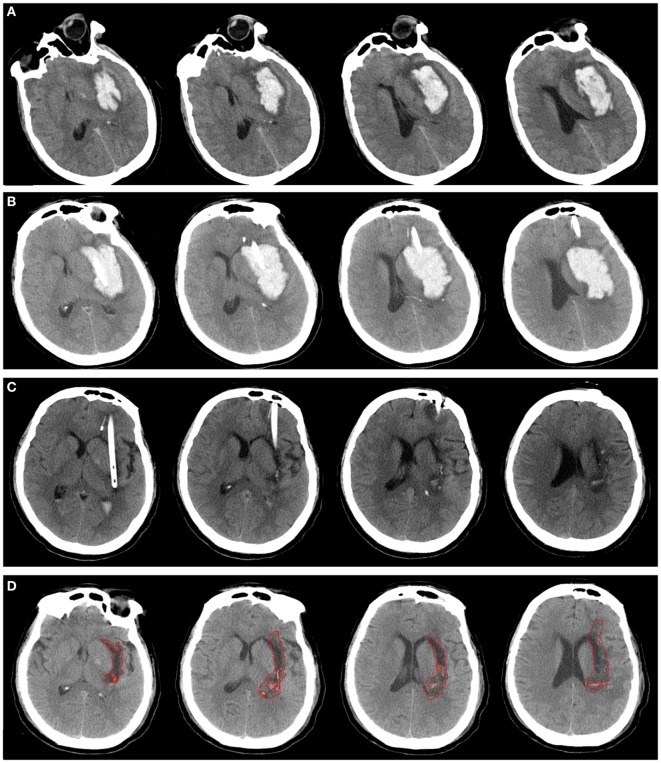
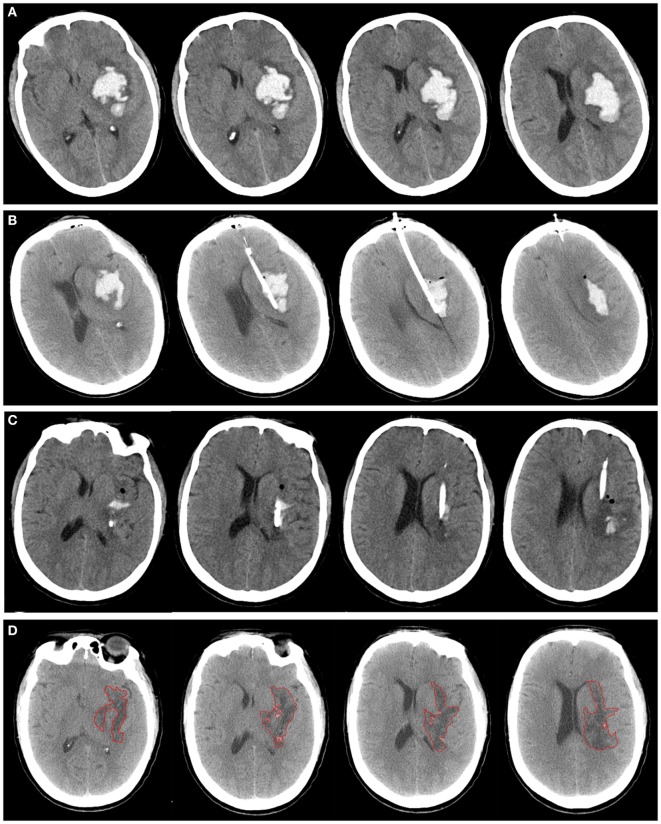
Spontaneous intracerebral hemorrhage (ICH) is a devastating form of stroke, which leads to a high rate of mortality and poor neurological outcomes worldwide. Thrombolytic evacuation with urokinase-type plasminogen activator (uPA) or tissue-type plasminogen activator (tPA) has been showed to be a hopeful treatment for ICH. However, to the best of our knowledge, no clinical trials were reported to compare the efficacy and safety of these two fibrinolytics administrated following minimally invasive stereotactic puncture (MISP) in patients with spontaneous basal ganglia ICH. Therefore, the authors intended here to evaluate the differential impact of uPA and tPA in a retrospective study. In the present study, a total of 86 patients with spontaneous ICH in basal ganglia using MISP received either uPA (uPA group, n = 45) or tPA (tPA group, n = 41), respectively. The clinical baseline characteristics prior to the operation were collected. In addition, therapeutic responses were assessed by the short-term outcomes within 30 days postoperation, as well as long-term outcomes at 1 year postoperation. Our findings showed that, in comparison with tPA, uPA was able to better promote hematoma evacuation and ameliorate perihematomal edema, but the differences were not statistically significant. Moreover, the long-term functional outcomes of both groups were similar, with no statistical difference. In conclusion, these results provide evidence supporting that uPA and tPA are similar in the efficacy and safety for thrombolytic evacuation in combination with MISP in patients with spontaneous basal ganglia ICH.
Keywords: basal ganglia; intracerebral hemorrhage; thrombolytic evacuation; tissue-type plasminogen activator; urokinase.
Figures
References
-
- Ganesh KN, Zuckerman SL, Khan IS, Dewan MC, Morone PJ, Mocco J. Treatment of intracerebral hemorrhage: a selective review and future directions. J Neurosurg Sci (2016). - PubMed
LinkOut - more resources
Full Text Sources
Other Literature Sources
Miscellaneous
