


Reflection as a Learning Tool in Graduate Medical Education: A Systematic Review
- PMID: 28824754
- PMCID: PMC5559236
- DOI: 10.4300/JGME-D-16-00500.1
Reflection as a Learning Tool in Graduate Medical Education: A Systematic Review
Abstract
Background: Graduate medical education programs employ reflection to advance a range of outcomes for physicians in training. However, the most effective applications of this tool have not been fully explored.
Objective: A systematic review of the literature examined interventions reporting the use of reflection in graduate medical education.
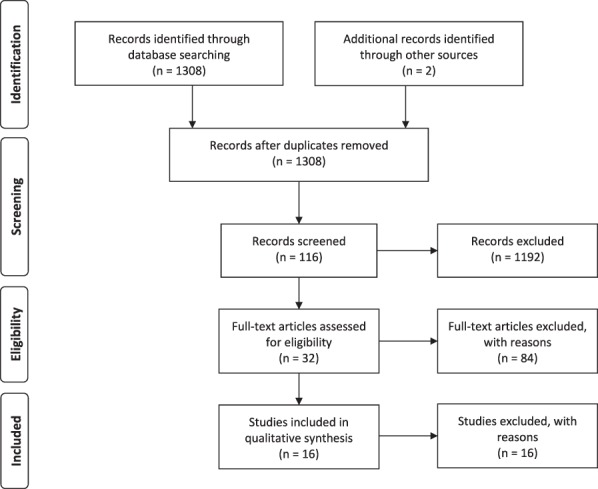
Methods: The authors searched Medline/PubMed, Embase, Cochrane CENTRAL, and ERIC for studies of reflection as a teaching tool to develop medical trainees' capacities. Key words and subject headings included reflection, narrative, residents/GME, and education/teaching/learning. No language or date limits were applied. The search yielded 1308 citations between inception for each database and June 15, 2015. A total of 16 studies, encompassing 477 residents and fellows, met eligibility criteria. Study quality was assessed using the Critical Appraisal Skills Programme Qualitative Checklist. The authors conducted a thematic analysis of the 16 articles.
Results: Outcomes studied encompassed the impact of reflection on empathy, comfort with learning in complex situations, and engagement in the learning process. Reflection increased learning of complex subjects and deepened professional values. It appears to be an effective tool for improving attitudes and comfort when exploring difficult material. Limitations include that most studies had small samples, used volunteers, and did not measure behavioral outcomes.
Conclusions: Critical reflection is a tool that can amplify learning in residents and fellows. Added research is needed to understand how reflection can influence growth in professional capacities and patient-level outcomes in ways that can be measured.
Conflict of interest statement
Conflict of interest: The authors declare they have no competing interests. The results of the project were presented at The Arnold P. Gold Foundation Research Institute “Mapping the Landscape, Journeying Together” Symposium, Chicago, Illinois, May 1–2, 2016.
References
-
- Mann K, Gordon J, MacLeod A. . Reflection and reflective practice in health professions education: a systematic review. Adv Health Sci Educ Theory Pract. 2009; 14 4: 595– 621. - PubMed
-
- Kung JW, Slanetz PJ, Huang GC, et al. Reflective practice: assessing its effectiveness to teach professionalism in a radiology residency. Acad Radiol. 2015; 22 10: 1280– 1286. - PubMed
-
- Miller Juve AK. Reflective Practice and Readiness for Self-Directed Learning in Anesthesiology Residents Training in the United States [dissertation]. Portland: University of Oregon; 2012. http://pdxscholar.library.pdx.edu/open_access_etds/235/. Accessed May 11, 2017.
-
- Wittich CM, Reed DA, McDonald FS, et al. Perspective: transformative learning: a framework using critical reflection to link the improvement competencies in graduate medical education. Acad Med. 2010; 85 11: 1790– 1793. - PubMed
-
- Adams KE, O'Reilly M, Romm J, et al. Effect of Balint training on resident professionalism. Am J Obstet Gynecol. 2006; 195 5: 1431– 1437. - PubMed
Publication types
MeSH terms
LinkOut - more resources
Full Text Sources
Other Literature Sources
Miscellaneous
