


Acceptance-based interoceptive exposure for young children with functional abdominal pain
- PMID: 28826066
- PMCID: PMC5786377
- DOI: 10.1016/j.brat.2017.07.009
Acceptance-based interoceptive exposure for young children with functional abdominal pain
Abstract
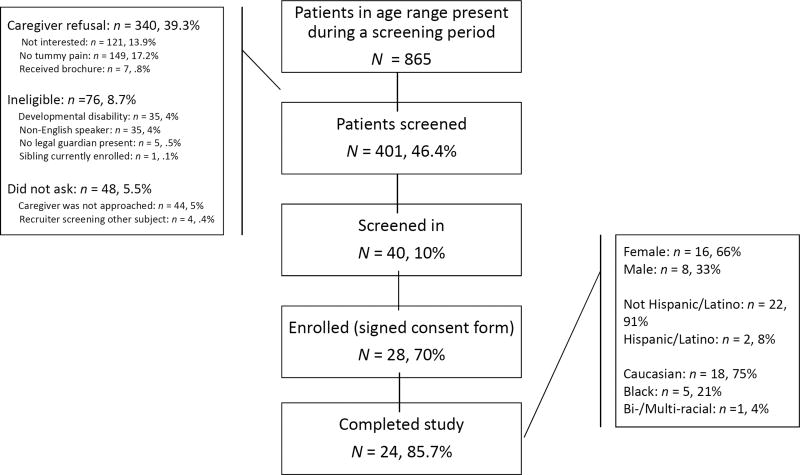
Functional abdominal pain (FAP) is a common childhood somatic complaint that contributes to impairment in daily functioning (e.g., school absences) and increases risk for chronic pain and psychiatric illness. Cognitive behavioral treatments for FAP target primarily older children (9 + years) and employ strategies to reduce a focus on pain. The experience of pain may be an opportunity to teach viscerally hypersensitive children to interpret the function of a variety of bodily signals (including those of hunger, emotions) thereby reducing fear of bodily sensations and facilitating emotion awareness and self-regulation. We designed and tested an interoceptive exposure treatment for younger children (5-9 years) with FAP. Assessments included diagnostic interviews, 14 days of daily pain monitoring, and questionnaires. Treatment involved 10 weekly appointments. Using cartoon characters to represent bodily sensations (e.g., Gassy Gus), children were trained to be "FBI agents" - Feeling and Body Investigators - who investigated sensations through exercises that provoked somatic experience. 24 parent-child dyads are reported. Pain (experience, distress, and interference) and negative affect demonstrated clinically meaningful and statistically significant change with effect sizes ranging from 0.48 to 71 for pain and from 0.38 to 0.61 for pain distress, total pain: X2 (1, n = 24) = 13.14, p < 0.0003. An intervention that helps children adopt a curious stance and focus on somatic symptoms reduces pain and may help lessen somatic fear generally.
Clinical trial registration: NCT02075437.
Keywords: Functional abdominal pain; Interoceptive awareness; Interoceptive exposure; Somatic fear; Visceral hypersensitivity.
Copyright © 2017 Elsevier Ltd. All rights reserved.
Conflict of interest statement
Figures




References
-
- Arcelus J, Mitchell AJ, Wales J, Nielsen S. Mortality Rates in Patients With Anorexia Nervosa and Other Eating Disorders A Meta-analysis of 36 Studies. Archives of General Psychiatry. 2011;68:724–731. - PubMed
-
- Bradley MM, Lang PJ. MEASURING EMOTION - THE SELF-ASSESSMENT MANNEQUIN AND THE SEMANTIC DIFFERENTIAL. Journal of Behavior Therapy and Experimental Psychiatry. 1994;25:49–59. - PubMed
-
- Campo JV, Bridge J, Ehmann M, Altman S, Lucas A, Birmaher B, Di Lorenzo C, Iyengar S, Brent DA. Recurrent abdominal pain, anxiety, and depression in primary care. Pediatrics. 2004;113:817–824. - PubMed
-
- Campo JV, Di Lorenzo C, Chiappetta L, Bridge J, Colborn DK, Gartner JC, Jr, Gaffney P, Kocoshis S, Brent D. Adult outcomes of pediatric recurrent abdominal pain: do they just grow out of it? Pediatrics. 2001;108:E1. - PubMed
-
- Campo JV, Gilchrist RH. Psychiatric comorbidity and functional abdominal pain. Pediatric Annals. 2009;38:283–287. - PubMed
Publication types
MeSH terms
Associated data
Grants and funding
LinkOut - more resources
Full Text Sources
Other Literature Sources
Medical
Miscellaneous
