


Understanding Resistance Mechanisms and Expanding the Therapeutic Utility of PARP Inhibitors
- PMID: 28829366
- PMCID: PMC5575612
- DOI: 10.3390/cancers9080109
Understanding Resistance Mechanisms and Expanding the Therapeutic Utility of PARP Inhibitors
Abstract
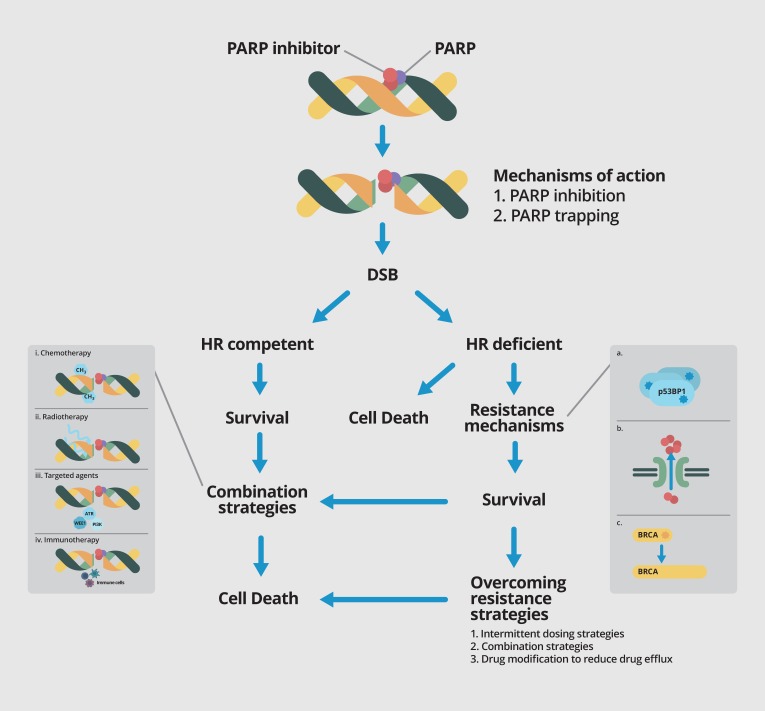
Poly-(ADP-ribose) polymerase (PARP) inhibitors act through synthetic lethality in cells with defects in homologous recombination (HR) DNA repair caused by molecular aberrations such as BRCA mutations, and is approved for treatment in ovarian cancer, with promising clinical activity against other HR defective tumors including breast and prostate cancers. Three PARP inhibitors have been FDA approved, while another two have shown promising activity and are in late stage development. Nonetheless, both primary and secondary resistance to PARP inhibition have led to treatment failure, and the development of predictive biomarkers and the ability to identify and overcome mechanisms of resistance is vital for optimization of its clinical utility. Additionally, there has been evidence that PARP inhibition may have a therapeutic role beyond HR deficient tumors which warrants further investigation, both as single agent and in combination with other therapeutic modalities like cytotoxic chemotherapy, radiation, targeted therapy and immunotherapy. With new strategies to overcome resistance and expand its therapeutic utility, PARP inhibitors are likely to become a staple in our armamentarium of drugs in cancer therapeutics.
Keywords: PARP inhibitors; targeted therapy.
Conflict of interest statement
D.S.P Tan is a recipient of research funding from AstraZeneca.
Figures
References
-
- Gelmon K.A., Tischkowitz M., Mackay H., Swenerton K., Robidoux A., Tonkin K., Hirte H., Huntsman D., Clemons M., Gilks B., et al. Olaparib in patients with recurrent high-grade serous or poorly differentiated ovarian carcinoma or triple-negative breast cancer: A phase 2, multicentre, open-label, non-randomised study. Lancet Oncol. 2011;12:852–861. doi: 10.1016/S1470-2045(11)70214-5. - DOI - PubMed
Publication types
LinkOut - more resources
Full Text Sources
Other Literature Sources
