


Zygotic Genome Activation in Vertebrates
- PMID: 28829942
- PMCID: PMC5714289
- DOI: 10.1016/j.devcel.2017.07.026
Zygotic Genome Activation in Vertebrates
Abstract
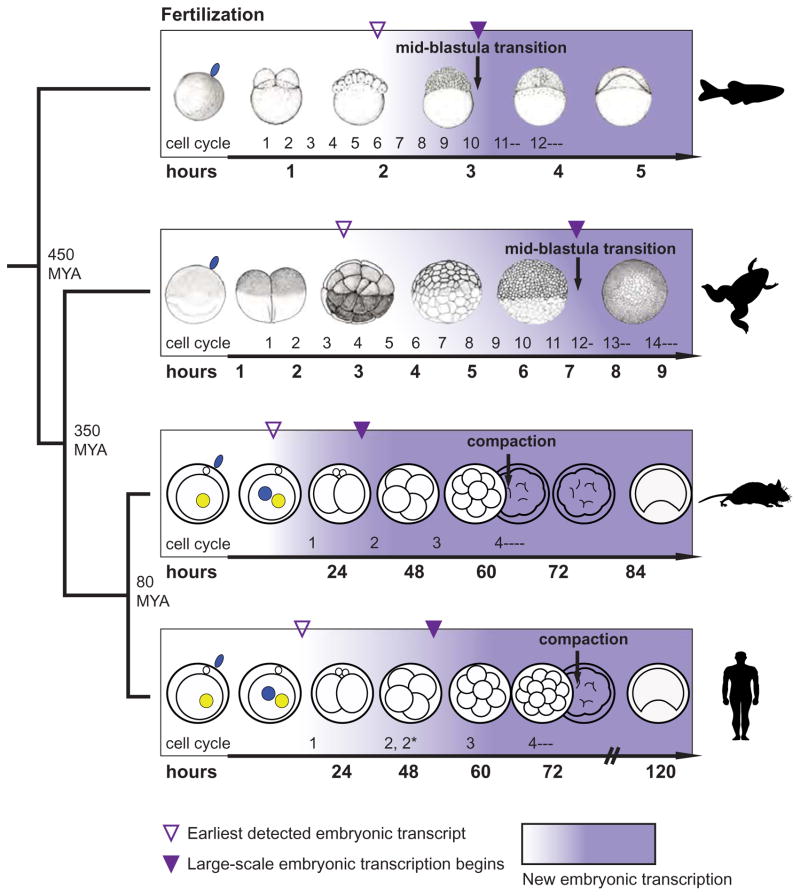
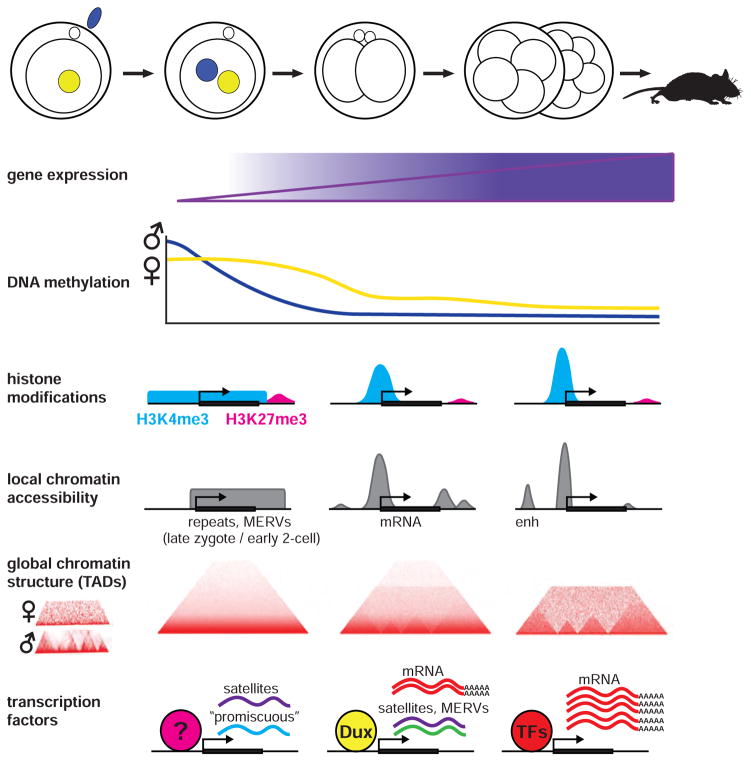
The first major developmental transition in vertebrate embryos is the maternal-to-zygotic transition (MZT) when maternal mRNAs are degraded and zygotic transcription begins. During the MZT, the embryo takes charge of gene expression to control cell differentiation and further development. This spectacular organismal transition requires nuclear reprogramming and the initiation of RNAPII at thousands of promoters. Zygotic genome activation (ZGA) is mechanistically coordinated with other embryonic events, including changes in the cell cycle, chromatin state, and nuclear-to-cytoplasmic component ratios. Here, we review progress in understanding vertebrate ZGA dynamics in frogs, fish, mice, and humans to explore differences and emphasize common features.
Keywords: early vertebrate development; maternal-to-zygotic transition; nuclear-to-cytoplasm ratio; zygotic genome activation.
Copyright © 2017 Elsevier Inc. All rights reserved.
Figures
References
-
- Aiken CEM, Swoboda PPL, Skepper JN, Johnson MH. The direct measurement of embryogenic volume and nucleo-cytoplasmic ratio during mouse pre-implantation development. Reproduction. 2004;128:527–535. - PubMed
Publication types
MeSH terms
Grants and funding
LinkOut - more resources
Full Text Sources
Other Literature Sources
