Review
. 2017 Nov;33(11):901-913.
doi: 10.1016/j.pt.2017.08.001. Epub 2017 Aug 19.

The Intersection of Immune Responses, Microbiota, and Pathogenesis in Giardiasis

Affiliations
Review

The Intersection of Immune Responses, Microbiota, and Pathogenesis in Giardiasis

Marc Y Fink et al. Trends Parasitol. 2017 Nov.

Abstract

Giardia lamblia is one of the most common infectious protozoans in the world. Giardia rarely causes severe life-threatening diarrhea, and may even have a slight protective effect in this regard, but it is a major contributor to malnutrition and growth faltering in children in the developing world. Giardia infection also appears to be a significant risk factor for postinfectious irritable bowel and chronic fatigue syndromes. In this review we highlight recent work focused on the impact of giardiasis and the mechanisms that contribute to the various outcomes of this infection, including changes in the composition of the microbiota, activation of immune responses, and immunopathology.

Keywords: Giardia; giardiasis; immunity; immunopathology; microbiota.


Figures

Figure 1
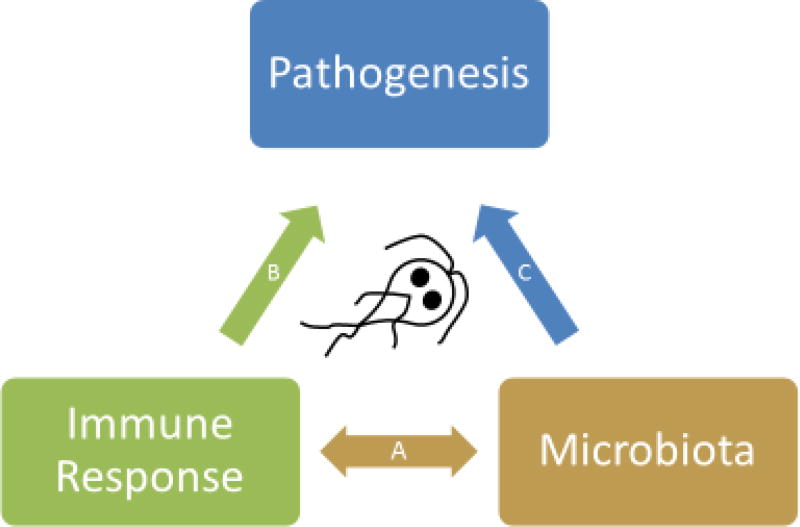
Figure 1. A model for the intersection between Immune Response, Microbiota, and Pathogenesis during Giardia infections
A) Immune response and composition of the intestinal microbiota are highly linked to each other. The composition of the microbiota influences T cell development (e.g. segmented filamentous bacteria promote Th17 responses while Clostridia promote regulatory T cell development). Conversely, immune responses modulate the microbiota composition through numerous effector mechanisms such as anti-microbial peptides, mucous, nitric oxide (NO) and IgA. B) Several elements of Giardia pathogenesis have been shown to depend on immune responses activated by infection. These include anti-parasitic effects of anti-microbial peptides, NO and IgA. Smooth muscle hypercontractility and intestinal hypermotility also depend on adaptive immune responses as well as mast cell responses, and disaccahridase deficiency is driven by activated CD8+ T cells. C) Commensal microbiota also contribute to the pathology observed during, and possibly after, Giardia infections. In addition to contributing to activation of the immune response during infections, dysbiosis of the gut microbiome may also directly mediate some of the nutrient malabsorption observed during infections and also the long-term sequelae, such as post-infectious irritable bowel syndrome.
Figure 2
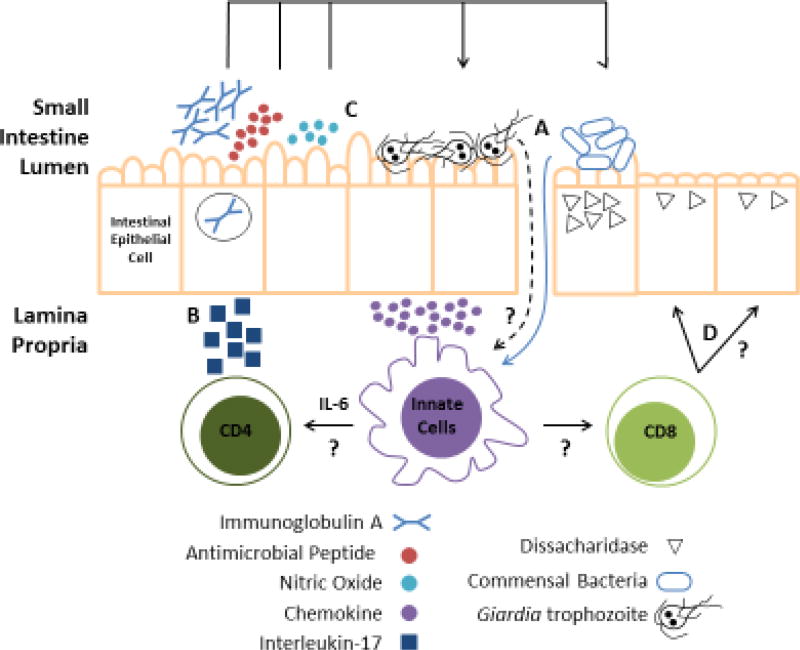
Figure 2. The multiple roles of intestinal epithelial cells during Giardia infections
The intestinal epithelium normally provides a secure barrier against invading microbes. (A) During Giardia colonization of the small intestine, permeability increases resulting in the translocation of intact microbes and/or microbial antigens into the lamina propria. Innate immune cells (e.g., macrophages and dendritic cells) become activated and initiate the downstream adaptive responses. Which host receptors and parasite ligands serve to activate these responses are unclear, and other than IL-6, the cytokines which drive development of adaptive responses are unknown. (B) Adaptive responses include IgA production by B cells, IL-17 production by CD4+ Th17 cells and activation of CD8+ T cells, which contribute to protection or immunopathology as described in the text. In response to IL-17, intestinal epithelial cells (IECs) secrete antimicrobial peptides and transport IgA into the lumen where they can aid in Giardia protection, but also impact the commensal microbes. (C) Additionally, in response to Giardia, IECs can produce nitric oxide to aid in protective immunity and also release chemokines to recruit innate immune cells. (D) Activation of CD8+ T cells induces pathological symptoms including microvilli shortening and reduced dissacharidase activity through an unknown mechanism.

References

    1. Adam RD. Biology of Giardia lamblia. Clin Microbiol Rev. 2001;14:447–475. - PMC - PubMed
    1. Monis PT, et al. Variation in Giardia: towards a taxonomic revision of the genus. Trends Parasitol. 2009;25:93–100. - PubMed
    1. Zahedi A, et al. Molecular typing of Giardia duodenalis in humans in Queensland - first report of Assemblage E. Parasitology. 2017:1–8. - PubMed
    1. Roxstrom-Lindquist K, et al. Giardia immunity--an update. Trends Parasitol. 2006;22:26–31. - PubMed
    1. Halliez MC, Buret AG. Extra-intestinal and long term consequences of Giardia duodenalis infections. World J Gastroenterol. 2013;19:8974–8985. - PMC - PubMed