


Exposure to agricultural pesticide impairs visual lateralization in a larval coral reef fish
- PMID: 28831109
- PMCID: PMC5567261
- DOI: 10.1038/s41598-017-09381-0
Exposure to agricultural pesticide impairs visual lateralization in a larval coral reef fish
Abstract
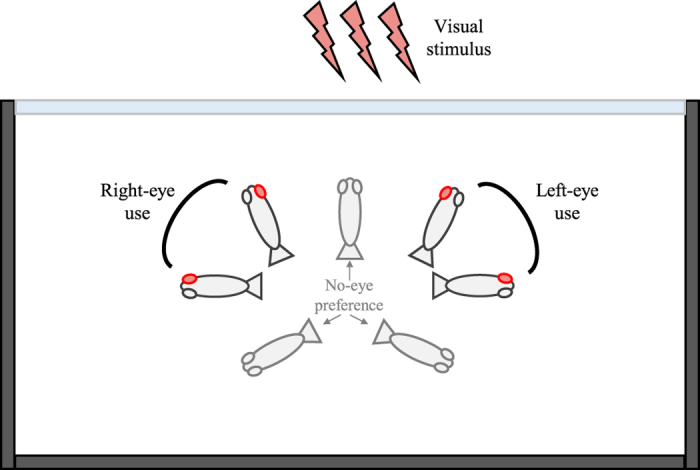
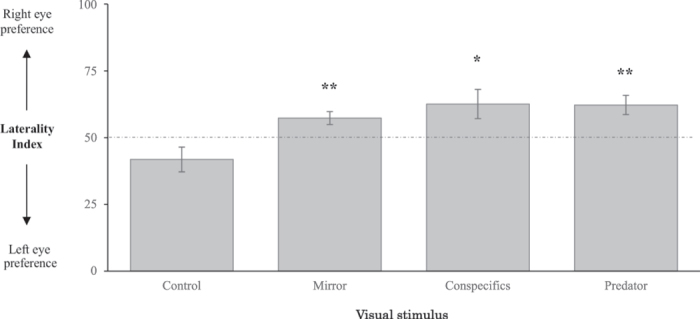
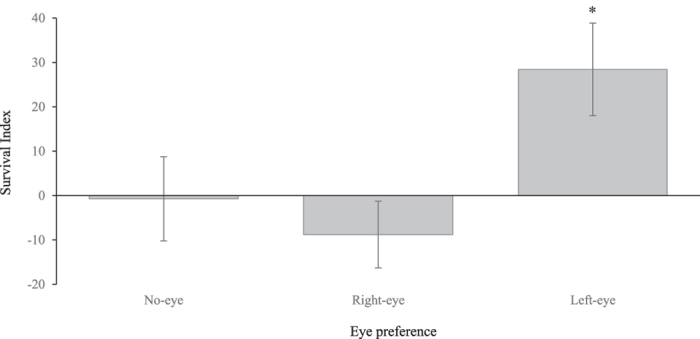
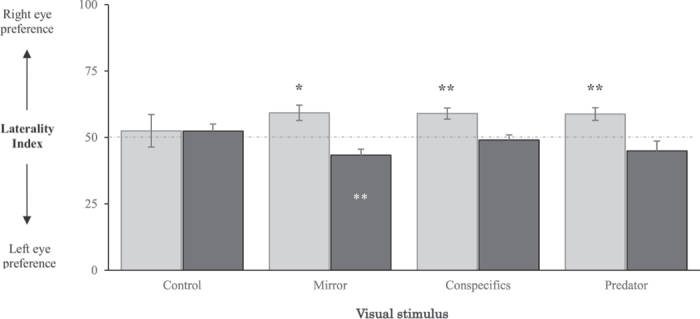
Lateralization, i.e. the preferential use of one side of the body, may convey fitness benefits for organisms within rapidly-changing environments, by optimizing separate and parallel processing of different information between the two brain hemispheres. In coral reef-fishes, the movement of larvae from planktonic to reef environments (recruitment) represents a major life-history transition. This transition requires larvae to rapidly identify and respond to sensory cues to select a suitable habitat that facilitates survival and growth. This 'recruitment' is critical for population persistence and resilience. In aquarium experiments, larval Acanthurus triostegus preferentially used their right-eye to investigate a variety of visual stimuli. Despite this, when held in in situ cages with predators, those larvae that previously favored their left-eye exhibited higher survival. These results support the "brain's right-hemisphere" theory, which predicts that the right-eye (i.e. left-hemisphere) is used to categorize stimuli while the left-eye (i.e. right-hemisphere) is used to inspect novel items and initiate rapid behavioral-responses. While these experiments confirm that being highly lateralized is ecologically advantageous, exposure to chlorpyrifos, a pesticide often inadvertently added to coral-reef waters, impaired visual-lateralization. This suggests that chemical pollutants could impair the brain function of larval fishes during a critical life-history transition, potentially impacting recruitment success.
Conflict of interest statement
The authors declare that they have no competing interests.
Figures
References
-
- Rosa Salva O, Regolin L, Mascalzoni E, Vallortigara G. Cerebral and Behavioural Asymmetries in Animal Social Recognition. Comp. Cogn. Behav. Rev. 2012;7:110–138. doi: 10.3819/ccbr.2012.70006. - DOI
Publication types
MeSH terms
Substances
LinkOut - more resources
Full Text Sources
Other Literature Sources
Medical
