


Predictive value of respiratory symptoms for the diagnosis of pollen-induced seasonal asthma among children and adults in Inner Mongolia
- PMID: 28831262
- PMCID: PMC5552151
- DOI: 10.2147/TCRM.S138355
Predictive value of respiratory symptoms for the diagnosis of pollen-induced seasonal asthma among children and adults in Inner Mongolia
Abstract
Background: The diagnosis of asthma is made on the basis of variable respiratory symptoms and supported by objective evidence of variable airflow limitation. However, spirometry and bronchoprovocation tests may not be routinely available in resource-scarce settings or in the context of large-scale epidemiological studies. There is a gap in knowledge about the predictive value of respiratory symptoms for the diagnosis of pollen-induced asthma.
Objective: The aim of this study was to investigate the predictive value of self-reported respiratory symptoms for diagnosing pollen-induced asthma.
Patients and methods: We recruited 1,161 patients with respiratory symptoms who presented to the respiratory medicine outpatient clinic of two central hospitals in Inner Mongolia during the pollen season of July-September 2015. All patients were interviewed by a respiratory physician and completed a questionnaire survey, lung function tests and skin prick tests for common inhaled allergens.
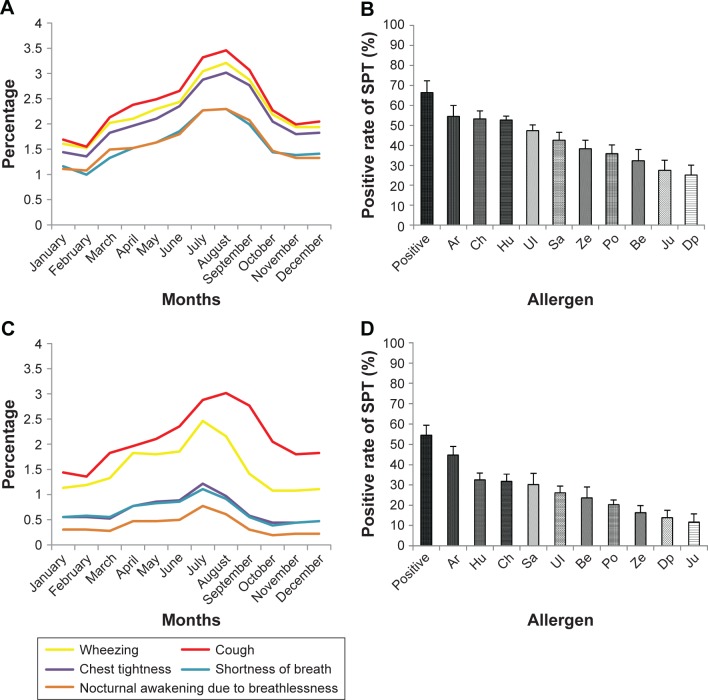
Results: A total of 392 patients (33.8%) were diagnosed with asthma and 292 (25.2%, 160 adults, 132 children) with pollen-induced asthma. Respiratory symptoms of cough, wheezing, dyspnea, chest pain and nocturnal awakenings due to breathlessness were all associated with increased odds of being diagnosed with pollen-induced asthma, with cough being the most common symptom in both adults and children, giving a sensitivity of 90.6% in adults and 88.6% in children. Wheezing was the most specific symptom (78% and 89.5% in adults and children, respectively) compared to other symptoms. Overall, the positive predictive value of respiratory symptoms was poor for diagnosing pollen-induced asthma, with the exception of wheezing in children which had a high positive predictive value of 72.7%.
Conclusion: Cough was the predominant symptom in adults and children with pollen-induced asthma. Wheezing was a reliable predictor of pollen-induced asthma in children. In adults, respiratory symptoms were not sufficiently reliable for diagnosing pollen-induced asthma.
Keywords: asthma symptoms; cough; pollen-induced asthma; shortness of breath; wheezing.
Conflict of interest statement
Disclosure The authors report no conflicts of interest in this work.
Figures
References
-
- Masoli M, Fabian D, Holt S, Global Initiative for Asthma (GINA) Program The global burden of asthma: executive summary of the GINA dissemination committee report. Allergy. 2004;59(5):469–478. - PubMed
-
- World Health Organization . Global Surveillance, Prevention and Control of Chronic Respiratory Diseases: A Comprehensive Report. Geneva: World Health Organization; 2007.
-
- Loftus PA, Wise SK. Epidemiology and economic burden of asthma. Int Forum Allergy Rhinol. 2015;5(suppl 1):S7–S10. - PubMed
-
- Braman SS. The global burden of asthma. Chest. 2006;130(1 suppl):S4–S12. - PubMed
LinkOut - more resources
Full Text Sources
Other Literature Sources
Miscellaneous
