Review
. 2017:2017:8201672.
doi: 10.1155/2017/8201672. Epub 2017 Aug 2.

New Frontiers in Genetics, Gut Microbiota, and Immunity: A Rosetta Stone for the Pathogenesis of Inflammatory Bowel Disease

Affiliations
Review

New Frontiers in Genetics, Gut Microbiota, and Immunity: A Rosetta Stone for the Pathogenesis of Inflammatory Bowel Disease

Mingxia Zhou et al. Biomed Res Int. 2017.

Abstract

Inflammatory bowel disease (IBD), which encompasses ulcerative colitis (UC) and Crohn's disease (CD), is a complicated, uncontrolled, and multifactorial disorder characterized by chronic, relapsing, or progressive inflammatory conditions that may involve the entire gastrointestinal tract. The protracted nature has imposed enormous economic burdens on patients with IBD, and the treatment is far from optimal due to the currently limited comprehension of IBD pathogenesis. In spite of the exact etiology still remaining an enigma, four identified components, including personal genetic susceptibility, external environment, internal gut microbiota, and the host immune response, are responsible for IBD pathogenesis, and compelling evidence has suggested that IBD may be triggered by aberrant and continuing immune responses to gut microbiota in genetically susceptibility individuals. The past decade has witnessed the flourishing of research on genetics, gut microbiota, and immunity in patients with IBD. Therefore, in this review, we will comprehensively exhibit a series of novel findings and update the major advances regarding these three fields. Undoubtedly, these novel findings have opened a new horizon and shed bright light on the causality research of IBD.


Figures
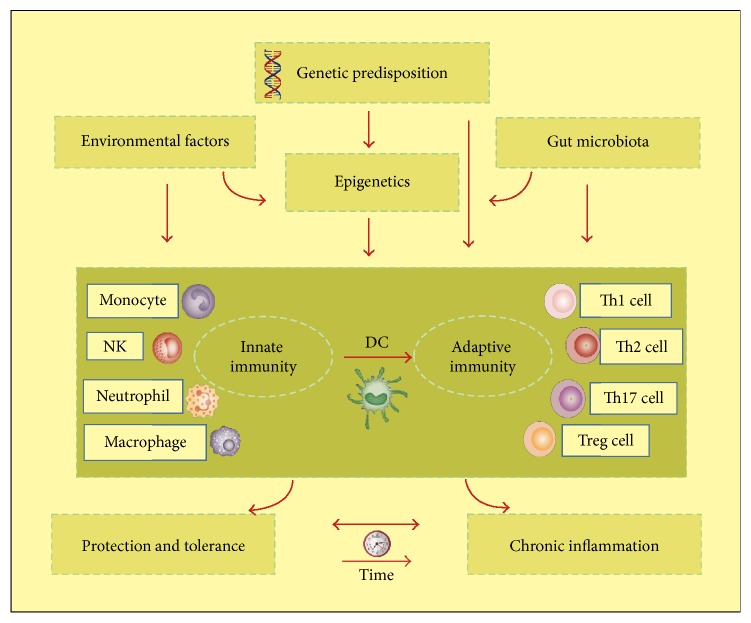
Figure 1
Figure 1
Roles for genetics and epigenetics in IBD pathogenesis. Epigenetics, acting as the mediators of genetic and environmental factors, along with genetic, external environmental factors and internal gut microbiota, participate in motivating the host immune system. The consequence of the following immune response is whether insults tolerance or chronic inflammation initiation and development occur.
Figure 2
Figure 2
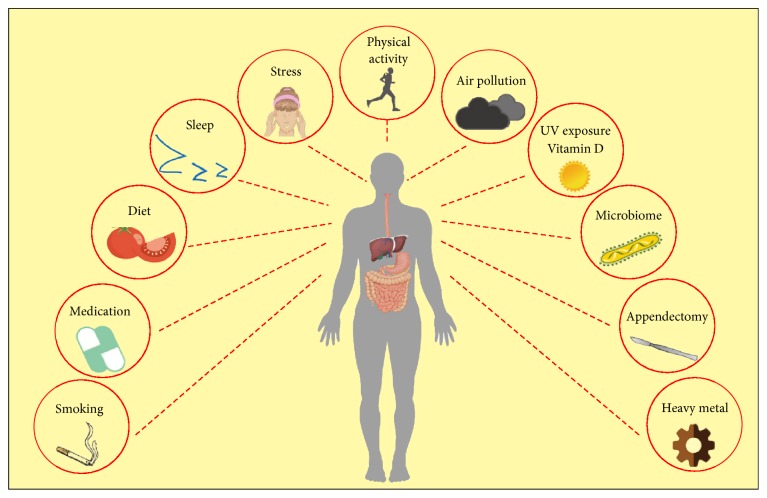
Environmental risk factors involved in IBD pathogenesis. External environmental factors such as air pollution, UV and heavy metal exposure, smoking, and diet, together with some internal environmental factors such as gut microbiota dysbiosis and appendectomy, play significant roles in the development of IBD.
Figure 3
Figure 3
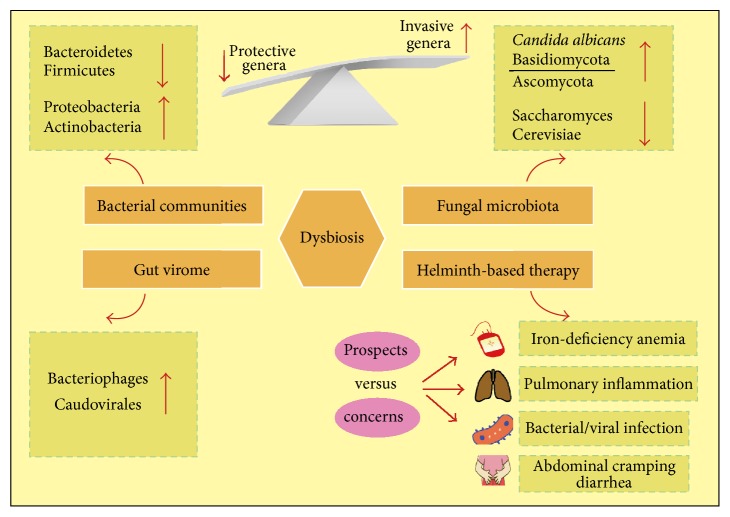
The dysbiosis of gut microbiota on the intestinal mucosal surface is characterized by low richness of protective genera but high richness of invasive genera. The altered profiles and functions of intestinal bacteria, fungi, and viruses under conditions of dysbiosis contribute to IBD pathogenesis. The latest concerns and potential risks about Helminth-based therapy are also summarized in this figure.
Figure 4
Figure 4
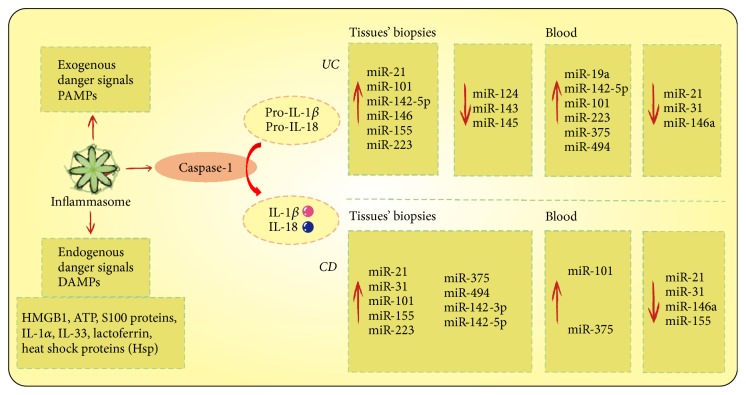
Inflammasomes recognize various exogenous danger signals (PAMPs) and endogenous danger signals (DAMPs) and respond by activating caspase-1 and promoting the production of IL-1β and IL-18. The dysregulated expression of tissue and blood miRNAs and insufficient miRNA-mediated suppression could lead to an excessive immune response and inflammation, and these differential expression miRNAs may help distinguish between UC and CD and provide potential targets for early detection and therapy.

References

    1. Ng S. C., Tang W., Ching J. Y., et al. Incidence and phenotype of inflammatory bowel disease based on results from the Asia-Pacific Crohn's and colitis epidemiology study. Gastroenterology. 2013;145(1):158–165.e2. doi: 10.1053/j.gastro.2013.04.007. - DOI - PubMed
    1. Park S. J., Kim W. H., Cheon J. H. Clinical characteristics and treatment of inflammatory bowel disease: a comparison of Eastern and Western perspectives. World Journal of Gastroenterology. 2014;20(33):11525–11537. doi: 10.3748/wjg.v20.i33.11525. - DOI - PMC - PubMed
    1. Kaplan G. G. The global burden of IBD: from 2015 to 2025. Nature Reviews Gastroenterology & Hepatology. 2015;12(12):720–727. doi: 10.1038/nrgastro.2015.150. - DOI - PubMed
    1. Basso P. J., Fonseca M. T., Bonfá G., et al. Association among genetic predisposition, gut microbiota, and host immune response in the etiopathogenesis of inflammatory bowel disease. Brazilian Journal of Medical and Biological Research. 2014;47(9):727–737. doi: 10.1590/1414-431x20143932. - DOI - PMC - PubMed
    1. Dixon L. J., Kabi A., Nickerson K. P., McDonald C. Combinatorial effects of diet and genetics on inflammatory bowel disease pathogenesis. Inflammatory Bowel Diseases. 2015;21(4):912–922. doi: 10.1097/MIB.0000000000000289. - DOI - PMC - PubMed

MeSH terms

LinkOut - more resources