. 2018 Feb;122(2):208-213.
doi: 10.1111/bcpt.12875. Epub 2017 Nov 13.

Evaluation of Post-Mortem Effects on Global Brain DNA Methylation and Hydroxymethylation

Affiliations

Evaluation of Post-Mortem Effects on Global Brain DNA Methylation and Hydroxymethylation

Louise K Sjöholm et al. Basic Clin Pharmacol Toxicol. 2018 Feb.

Abstract

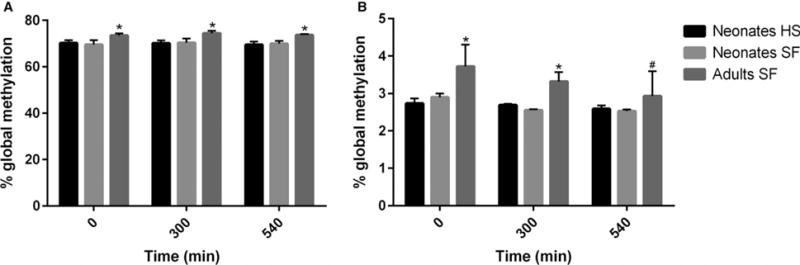
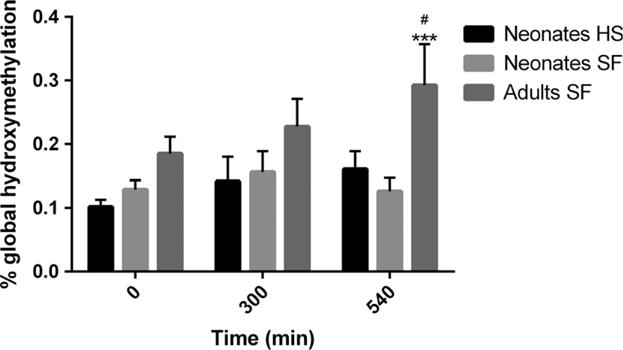
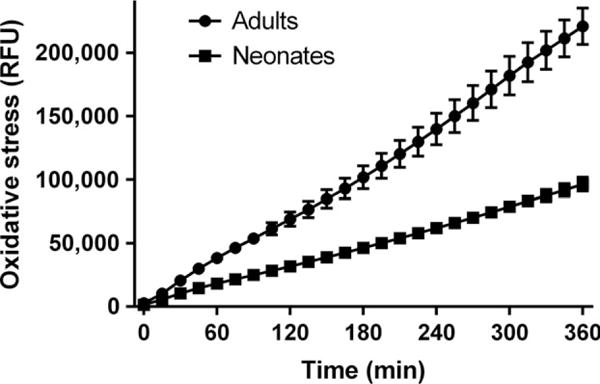
The number of epigenetic studies on brain functions and diseases are dramatically increasing, but little is known about the impact of post-mortem intervals and post-sampling effects on DNA modifications such as 5-methylcytosine (5mC) and 5-hydroxymethylcytosine (5hmC). Here, we examined post-mortem-induced changes in global brain 5mC and 5hmC levels at post-mortem intervals up to 540 min., and studied effects of tissue heat stabilization, using LUMA and ELISA. The global 5mC and 5hmC levels were generally higher in the cerebellum of adult rats than neonates. When measured by ELISA, the global 5mC content in adults, but not neonates, decreased with the post-mortem interval reaching a significantly lower level in cerebellum tissue at the post-mortem interval 540 min. (2.9 ± 0.7%; mean ± S.E.M.) compared to control (3.7 ± 0.6%). The global 5hmC levels increased with post-mortem interval reaching a significantly higher level at 540 min. (0.29 ± 0.06%) compared to control (0.19 ± 0.03%). This suggests that the post-mortem interval may confound 5mC and 5hmC analysis in human brain tissues as the post-mortem handling could vary substantially. The reactive oxygen species (ROS) level in cerebellum also increased over time, in particular in adults, and may be part of the mechanism that causes the observed post-mortem changes in 5mC and 5hmC. The global 5mC and 5hmC states were unaffected by heat stabilization, allowing analysis of tissues that are stabilized to preserve more labile analytes. Further studies in human samples are needed to confirm post-mortem effects on DNA methylation/hydroxymethylation and elucidate details of the underlying mechanisms.


Figures

Fig. 1
Fig. 1
Effects of post-mortem interval and tissue heat stabilization (HS) on global DNA methylation in cerebellum measured by LUMA (A) and ELISA (B). To study the effect of post-mortem interval, the cerebellum from three groups of neonatal and adult animals were kept at room temperature for 0–540 min. before they were snap-frozen (SF) and stored at −80°C. To determine the effect of HS, the cerebellum from three groups of neonatal animals were instantly heat-stabilized and kept at room temperature for 0–540 min. before storage. Values represent mean ± S.E.M. *p < 0.05 compared with the neonatal SF group at respective time-points. #p < 0.05 compared with the adult 0-min. group. No differences were demonstrated between the neonatal SF and HS groups (ANOVA followed by Fisher’s LSD test).
Fig. 2
Fig. 2
Effects of post-mortem interval and tissue heat stabilization (HS) on global 5hmC levels in cerebellum. To study the effect of post-mortem interval, the cerebellum from three groups of neonatal and adult animals were kept at room temperature for 0–540 min. before they were snap-frozen (SF) and stored at −80°C. To determine the effect of HS, the cerebellum from three groups of neonatal animals were instantly heat-stabilized and kept at room temperature for 0–540 min. before storage. Values represent mean ± S.E.M. ***p < 0.001, compared with the neonate SF group at respective time-points. #p < 0.05 compared with the adult 0-min. group. No differences were demonstrated between the neonatal SF and HS groups (ANOVA followed by Fisher’s LSD test).
Fig. 3
Fig. 3
Oxidative stress was measured as relative fluorescence units (RFU) over time in cerebellum homogenates using the CM-H2DCFDA probe as an indicator for ROS. An ongoing production of oxidative stress was demonstrated in neonatal samples, and an even more distinct production in adults. Values represent mean ± S.E.M.

References

    1. Feinberg AP. Phenotypic plasticity and the epigenetics of human disease. Nature. 2007;447:433–40. - PubMed
    1. Karlsson O, Baccarelli AA. Environmental health and long non-coding RNAs. Curr Environ Health Rep. 2016;31:178–87. - PMC - PubMed
    1. Fasolino M, Liu S, Wang Y, Zhou Z. Distinct cellular and molecular environments support aging-related DNA methylation changes in the substantia nigra. Epigenomics. 2017;9:21–31. - PMC - PubMed
    1. Stefanska B, MacEwan DJ. Epigenetics and pharmacology. Br J Pharmacol. 2015;172:2701–4. - PMC - PubMed
    1. Baccarelli A, Wright R, Bollati V, Litonjua A, Zanobetti A, Taran-tini L, et al. Ischemic heart disease and stroke in relation to blood DNA methylation. Epidemiology. 2010;21:819–28. - PMC - PubMed

LinkOut - more resources