Comment
. 2017 Oct;9(10):1331-1333.
doi: 10.15252/emmm.201708194.

Thwarting endogenous stress: BRCA protects against aldehyde toxicity

Affiliations
Comment

Thwarting endogenous stress: BRCA protects against aldehyde toxicity

Arnab Ray Chaudhuri et al. EMBO Mol Med. 2017 Oct.

Abstract

Homologous recombination (HR) and the Fanconi Anemia (FA) pathways constitute essential repair pathways for DNA damage, which includes DNA double‐stranded breaks (DSB) and inter‐strand cross‐links (ICL), respectively. Germline mutations affecting a single copy of the HR factors BRCA1 and BRCA2 predispose individuals to cancers of the breast, ovary, prostate, and pancreas. Cells deficient for BRCA proteins display high levels of genome instability due to defective repair of endogenous DSBs and are also exquisitely sensitive to DNA‐damaging agents. In addition to their roles in repair of DSBs and ICLs, HR and FA proteins have a genetically separable function in the protection of stalled DNA replication forks from nuclease‐mediated degradation (Schlacher et al, 2012). Although it has been hypothesized that loss of functional HR and ICL repair is the primary cause of cancer in BRCA‐ and FA‐deficient patients (Prakash et al, 2015), the contribution of replication fork instability associated with the degradation of nascent DNA remains unclear. Two recent papers explain how endogenous toxins render cells vulnerable to genomic instability, which explains how the BRCA/FA pathway suppresses tumorigenesis (Tacconi et al, 2017; Tan et al, 2017).


Figures

Figure 1
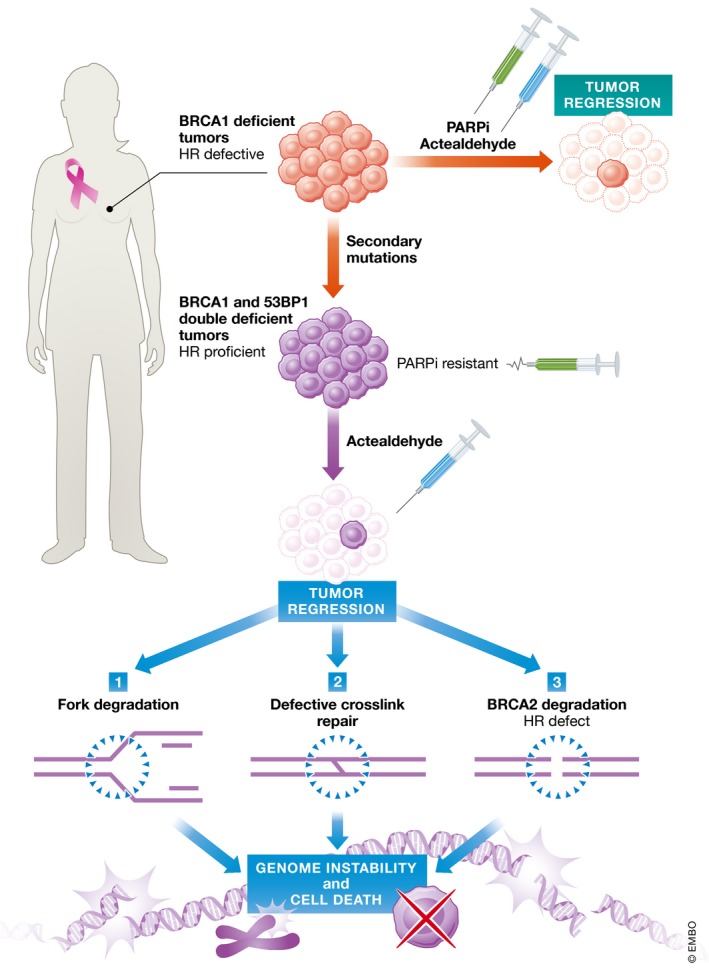
Figure 1. Model for aldehyde sensitivity in BRCA‐deficient tumors
Breast tumors with BRCA1 mutations are sensitive to DNA‐damaging agents like PARP inhibitors (PARPi) and acetaldehyde due to defective homologous recombination (HR). However, these tumors have a high propensity to develop resistance to drugs by acquiring secondary mutations in BRCA1 or in factors like 53BP1 and that restore HR. Tan et al (2017) show that these PARPi‐resistant, HR‐proficient tumors are sensitive to acetaldehyde treatments. The molecular mechanisms underlying this sensitivity can be explained by three mutually non‐exclusive mechanisms: (1) BRCA1 and 53BP1 double mutants are still defective for replication fork protection although they are HR proficient. This could result in genome instability and loss of cellular viability. (2) BRCA1‐ and 53BP‐deficient cells are defective for cross‐link repair as BRCA1 has roles in the repair of cross‐links upstream of HR. (3) Acetaldehyde treatments could result in selective degradation of BRCA2 proteins in these HR‐proficient cells rendering them HR deficient and thus making them hypersensitive to acetaldehyde treatments. These mechanisms in concert could account for increased genome instability and cell death observed in the HR‐proficient PARPi‐resistant tumors.

Comment on

References

    1. Bunting SF, Callen E, Kozak ML, Kim JM, Wong N, Lopez‐Contreras AJ, Ludwig T, Baer R, Faryabi RB, Malhowski A et al (2012) BRCA1 functions independently of homologous recombination in DNA interstrand crosslink repair. Mol Cell 46: 125–135 - PMC - PubMed
    1. Cai Q, Wu J, Cai Q, Chen EZ, Jiang ZY (2015) Association between Glu504Lys polymorphism of ALDH2 gene and cancer risk: a meta‐analysis. PLoS One 10: e0117173 - PMC - PubMed
    1. Hartford SA, Chittela R, Ding X, Vyas A, Martin B, Burkett S, Haines DC, Southon E, Tessarollo L, Sharan SK (2016) Interaction with PALB2 is essential for maintenance of genomic integrity by BRCA2. PLoS Genet 12: e1006236 - PMC - PubMed
    1. Langevin F, Crossan GP, Rosado IV, Arends MJ, Patel KJ (2011) Fancd2 counteracts the toxic effects of naturally produced aldehydes in mice. Nature 475: 53–58 - PubMed
    1. Lord CJ, Ashworth A (2013) Mechanisms of resistance to therapies targeting BRCA‐mutant cancers. Nat Med 19: 1381–1388 - PubMed