


Youth Participatory Action Research (YPAR) 2.0: how technological innovation and digital organizing sparked a food revolution in East Oakland
- PMID: 28835731
- PMCID: PMC5564687
- DOI: 10.1080/09518398.2016.1201609
Youth Participatory Action Research (YPAR) 2.0: how technological innovation and digital organizing sparked a food revolution in East Oakland
Abstract
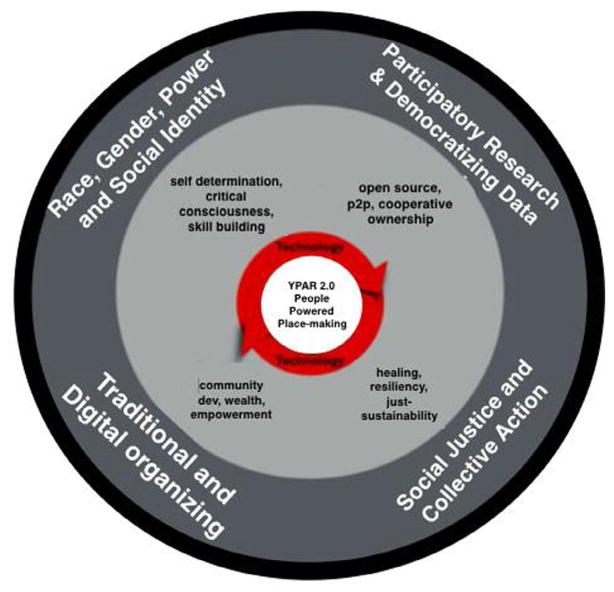
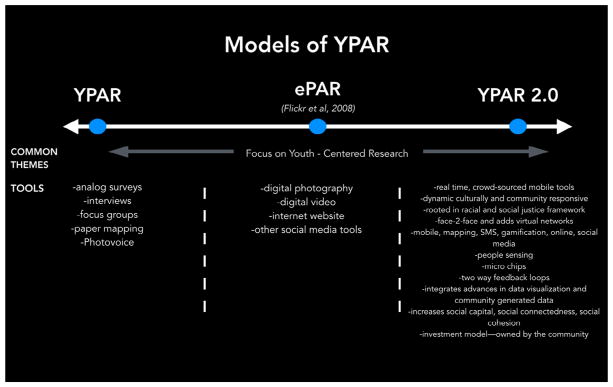
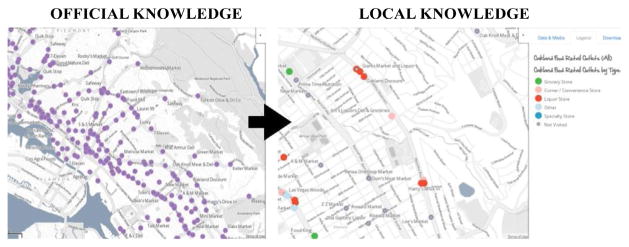
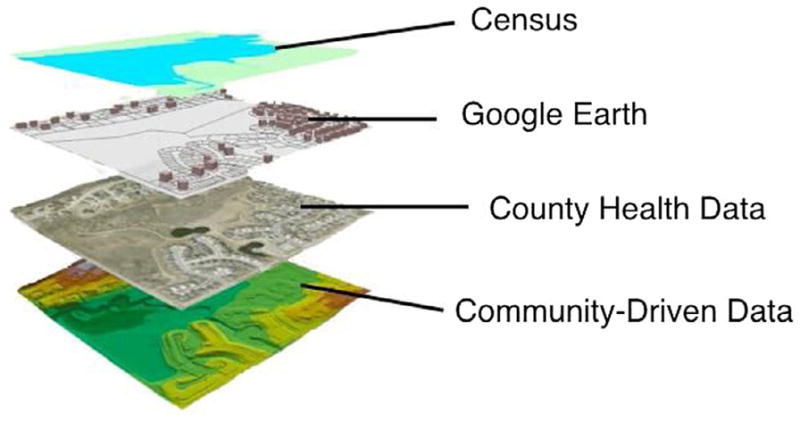
This article argues that technological innovation is transforming the flow of information, the fluidity of social action, and is giving birth to new forms of bottom up innovation that are capable of expanding and exploding old theories of reproduction and resistance because 'smart mobs', 'street knowledge', and 'social movements' cannot be neutralized by powerful structural forces in the same old ways. The purpose of this article is to develop the concept of YPAR 2.0 in which new technologies enable young people to visualize, validate, and transform social inequalities by using local knowledge in innovative ways that deepen civic engagement, democratize data, expand educational opportunity, inform policy, and mobilize community assets. Specifically this article documents how digital technology (including a mobile, mapping and SMS platform called Streetwyze and paper-mapping tool Local Ground) - coupled with 'ground-truthing' - an approach in which community members work with researchers to collect and verify 'public' data - sparked a food revolution in East Oakland that led to an increase in young people's self-esteem, environmental stewardship, academic engagement, and positioned urban youth to become community leaders and community builders who are connected and committed to health and well-being of their neighborhoods. This article provides an overview of how the YPAR 2.0 Model was developed along with recommendations and implications for future research and collaborations between youth, teachers, neighborhood leaders, and youth serving organizations.
Keywords: CPBR; People sensors; Youth Participatory Action Research (YPAR); citizen science; digital organizing; environmental justice; location-based services.
Conflict of interest statement
Disclosure statement No potential conflict of interest was reported by the author.
Figures


References
-
- Adelman L. Unnatural causes: Is inequality making us sick? Preventing Chronic Disease. 2007;4(4)
-
- Agyeman J. Just sustainabilities: Development in an unequal world. Cambridge, MA: MIT Press; 2003.
-
- Akom AA. Ameritocracy and infra-racial racism: Racializing social and cultural reproduction theory in the twenty-first century. Race Ethnicity and Education. 2008;11:205–230.
-
- Akom AA. Critical race theory meets participatory action research: Creating a community of youth as public intellectuals. In: Ayers W, Quinn T, Stovall D, editors. Social justice in education handbook. New York, NY: Erlbaum Press; 2009a. pp. 508–521.
-
- Akom AA. Research for liberation: Du Bois, the Chicago school, and the development of black emancipatory action research. In: Anderson NS, Kharem H, editors. Education as a practice of freedom: African American educational thought and ideology. New York, NY: Lexington Press; 2009b. pp. 193–212.
Grants and funding
LinkOut - more resources
Full Text Sources
Other Literature Sources