. 2017 Aug 24;7(1):9345.
doi: 10.1038/s41598-017-09764-3.

Combinatorial bioactive botanicals re-sensitize tamoxifen treatment in ER-negative breast cancer via epigenetic reactivation of ERα expression

Affiliations

Combinatorial bioactive botanicals re-sensitize tamoxifen treatment in ER-negative breast cancer via epigenetic reactivation of ERα expression

Yuanyuan Li et al. Sci Rep. .

Abstract

Conventional cancer prevention has primarily focused on single chemopreventive compounds that may not be sufficiently efficacious. We sought to investigate potential combinatorial effects of epigenetic bioactive botanicals including epigallocatechin-3-gallate (EGCG) in green tea polyphenols (GTPs) and sulforaphane (SFN) in broccoli sprouts (BSp) on neutralizing epigenetic aberrations in estrogen receptor-α (ERα) leading to enhanced anti-hormone therapeutic efficacy in ERα-negative breast cancer. Our results showed that this combinatorial treatment re-sensitized ERα-dependent cellular inhibitory responses to an estrogen antagonist, tamoxifen (TAM), via at least in part, epigenetic reactivation of ERα expression in ERα-negative breast cancer cells. Further in vivo studies revealed the combinatorial diets of GTPs and BSp significantly inhibited breast tumor growth in ERα-negative mouse xenografts, especially when combined with TAM treatment. This novel treatment regimen can lead to remodeling of the chromatin structure by histone modifications and recruitment changes of transcriptional factor complex in the ERα promoter thereby contributing to ERα reactivation and re-sensitized chemotherapeutic efficacy of anti-hormone therapy. Our studies indicate that combinatorial bioactive botanicals from GTPs and BSp are highly effective in inhibiting ERα-negative breast cancer due at least in part to epigenetic reactivation of ERα, which in turn increases TAM-dependent anti-estrogen chemosensitivity in vitro and in vivo.


Conflict of interest statement

The authors declare that they have no competing interests.

Figures
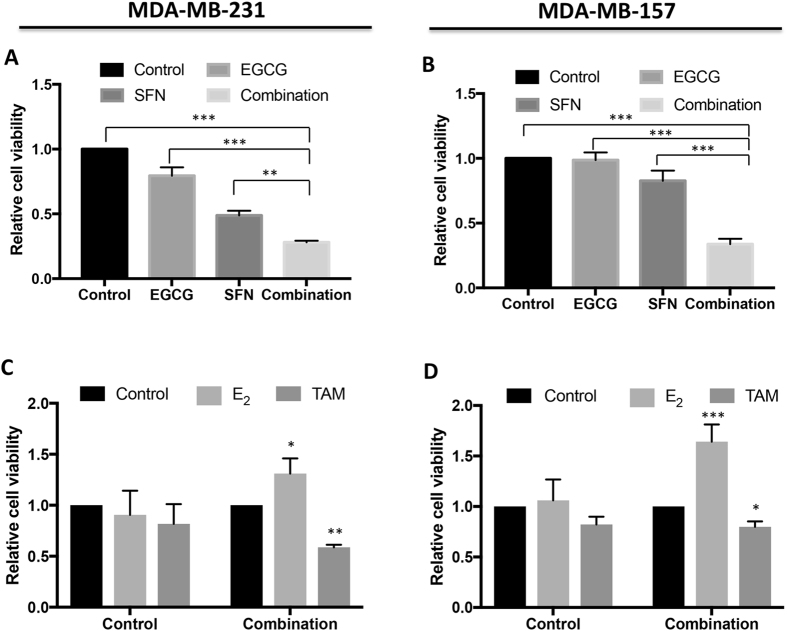
Figure 1
Figure 1
Combinatorial treatment with EGCG and SFN induced growth inhibitory effects in ERα-negative breast cancer cells. (A and B) Graphic presentation of relative cellular viability in response to treatments with EGCG and SFN, alone or in combination. ERα-negative breast cancer MDA-MB-231 (left panel) and/or MDA-MB-157 cells (right panel) were plated in 96-well plates in triplicate and treated with EGCG (20 μm) and SFN (10 μm), alone or combination for 3 days. C and D, Cellular viability in response to E2 and tamoxifen (TAM). EGCG and SFN-pretreated cells were treated with or without 10 nM of E2 or 1 µM TAM for 1 day. Control cells were grown in parallel with the treated cells but received vehicle DMSO. Data were in triplicate from three independent experiments and normalized to the control. Columns, mean; Bars, standard deviation, SD; *p < 0.05; **p < 0.01; ***p < 0.001, significantly different from the indicated comparisons.
Figure 2
Figure 2
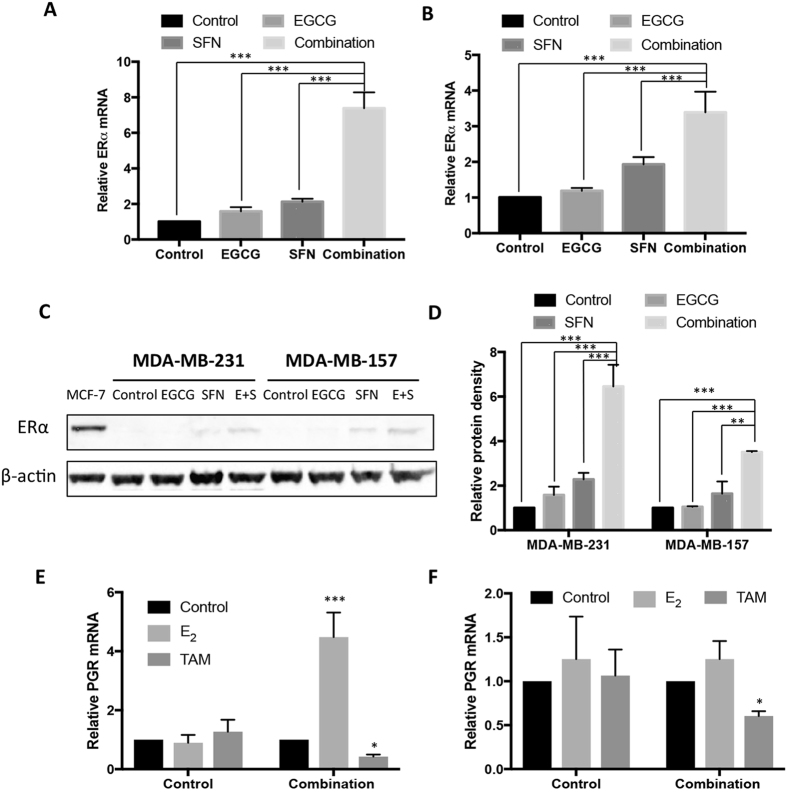
Combined treatment with EGCG and SFN induced synergistic ERα expression in ERα-negative breast cancer cells. ERα-negative breast cancer MDA-MB-231 (A) and MDA-MB-157 cells (B) were treated with EGCG and SFN, alone or combination as indicated above and relative ERα mRNA expression was analyzed by quantitative real-time PCR. (C) Protein expression of ERα in MDA-MB-231 and MDA-MB-157 cells. MCF-7 cells served as a positive control. The full-length blots were shown in the Fig. S4. (D) Protein quantification for (C). (E) and (F) mRNA expression changes of ER-responsive downstream gene, progesterone receptor (PGR), in response to E2 or TAM stimulation in MDA-MB-231 (E) and MDA-MB-157 cells (F). Data were in triplicate from three independent experiments and normalized to internal control and calibrated to levels in untreated samples. E + S, EGCG and SFN in combination; Columns, mean; Bars, SD; *p < 0.05; **p < 0.01; ***p < 0.001, significantly different from the indicated comparisons.
Figure 3
Figure 3
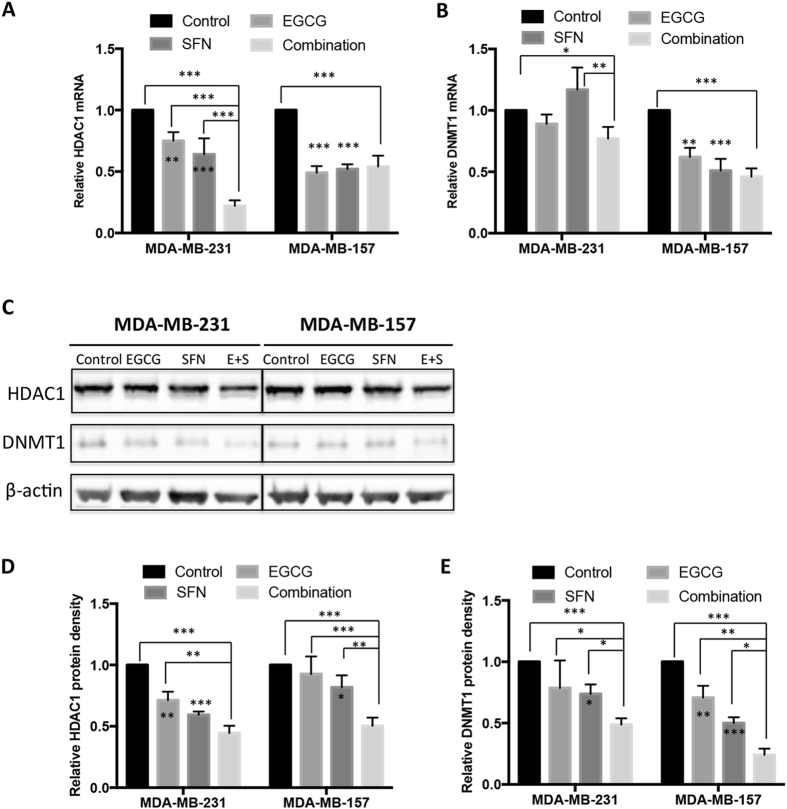
Gene expressions of HDAC1 and DNMT1 by EGCG and/or SFN treatment. Quantitative real-time PCR was performed to measure relative transcription of HDAC1 (A) and DNMT1 (B) in MDA-MB-231 cells and MDA-MB-157 cells. (C) Protein expression of HDAC1 and DNMT1 in MDA-MB-231 and MDA-MB-157 cells. β-actin was loaded as an internal control. The full-length blots were shown in the Supplementary Information. (D) HDAC1 protein quantification. (E) DNMT1 protein quantification. Data were in triplicate from three independent experiments and normalized to internal control and calibrated to levels in untreated samples. E + S, EGCG and SFN in combination; Columns, mean; Bars, SD; *p < 0.05; **p < 0.01; ***p < 0.001, significantly different from control or the indicated comparisons.
Figure 4
Figure 4
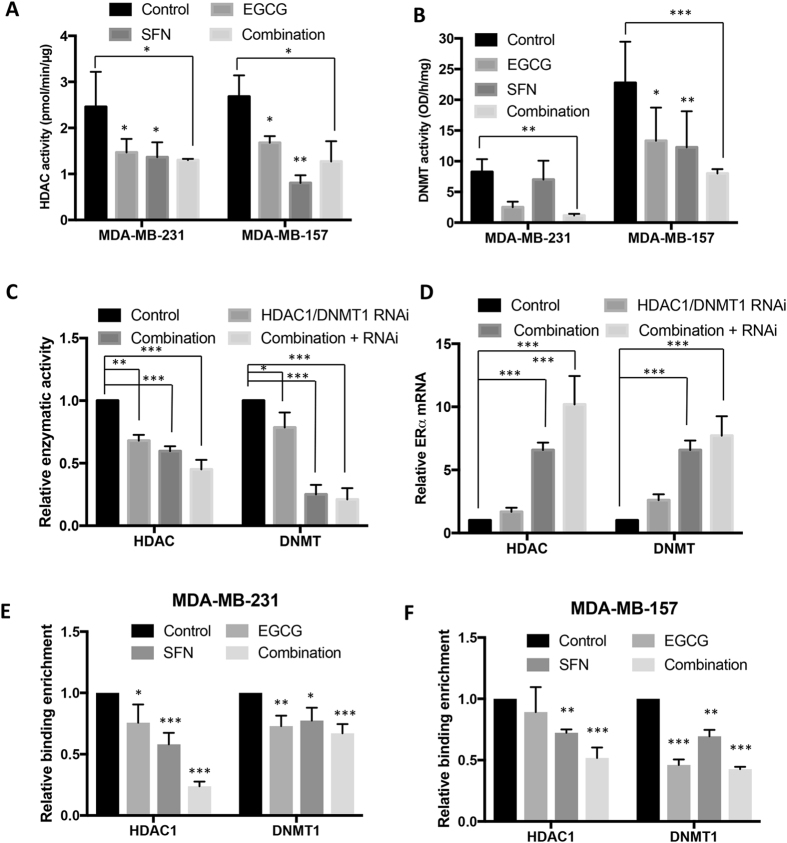
Combinatorial treatment with EGCG and SFN caused ERα expression changes through regulation of HDAC1 and DNMT1. (A) HDAC enzymatic activity. (B) DNMTs enzymatic activity. Nuclear proteins from MDA-MB-231 and MDA-MB-157 cells were extracted after the treatment as described above. The HDAC and DNMT activity assays were performed according to the manufacturer’s protocols. The values of enzymatic activities of HDACs and DNMTs are the means of three independent experiments. (C) and (D) EGCG and SFN-induced ERα transcriptional activation through affecting epigenetic pathways via directly influencing expression and enzymatic activities of HDAC and DNMT. (C) Relative HDAC enzymatic activity (left panel) and DNMT enzymatic activity (right panel) when expressions of HDAC1 or DNMT1 were reduced. (D) Relative ERα mRNA expression. Combination-treated or untreated MDA-MB-231 cells were transfected with either HDAC1 or DNMT1 siRNA to inhibit related gene expression and extracted nuclear protein or RNA after three days of transfection. (E) and (F) binding abilities of HDAC1 and DNMT1 in the ERα promoter were determined by ChIP assay in the MDA-MB-231 (E) and MDA-MB-157 cells (F) in response to EGCG and/or SFN treatment. Data were in triplicate from three independent experiments and normalized to internal control and calibrated to levels in untreated samples. Columns, mean; Bars, SD; **p < 0.01; ***p < 0.001, significantly different from control.
Figure 5
Figure 5
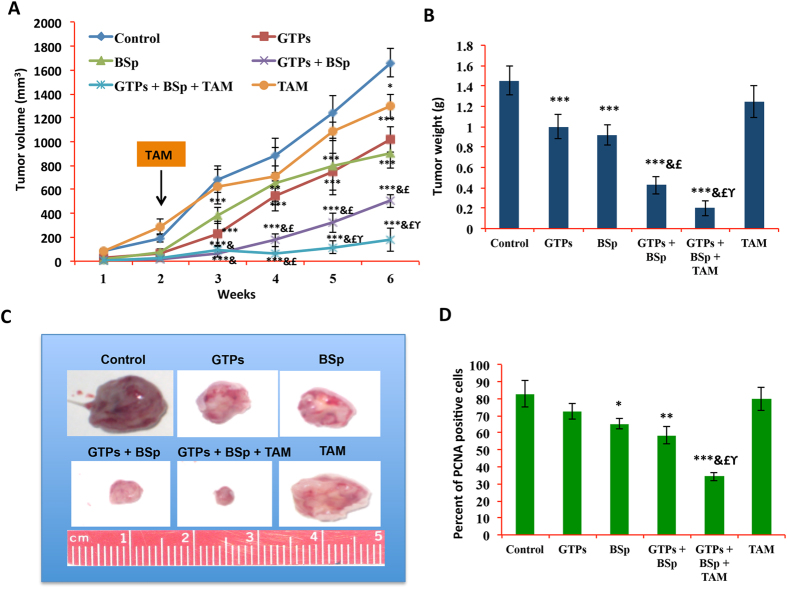
Tumor inhibitory effects of dietary GTPs and BSp with or without TAM treatment on tumor growth of ERα(−) breast cancer MDA-MB-231 xenografts. Female athymic nu/nu mice were injected with MDA-MB-231 cells. Mice (5 per group) were administered either regular control diet, 0.3% GTPs in drinking water, 13% BSp diet or two diets in combination two weeks prior to injection and thereafter. (A) Tumor volume. Tumor volumes were observed weekly after injection and represented as mean values for each group. One 21-day release of 25 mg TAM pellet was implanted subcutaneously two weeks post-injection as indicated with an orange box. (B) Tumor weight. (C) Representative photographs of the breast tumors in different experimental groups when harvested at the termination of the experiment (D) Bar chart is presented showing the immunohistochemical results in terms of percentage of PCNA-positive cells. PCNA-positive cells were counted in 5 different areas of the sections. Symbols and columns, mean; Bars, SD; *p < 0.05, **p < 0.01, ***p < 0.001, significantly different from control group; & p < 0.01, significantly different from BSp group; £ p < 0.01, significantly different from GTPs group; ϒ p < 0.05, significantly different from GTPs + BSp group.
Figure 6
Figure 6
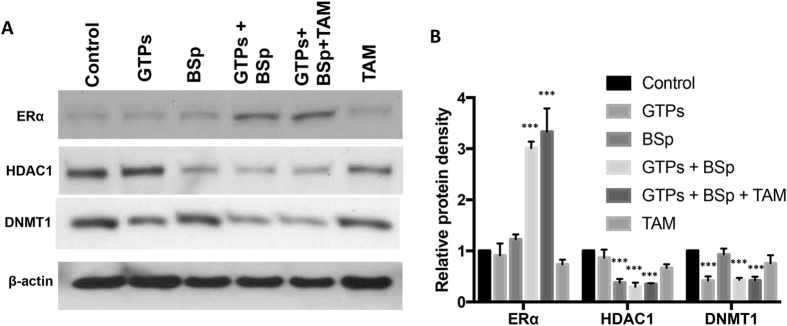
Expression changes of ERα, HDAC1 and DNMT1 in mouse orthotopic xenografts. (A) Protein levels of ERα, DNMT1 and HDAC1 in mouse orthotopic tumors in mammary glands using western blot analysis. The full-length blots were shown in the Supplementary Information. (B) Protein qualification analysis based on the band density. Data were in triplicate from three independent experiments. Relative protein expression was calculated by normalizing the original data to internal control and calibrating to levels in untreated samples. Columns, mean; Bars, SD; **p < 0.01; ***p < 0.001, significantly different from control.
Figure 7
Figure 7
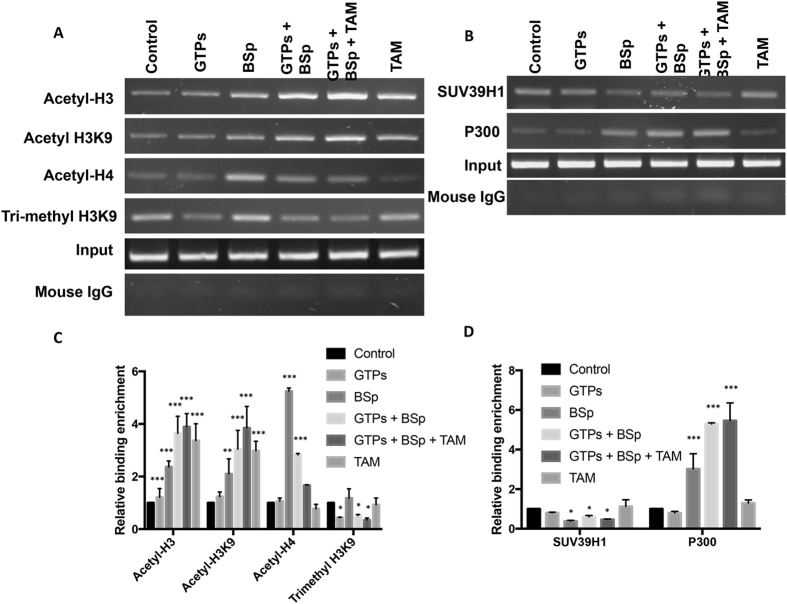
Alterations of histone modification and binding ability of transcriptional complex in the promoter region of ERα in the mouse orthotopic xenografts. (A) Histone modification patterns in the ERα promoter. (B) Binding abilities of transcriptional co-repressor, SUV39H1 and co-activator, P300, to the ERα promoter. Histone modification patterns and binding of transcription factors were determined by ChIP assay as described previously. Representative photograph from an experiment was repeated in triplicate. The full-length gels were shown in the Supplementary Figures (Fig. S4). Orthotopic tumors in mouse mammary glands from different treatment groups were treated as described previously and analyzed by ChIP assays using chromatin markers including acetyl-H3, acetyl-H3K9, acetyl-H4 and trimethyl-H3K9, transcription factor antibodies for SUV39H1 and P300 and mouse IgG control in the promoter region of ERα. Inputs came from the total DNA and served as the same ChIP-PCR conditions. (C) Bar chart is represented relative histone modification enrichment in the ERα promoter. (D) Relative binding abilities of SUV39H1 and P300 to the ERα promoter. Data were calculated from the corresponding DNA fragments amplified by ChIP-PCR. DNA enrichment was calculated as the ratio of each bound sample divided by the input while the untreated control sample is represented as 1. Columns, mean; Bars, SD; **p < 0.01; ***p < 0.001, significantly different from control.

References

    1. Paul DS, Beck S. Advances in epigenome-wide association studies for common diseases. Trends. Mol Med. 2014;20:541–543. doi: 10.1016/j.molmed.2014.07.002. - DOI - PMC - PubMed
    1. Esteller M. Cancer epigenomics: DNA methylomes and histone-modification maps. Nat. Rev. Genet. 2007;8:286–298. doi: 10.1038/nrg2005. - DOI - PubMed
    1. Meeran SM, Ahmed A, Tollefsbol TO. Epigenetic targets of bioactive dietary components for cancer prevention and therapy. Clin. Epigenetics. 2010;1:101–116. doi: 10.1007/s13148-010-0011-5. - DOI - PMC - PubMed
    1. Li Y, Tollefsbol TO. Impact on DNA methylation in cancer prevention and therapy by bioactive dietary components. Curr. Med. Chem. 2010;17:2141–2151. doi: 10.2174/092986710791299966. - DOI - PMC - PubMed
    1. Li Y, Yuan YY, Meeran SM, Tollefsbol TO. Synergistic epigenetic reactivation of estrogen receptor-α (ERα) by combined green tea polyphenol and histone deacetylase inhibitor in ERα-negative breast cancer cells. Mol. Cancer. 2010;9 doi: 10.1186/1476-4598-9-274. - DOI - PMC - PubMed

Publication types

MeSH terms