Dry blood spot testing for hepatitis C in people who injected drugs: reaching the populations other tests cannot reach
- PMID: 28839735
- PMCID: PMC5369823
- DOI: 10.1136/flgastro-2013-100308
Dry blood spot testing for hepatitis C in people who injected drugs: reaching the populations other tests cannot reach
Abstract
Objective: The aim of the study was to evaluate the effectiveness of Dry Blood Spot testing (DBST) for hepatitis C within a geographical area.
Design: This is a prospective cohort study of all individuals living in Tayside who had received a hepatitis C virus (HCV) DBST between 2009 and 2011.
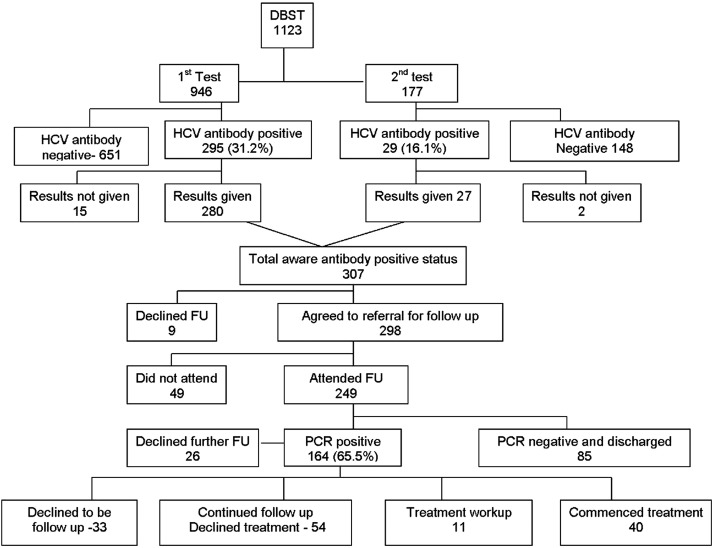
Results: During the study, 1123 DBSTs were carried out. 946 individuals had one test. 295 (31.2%) of these individuals were HCV antibody positive on their first test. Overall, 94.3% (902/956) individuals returned for the results of their test. During the course of the study 177 individuals were retested and 29 new cases of hepatitis C were detected. 249 individuals attended for further follow-up, and 164 (65.5%) were PCR positive. All 164 PCR-positive individuals were offered referral into specialist HCV services for further assessment. Data showed 62.5% were genotype 3, 65.1% had a low viral load (<600 000 iu/ml) and 77.5% had a Fibroscan score below 7 KPa. To date, 40 have commenced treatment and a further 16 are currently in the assessment period. Overall, we have retained in services or treated 63.6% (105/164) of patients who were initially referred and with effective support mechanisms in place we have achieved sustained viral response rates of 90%.
Conclusions: The study has shown that DBST is a complementary technique to conventional venepuncture for the diagnosis of HCV. The majority of patients have low viral loads and low fibrosis scores, so that while this group of patients may be difficult to reach and may be challenging to maintain in therapy, they are easier to cure.
Keywords: ANTIVIRAL THERAPY; HEPATITIS C.
Figures
References
-
- Davis GL, Alter MJ, El-Serag H, et al. Aging of hepatitis C virus (HCV)-infected persons in the United States: a multiple cohort model of HCV prevalence and disease progression. Gastroenterology 2010;138:513–21. - PubMed
-
- Lavanchy D. The global burden of hepatitis C. Liver Int 2009;29(Suppl 1):74–81. - PubMed
-
- Alter HJ, Seeff LB. Recovery, persistence, and sequelae in hepatitis C virus infection: a perspective on long-term outcome. Semin Liver Dis 2000;20:17–35. - PubMed
-
- Camma C, Giunta M, Andreone P, et al. Interferon and prevention of hepatocellular carcinoma in viral cirrhosis: an evidence-based approach. J Hepatol 2001;34:593–602. - PubMed
LinkOut - more resources
Full Text Sources
Other Literature Sources