


From Waldenström's macroglobulinemia to aggressive diffuse large B-cell lymphoma: a whole-exome analysis of abnormalities leading to transformation
- PMID: 28841204
- PMCID: PMC5596383
- DOI: 10.1038/bcj.2017.72
From Waldenström's macroglobulinemia to aggressive diffuse large B-cell lymphoma: a whole-exome analysis of abnormalities leading to transformation
Abstract
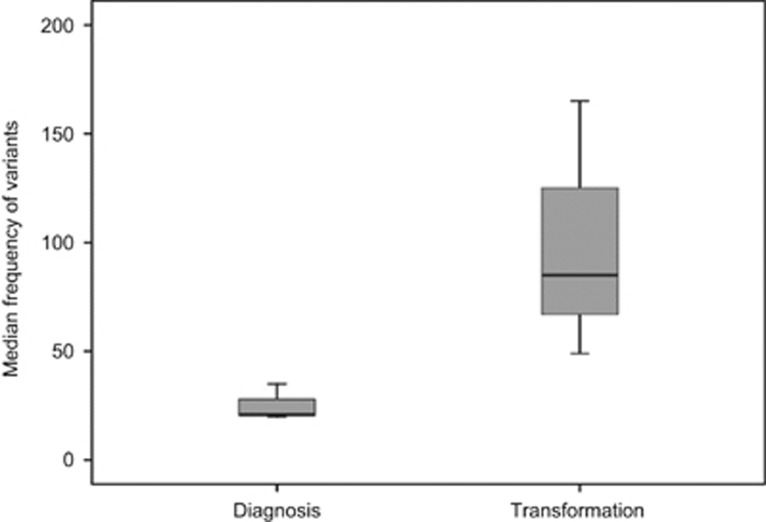
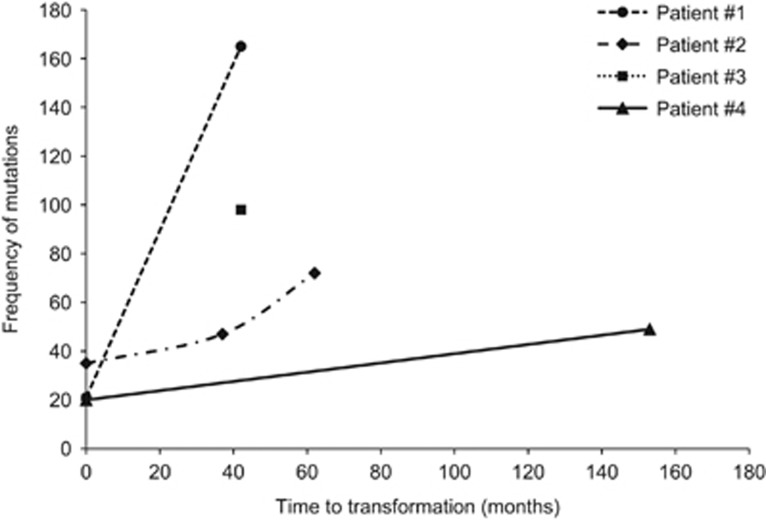
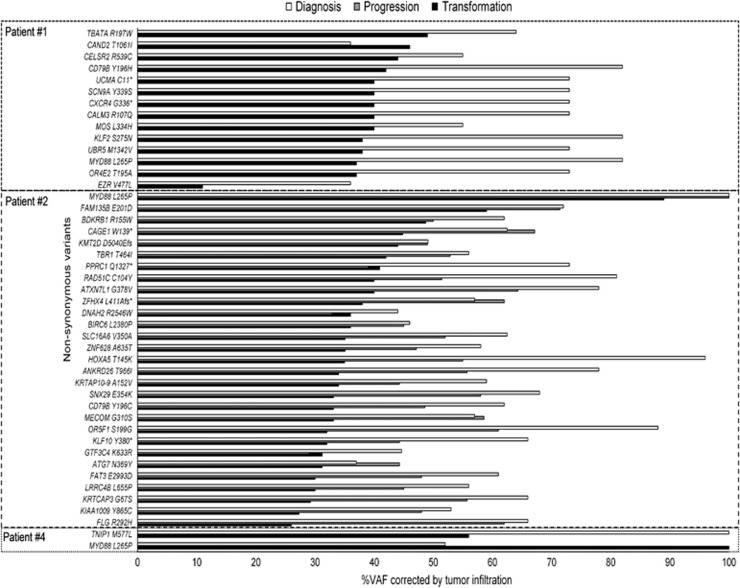
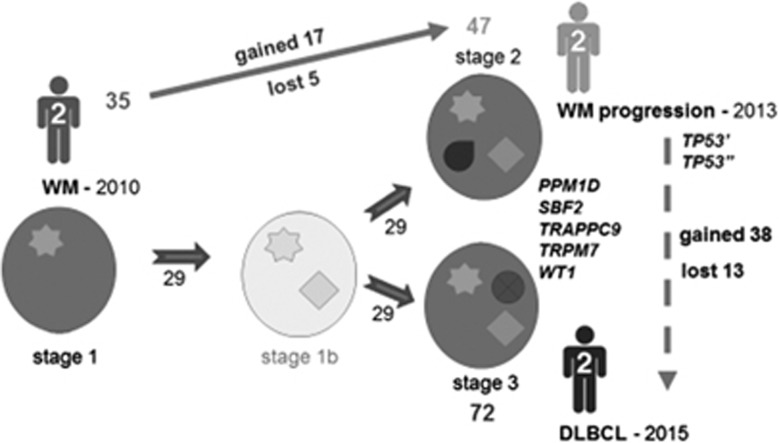
Transformation of Waldenström's macroglobulinemia (WM) to diffuse large B-cell lymphoma (DLBCL) occurs in up to 10% of patients and is associated with an adverse outcome. Here we performed the first whole-exome sequencing study of WM patients who evolved to DLBCL and report the genetic alterations that may drive this process. Our results demonstrate that transformation depends on the frequency and specificity of acquired variants, rather than on the duration of its evolution. We did not find a common pattern of mutations at diagnosis or transformation; however, there were certain abnormalities that were present in a high proportion of clonal tumor cells and conserved during this transition, suggesting that they have a key role as early drivers. In addition, recurrent mutations gained in some genes at transformation (for example, PIM1, FRYL and HNF1B) represent cooperating events in the selection of the clones responsible for disease progression. Detailed comparison reveals the gene abnormalities at diagnosis and transformation to be consistent with a branching model of evolution. Finally, the frequent mutation observed in the CD79B gene in this specific subset of patients implies that it is a potential biomarker predicting transformation in WM.
Conflict of interest statement
The authors declare no conflict of interest
Figures
References
-
- Owen RG, Treon SP, Al-Katib A, Fonseca R, Greipp PR, McMaster ML et al. Clinicopathological definition of Waldenstrom’s macroglobulinemia: consensus panel recommendations from the Second International Workshop on Waldenstrom’s Macroglobulinemia. Semin Oncol 2003; 30: 110–115. - PubMed
-
- Kyrtsonis MC, Vassilakopoulos TP, Angelopoulou MK, Siakantaris P, Kontopidou FN, Dimopoulou MN et al. Waldenström’s macroglobulinemia: clinical course and prognostic factors in 60 patients. Experience from a single hematology unit. Ann Hematol 2001; 80: 722–727. - PubMed
-
- Leleu X, Soumerai J, Roccaro A, Hatjiharissi E, Hunter ZR, Manning R et al. Increased incidence of transformation and myelodysplasia/acute leukemia in patients with Waldenström macroglobulinemia treated with nucleoside analogs. J Clin Oncol 2009; 27: 250–255. - PubMed
-
- Castillo JJ, Olszewski AJ, Hunter ZR, Kanan S, Meid K, Treon SP. Incidence of secondary malignancies among patients with Waldenström macroglobulinemia: an analysis of the SEER database. Cancer 2015; 121: 2230–2236. - PubMed
-
- Lin P, Mansoor A, Bueso-ramos C, Hao S. Diffuse large B-cell lymphoma occurring in patients with lymphoplasmacytic lymphoma/Waldenström macroglobulinemia clinicopathologic features of 12 cases. Am J Clin Pathol 2003; 120: 246–253. - PubMed
Publication types
MeSH terms
Substances
LinkOut - more resources
Full Text Sources
Other Literature Sources
