


Bio-behavioral synchrony promotes the development of conceptualized emotions
- PMID: 28843112
- PMCID: PMC5617801
- DOI: 10.1016/j.copsyc.2017.07.009
Bio-behavioral synchrony promotes the development of conceptualized emotions
Abstract
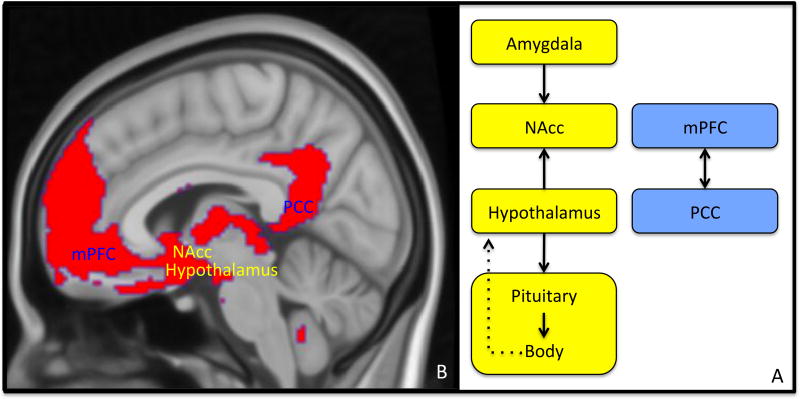
As adults, we have structured conceptual representations of our emotions that help us to make sense of and regulate our ongoing affective experience. The ability to use emotion concepts is critical to make predictions about the world and choose appropriate action, such as 'I am afraid, and going to run away' or 'I am hungry and going to eat'. Thus, emotion concepts have an important role in helping us maintain our ongoing physiological balance, or allostasis. We will suggest here that infants can learn emotion concepts for the purpose of allostasis regulation, and that conceptualization is key component in emotional development. Moreover, we will suggest that social dyads facilitate concept learning because of a robust evolutionary feature seen in newborns of social species: they cannot survive alone and depend on conspecifics for allostasis regulation. Such social dependency creates a robust driving force for social learning of emotion concepts, and makes the social dyad, which is designed to regulate the infant's allostasis, an optimal medium for concept learning. In line with that, we will review evidence showing that the neural reference space for emotion overlaps with neural circuits that support allostasis (striatum, amygdala, and hypothalamus) and conceptualization (medial prefrontal cortex, posterior cingulate cortex), and that their developmental trajectories are interrelated, and depend on synchronous social care.
Copyright © 2017 Elsevier Ltd. All rights reserved.
Figures

References
-
- McEwen BS, Wingfield JC. The concept of allostasis in biology and biomedicine. Hormones and Behavior. 2003;43:2–15. - PubMed
-
- Sterling P. Allostasis: A model of predictive regulation. Physiology & Behavior. 2012;106:5–15. - PubMed
-
- Winberg J. Mother and newborn baby: mutual regulation of physiology and behavior—a selective review. Developmental psychobiology. 2005;47:217–229. - PubMed
Publication types
MeSH terms
Grants and funding
LinkOut - more resources
Full Text Sources
Other Literature Sources
