


Phantom Limbs, Neuroprosthetics, and the Developmental Origins of Embodiment
- PMID: 28843655
- PMCID: PMC5623093
- DOI: 10.1016/j.tins.2017.07.003
Phantom Limbs, Neuroprosthetics, and the Developmental Origins of Embodiment
Abstract
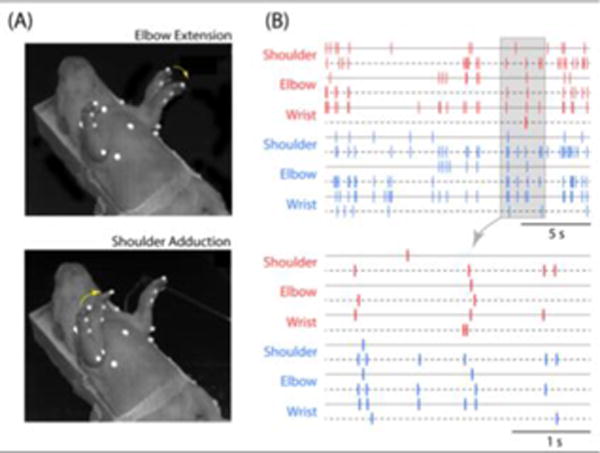
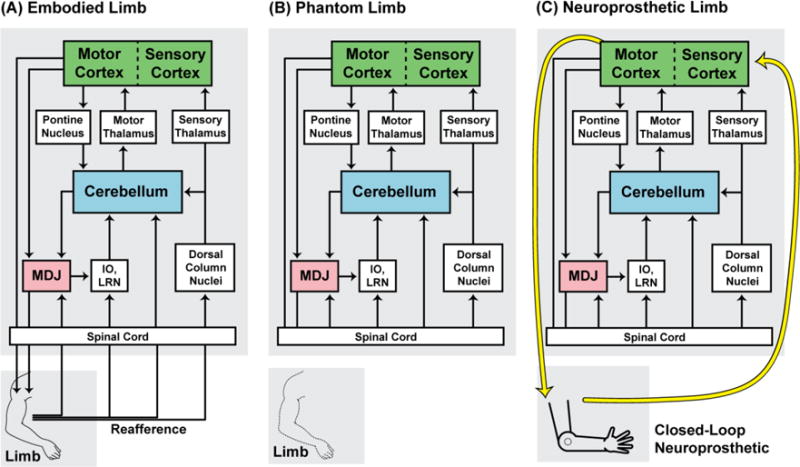
Amputees who wish to rid themselves of a phantom limb must weaken the neural representation of the absent limb. Conversely, amputees who wish to replace a lost limb must assimilate a neuroprosthetic with the existing neural representation. Whether we wish to remove a phantom limb or assimilate a synthetic one, we will benefit from knowing more about the developmental process that enables embodiment. A potentially critical contributor to that process is the spontaneous activity - in the form of limb twitches - that occurs exclusively and abundantly during active (REM) sleep, a particularly prominent state in early development. The sensorimotor circuits activated by twitching limbs, and the developmental context in which activation occurs, could provide a roadmap for creating neuroprosthetics that feel as if they are part of the body.
Keywords: REM sleep; body schema; brain–machine interface; cerebellum; development; motor cortex; myoclonic twitching; neural circuit.
Copyright © 2017 Elsevier Ltd. All rights reserved.
Figures
References
-
- Proske U, Gandevia SC. The proprioceptive senses: Their roles in signaling body shape, body position and movement, and muscle force. Physiol Rev. 2012;92:1651–1697. - PubMed
-
- Pfeifer R, et al. Cognition from the bottom up: on biological inspiration, body morphology, and soft materials. Trends Cogn Sci. 2014;18:404–413. - PubMed
-
- Pfeifer R, Bongard J. How the body shapes the way we think: a new view of intelligence. MIT Press; 2007.
Publication types
MeSH terms
Grants and funding
LinkOut - more resources
Full Text Sources
Other Literature Sources
