Transfer of the lesser tuberosity for reverse Hill-Sachs lesions after neglected posterior dislocations of the shoulder: A retrospective clinical study of 13 cases
- PMID: 28844682
- PMCID: PMC6197171
- DOI: 10.1016/j.aott.2017.07.004
Transfer of the lesser tuberosity for reverse Hill-Sachs lesions after neglected posterior dislocations of the shoulder: A retrospective clinical study of 13 cases
Abstract
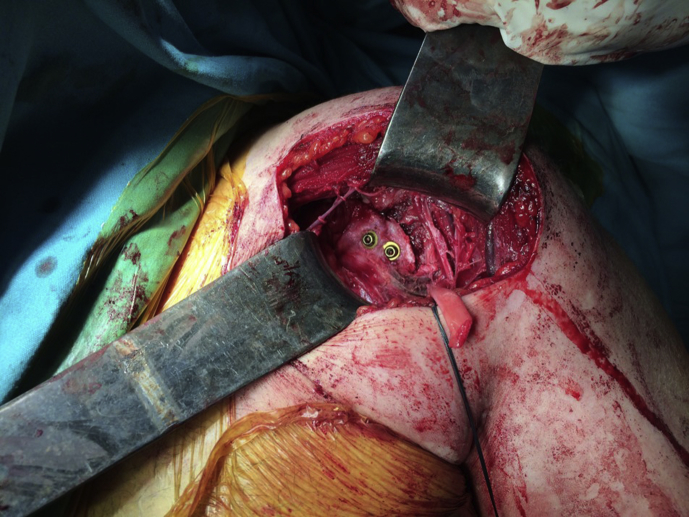
Objective: This study aimed to present middle-term functional and radiological outcomes of the transfer of the lesser tuberosity in the management of reverse Hill-Sachs lesions following posterior dislocations of the shoulder.
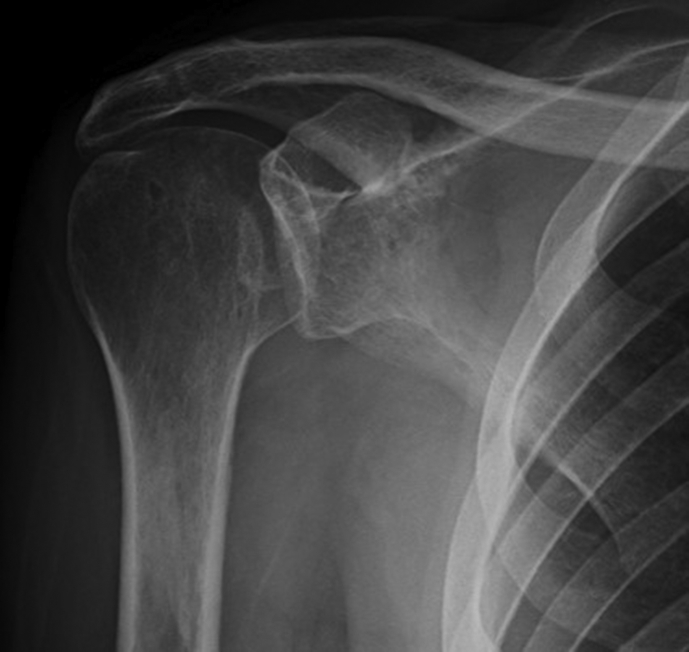
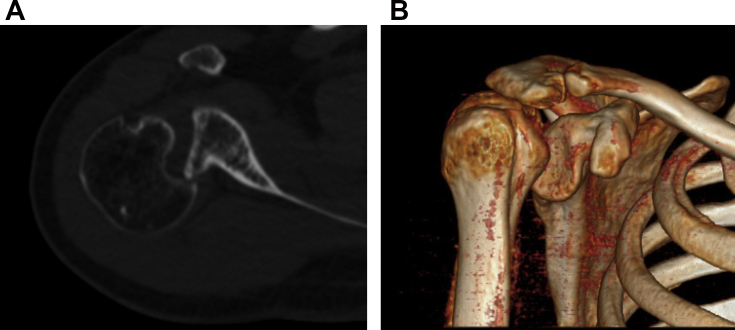
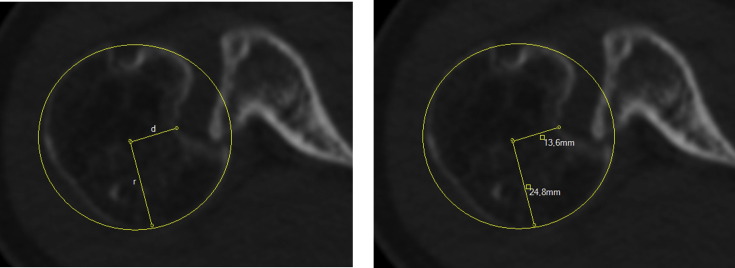
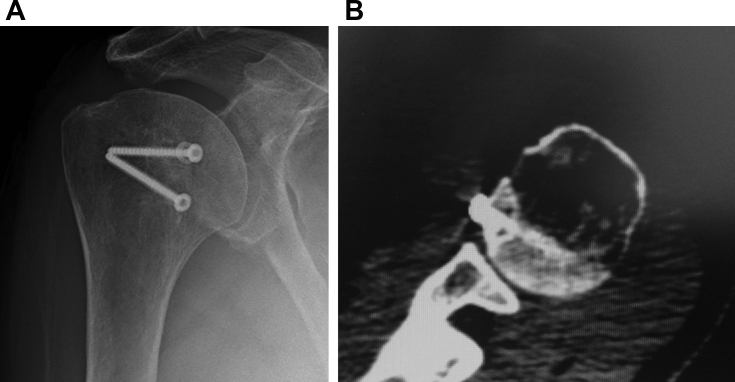
Patients and methods: With a diagnosis of neglected posterior shoulder dislocation (8 locked, 5 recurrent), 13 male patients (age range: 28-72; mean age: 39.3 years) who underwent the transfer of the lesser tuberosity due to reverse Hill-Sachs lesions, were retrospectively reviewed based on functional and radiological data. The etiologies were: epilepsy in 9 patients, a traffic accident in 2 patients, and fall in 2 patients. To assess the patients' functional level, American Shoulder and Elbow Surgeons (ASES) and Constant Scores were used, and the patients' range of motion at the last follow-up was measured. To evaluate the development of arthrosis, the final follow-up control plain radiographs were examined. The average size of the defects calculated from the axial computed tomography sets was 27% (range: 20%-40%).
Results: The average length of follow-up was 30 months (range: 12-67 months). At the last follow-up visit, the main ASES and Constant Scores were 78 and 85, respectively, and the average degrees of flexion, abduction, and external rotation were 163°, 151°, and 70° respectively. The concentric reduction was observed postoperatively.
Conclusion: McLaughlin procedure appears to be a safe and effective method in the treatment of neglected posterior shoulder dislocations with reverse Hill-Sachs lesion.
Level of evidence: Level IV, Therapeutic study.
Keywords: McLaughlin procedure; Posterior shoulder dislocation; Reverse Hill-Sachs lesion; Transfer of the lesser tuberosity.
Copyright © 2017 Turkish Association of Orthopaedics and Traumatology. Production and hosting by Elsevier B.V. All rights reserved.
Figures
References
MeSH terms
LinkOut - more resources
Full Text Sources
Other Literature Sources
Medical
Research Materials