Balance Deficit and Brain Connectivity in Children with Attention-Deficit/Hyperactivity Disorder
- PMID: 28845172
- PMCID: PMC5561403
- DOI: 10.4306/pi.2017.14.4.452
Balance Deficit and Brain Connectivity in Children with Attention-Deficit/Hyperactivity Disorder
Abstract
Objective: We aimed to assess disturbances in postural and gait balance and functional connectivity within the brain regions controlling balance in children with attention-deficit/hyperactivity disorder (ADHD).
Methods: Thirteen children with ADHD and 13 age- and sex-matched controls were recruited. Gait balance was assessed by the difference in the center of pressure (COP) between the left and right foot, as well as the difference in plantar pressure between the left and right foot during gait. Neuroimaging data were acquired using a 3.0 Tesla MRI scanner. Functional connectivity between the vermis of the cerebellum and all other brain regionswas assessed.
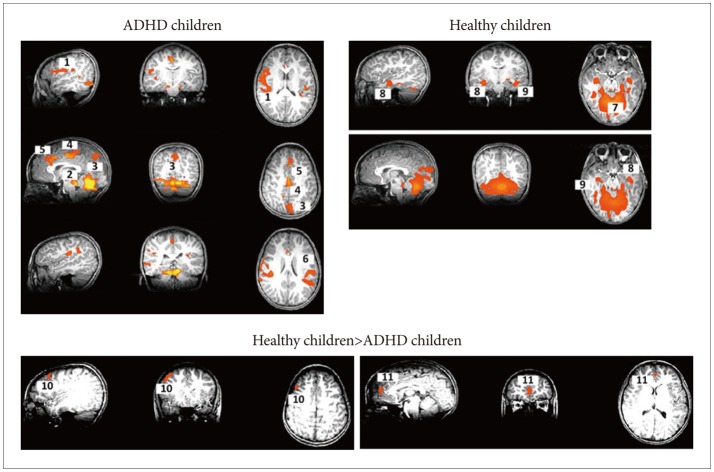
Results: The difference in plantar pressure between the left foot and right foot in the ADHD group was greater than that observed in the control group. The average COP jerk score of the right foot in the ADHD group was higher than that observed in the control group. A higher functional connectivity between the cerebellum and the right middle frontal gyrus (premotor cortex) and medial frontal gyrus (cingulate gyrus) was observed in the control group relative to the ADHD group. In the ADHD group, the difference in plantar pressure between the left and right foot was also negatively correlated with the beta-value within the middle frontal gyrus.
Conclusion: Children with ADHD had disturbance of balance as assessed by plantar pressure. Decreased brain connectivity from the cerebellum to the premotor cortex and anterior cingulate was associated with disturbances of posture and balance in children with ADHD.
Keywords: Attention-deficit/hyperactivity disorder; Cerebellum; Gait balance; Middle frontal gyrus; Resting-state functional magnetic resonance imaging.
Figures
References
-
- Ghanizadeh A. Predictors of postural stability in children with ADHD. J Atten Disord. 2011;15:604–610. - PubMed
-
- Biederman J, Faraone SV. Attention-deficit hyperactivity disorder. Lancet. 2005;366:237–248. - PubMed
-
- Tervo RC, Azuma S, Fogas B, Fiechtner H. Children with ADHD and motor dysfunction compared with children with ADHD only. Dev Med Child Neurol. 2002;44:383–390. - PubMed
LinkOut - more resources
Full Text Sources
Other Literature Sources