


Hair cortisol levels, psychological stress and psychopathological symptoms as predictors of postpartum depression
- PMID: 28846691
- PMCID: PMC5573300
- DOI: 10.1371/journal.pone.0182817
Hair cortisol levels, psychological stress and psychopathological symptoms as predictors of postpartum depression
Abstract
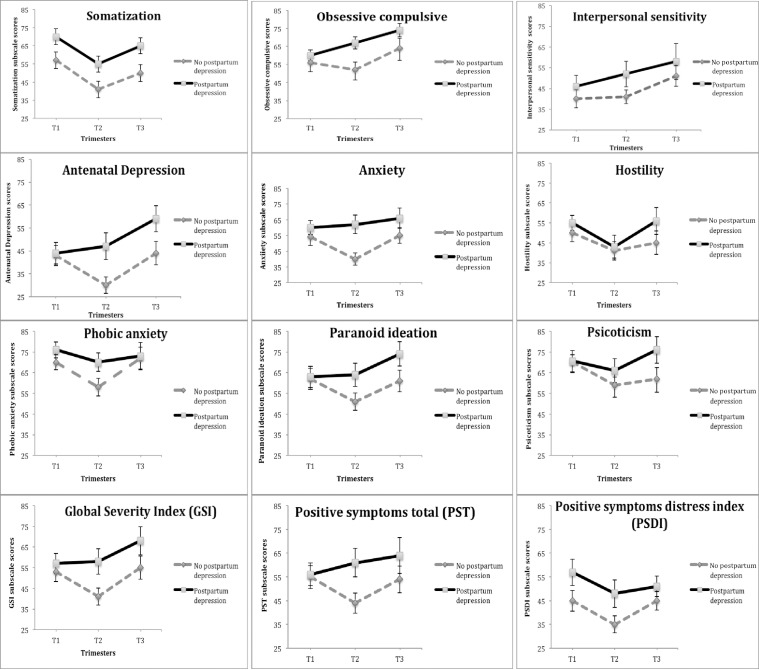
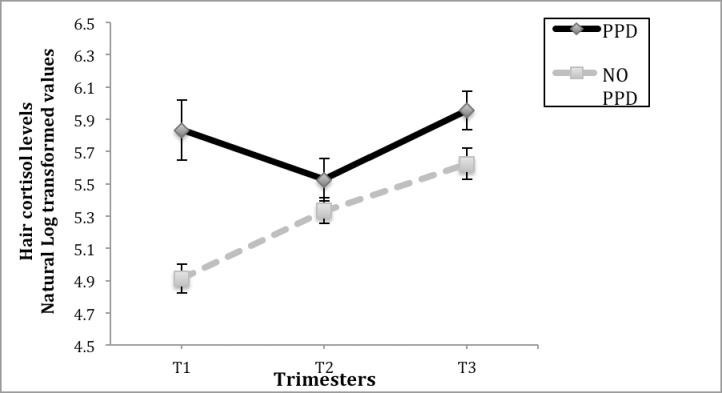
Postpartum depression affects a huge number of women and has detrimental consequences. Knowing the factors associated with postpartum depression during pregnancy can help its prevention. Although there is evidence surrounding behavioral or psychological predictors of postpartum depression, there is a lack of evidence of biological forecasters. The aim of this study was to analyze the sociodemographic, obstetric, and psychological variables along with hair cortisol levels during the first, second, and third trimesters of pregnancy that could predict postpartum depression symptoms. A sample of 44 pregnant women was assessed during 3 trimesters of pregnancy and the postpartum period using psychological questionnaires and hair cortisol levels. Participants were divided into 2 groups: a group with postpartum depression symptoms and a group with no postpartum depression symptoms. Results showed significant positive differences between groups in the first trimester regarding the Somatization subscale of the SCL-90-R (p < .05). In the second trimester, significant differences were found in the Somatization, Depression, Anxiety, and GSI subscales (p < .05). In the third trimester significant differences between both groups were found regarding pregnancy-specific stress. We found significant positive differences between groups regarding hair cortisol levels in the first and the third trimester. Hair cortisol levels could predict 21.7% of the variance of postpartum depression symptoms. In conclusion, our study provided evidence that psychopathological symptoms, pregnancy-specific stress, and hair cortisol levels can predict postpartum depression symptoms at different time-points during pregnancy. These findings can be applied in future studies and improve maternal care in clinical settings.
Conflict of interest statement
Figures
References
-
- National Institute for Health and Care Excelence. Antenatal and postnatal mental health. London: National Clinical Guideline Centre; 2016.
-
- Yim IS, Stapleton LRT, Guardino CM, Hahn-Holbrook J, Schetter CD. Biological and psychosocial predictors of postpartum depression: systematic review and call for integration. Annu Rev Clin Psychol. 2015;11: 99–137. doi: 10.1146/annurev-clinpsy-101414-020426 - DOI - PMC - PubMed
-
- Katon W, Russo J, Gavin A. Predictors of postpartum depression. J Womens Health. 2014;23(9): 753–759. doi: 10.1089/jwh.2014.4824 - DOI - PubMed
-
- O’Hara MW, McCabe JE. Postpartum depression: current status and future directions. Annu Rev of Clin Psychol. 2013;9: 379–407. doi: 10.1146/annurev-clinpsy-050212-185612. - DOI - PubMed
-
- Sockol LE, Epperson CN, Barber JP. Preventing postpartum depression: a meta-analytic review. Clin Psychol Rev. 2013;33(8): 1205–1217. doi: 10.1016/j.cpr.2013.10.004 - DOI - PMC - PubMed
MeSH terms
Substances
LinkOut - more resources
Full Text Sources
Other Literature Sources
Medical
Research Materials
Miscellaneous
