Review
. 2017 Nov:133:68-78.
doi: 10.1016/j.prostaglandins.2017.08.003. Epub 2017 Aug 25.

Modulation of mitochondrial dysfunction and endoplasmic reticulum stress are key mechanisms for the wide-ranging actions of epoxy fatty acids and soluble epoxide hydrolase inhibitors

Affiliations
Review

Modulation of mitochondrial dysfunction and endoplasmic reticulum stress are key mechanisms for the wide-ranging actions of epoxy fatty acids and soluble epoxide hydrolase inhibitors

Bora Inceoglu et al. Prostaglandins Other Lipid Mediat. 2017 Nov.

Abstract

The arachidonic acid cascade is arguably the most widely known biologic regulatory pathway. Decades after the seminal discoveries involving its cyclooxygenase and lipoxygenase branches, studies of this cascade remain an active area of research. The third and less widely known branch, the cytochrome P450 pathway leads to highly active oxygenated lipid mediators, epoxy fatty acids (EpFAs) and hydroxyeicosatetraenoic acids (HETEs), which are of similar potency to prostanoids and leukotrienes. Unlike the COX and LOX branches, no pharmaceuticals currently are marketed targeting the P450 branch. However, data support therapeutic benefits from modulating these regulatory lipid mediators. This is being approached by stabilizing or mimicking the EpFAs or even by altering the diet. These approaches lead to predominantly beneficial effects on a wide range of apparently unrelated states resulting in an enigma of how this small group of natural chemical mediators can have such diverse effects. EpFAs are degraded by soluble epoxide hydrolase (sEH) and stabilized by inhibiting this enzyme. In this review, we focus on interconnected aspects of reported mechanisms of action of EpFAs and inhibitors of soluble epoxide hydrolase (sEHI). The sEHI and EpFAs are commonly reported to maintain homeostasis under pathological conditions while remaining neutral under normal physiological conditions. Here we provide a conceptual framework for the unique and broad range of biological activities ascribed to epoxy fatty acids. We argue that their mechanism of action pivots on their ability to prevent mitochondrial dysfunction, to reduce subsequent ROS formation and to block resulting cellular signaling cascades, primarily the endoplasmic reticulum stress. By stabilizing the mitochondrial - ROS - ER stress axis, the range of activity of EpFAs and sEHI display an overlap with the disease conditions including diabetes, fibrosis, chronic pain, cardiovascular and neurodegenerative diseases, for which the above outlined mechanisms play key roles.

Keywords: Arachidonic acid; Endoplasmic reticulum stress; Epoxy fatty acids; Epoxydocosapentaenoic acid; Mitochondria; Soluble epoxide hydrolase.


Conflict of interest statement

Conflicts of Interest

BI, AB, FH and BH are all inventors on University of California Patents related to this work. BI and BH are founders of EicOsis which is developing sEHI as therapeutics.

Figures
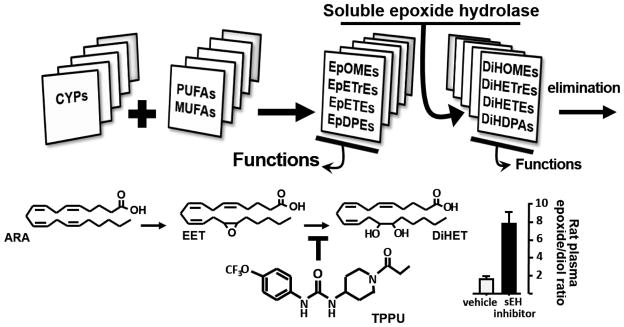
Figure 1
Figure 1. Epoxides of unsaturated and largely polyunsaturated fatty acids (MUFAs and PUFAs) are the major anti-inflammatory and analgesic mediators of the P450 branch of the arachidonic acid cascade
These epoxides are made largely by cytochrome P450 enzymes and may be stored as phospholipids. The best studied are the EETs (EpETrEs), but epoxides of LA (EpOMEs), EPA (EpETEs), and DHA (EpDPEs) also are chemical mediators with epoxides of the ω-3 DHA or EDPs being particularly more? active. These epoxides are converted at varying rates but generally with high Vmax and low Km to the corresponding diols, for example EETs are converted by sEH to DHETs (DiHETrEs). These diols are generally less bioactive, tend to move out of cells, and are rapidly conjugated and excreted. DHETs and particularly the diols of linoleic acid have been shown to be pro-inflammatory at the high concentrations present in sepsis. Inhibitors of sEH such at TPPU stabilize epoxy fatty acids (EpFA) such as the EETs shown, to increase the lipid epoxide to diol ratios in the blood which are associated with reduced inflammation and pain.
Figure 2
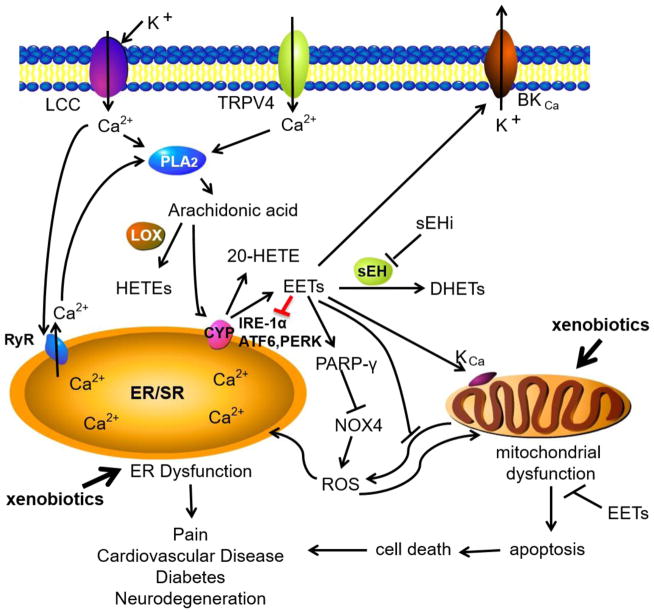
Figure 2. Signaling mechanisms involved in ROS induced ER dysfunction
In the presence of xenobiotic stress, ROS produced from the mitochondria may induce ER dysfunction. EETs and sEHI reduce the mitochondrial and NADPH oxidase (NOX4). EETs also activate important potassium channels on the mitochondria. Possible independent from these effects EETs and sEHI prevent the activation of the signaling cascade governed by the three major ER resident sensors inositol requiring protein 1α (IRE-1α), protein kinase RNA-like endoplasmic reticulum kinase (PERK) and activating transcription factor 6 (ATF6). RyR, ryanodine receptor; LCC, L-type Ca2+ channel; TRPV4, transient receptor potential cation channel subfamily V member 4; BKCa, calcium activated big potassium channel; KCa, calcium activated potassium channel; PARP-γ, poly(ADP-ribose) polymerase; K+, potassium ions, Ca2+, calcium ions.
Figure 3
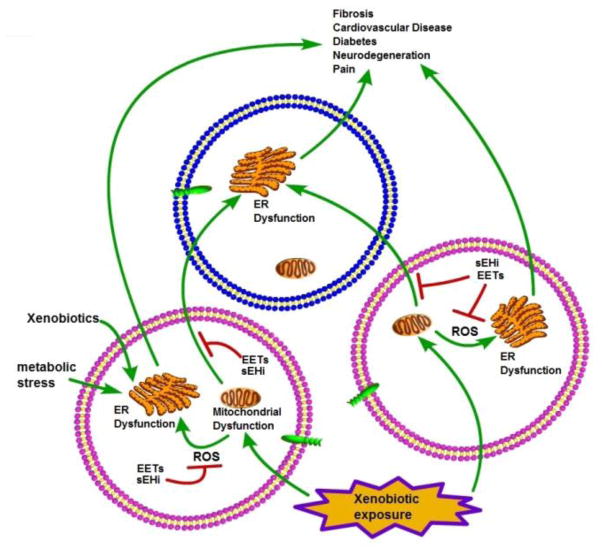
Figure 3. Schematic diagram showing the relationship among mitochondrial dysfunction, ER stress and EpFA
ER dysfunction is associated with numerous diseases including diabetes, cardiovascular, and neuronal diseases. sEH inhibitors (sEHI) and by implication the stabilized EpFAs are unique in improving symptoms in a variety of apparently unrelated disease states ranging from neuropathic pain and atrial fibrillation to pathological fibrosis and diabetes while sEHI have little if any effect on normal animals. This enigma is explained in part by EpFA stabilizing the mitochondrial →ROS → ER stress axis. The unfolded protein response and ER stress, working in part together with the cellular proteasome act to maintain cellular homeostasis. This homeostasis can be disrupted by a number of factors such as glucose associated with diabetes, xenobiotics such as paraquat or MPTP, and particularly reactive oxygen species (ROS) from many sources. ROS can be dramatically increased by mitochondrial dysfunction in turn associated both with disease states or exposure to xenobiotics including NSAIDs and triclosan. EpFA stabilized by sEHI protect the mitochondria, reduce the downstream activation of ER stress by ROS, hyperglycemia and other factors and thus ameliorate disease symptoms.

References

    1. Vane J. The mechanism of action of anti-inflammatory drugs. Int J Clin Pract Suppl. 2003;(135):2. - PubMed
    1. Marnett LJ. The COXIB experience: a look in the rearview mirror. Annu Rev Pharmacol Toxicol. 2009;49:265–90. - PubMed
    1. Spector AA, Kim HY. Cytochrome P450 epoxygenase pathway of polyunsaturated fatty acid metabolism. Biochim Biophys Acta. 2015;1851(4):356–65. - PMC - PubMed
    1. Spector AA. Arachidonic acid cytochrome P450 epoxygenase pathway. J Lipid Res. 2009;50(Suppl):S52–6. - PMC - PubMed
    1. Schmelzer KR, Inceoglu B, Kubala L, Kim IH, Jinks SL, Eiserich JP, Hammock BD. Enhancement of antinociception by coadministration of nonsteroidal anti-inflammatory drugs and soluble epoxide hydrolase inhibitors. Proc Natl Acad Sci U S A. 2006;103(37):13646–51. - PMC - PubMed

MeSH terms