Academic performance of children born preterm: a meta-analysis and meta-regression
- PMID: 28847871
- PMCID: PMC6047144
- DOI: 10.1136/archdischild-2017-312916
Academic performance of children born preterm: a meta-analysis and meta-regression
Abstract
Background: Advances in neonatal healthcare have resulted in decreased mortality after preterm birth but have not led to parallel decreases in morbidity. Academic performance provides insight in the outcomes and specific difficulties and needs of preterm children.
Objective: To study academic performance in preterm children born in the antenatal steroids and surfactant era and possible moderating effects of perinatal and demographic factors.
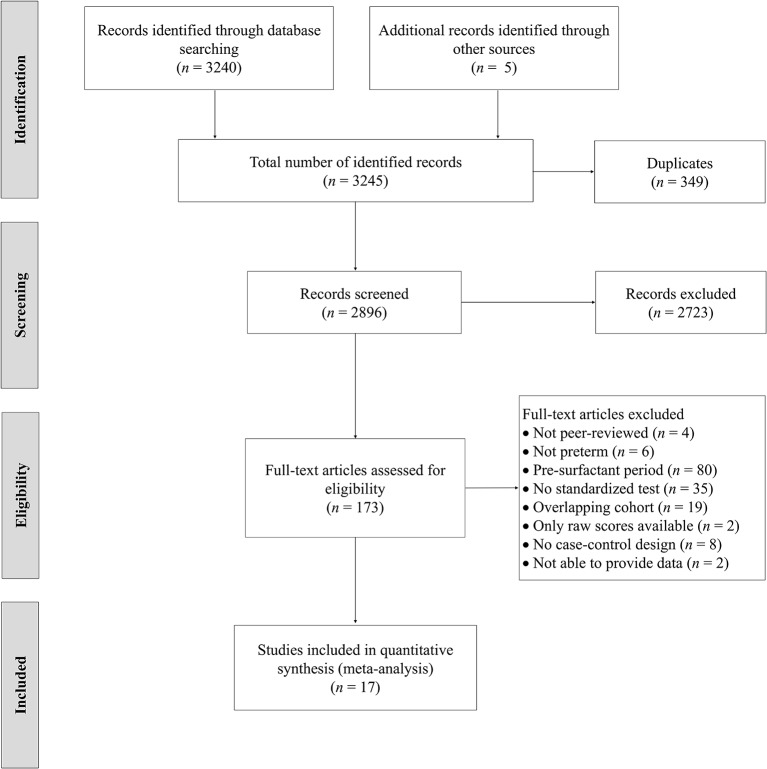
Design: PubMed, Web of Science and PsycINFO were searched for peer-reviewed articles. Cohort studies with a full-term control group reporting standardised academic performance scores of preterm children (<37 weeks of gestation) at age 5 years or older and born in the antenatal steroids and surfactant era were included. Academic test scores and special educational needs of preterm and full-term children were analysed using random effects meta-analysis. Random effects meta-regressions were performed to explore the predictive role of perinatal and demographic factors for between-study variance in effect sizes.
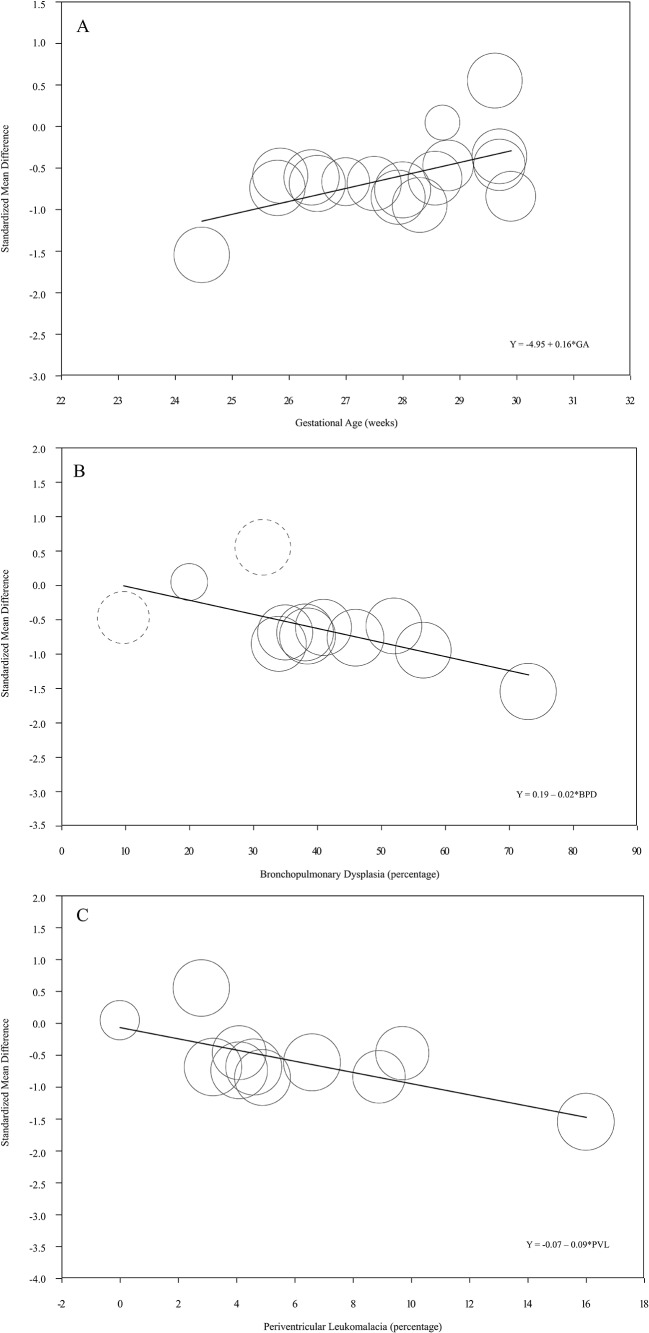
Results: The 17 eligible studies included 2390 preterm children and 1549 controls. Preterm children scored 0.71 SD below full-term peers on arithmetic (p<0.001), 0.44 and 0.52 SD lower on reading and spelling (p<0.001) and were 2.85 times more likely to receive special educational assistance (95% CI 2.12 to 3.84, p<0.001). Bronchopulmonarydysplasia explained 44% of the variance in academic performance (p=0.006).
Conclusion: Preterm children born in the antenatal steroids and surfactant era show considerable academic difficulties. Preterm children with bronchopulmonarydysplasia are at particular risk for poor academic outcome.
Keywords: neonatology; neurodevelopment; outcomes research.
© Article author(s) (or their employer(s) unless otherwise stated in the text of the article) 2018. All rights reserved. No commercial use is permitted unless otherwise expressly granted.
Conflict of interest statement
Competing interests: RMvE is employed at Nutricia Research, Utrecht, The Netherlands.
Figures
References
-
- Feinstein L, Sabates R, Anderson TM, et al. What are the effects of education on health? In: Desjardins R, Schuller T, eds Measuring the effects of education on health and civic engagement: proceedings of the Copenhagen Symposium. Paris: organisation for Economic Co-operation and development, 2006:171–353.
Publication types
MeSH terms
LinkOut - more resources
Full Text Sources
Other Literature Sources
Medical