


A Practical Evaluation of a High-Security Energy-Efficient Gateway for IoT Fog Computing Applications
- PMID: 28850104
- PMCID: PMC5620735
- DOI: 10.3390/s17091978
A Practical Evaluation of a High-Security Energy-Efficient Gateway for IoT Fog Computing Applications
Abstract
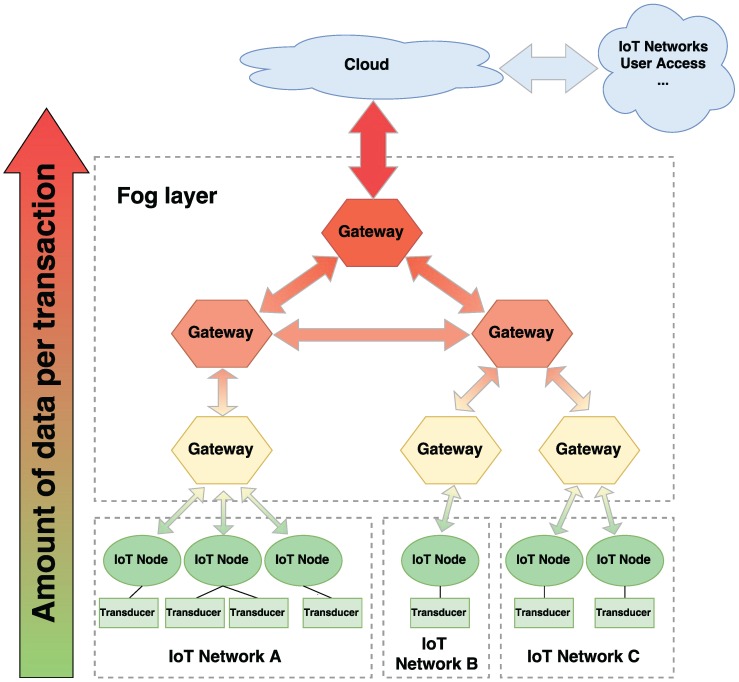
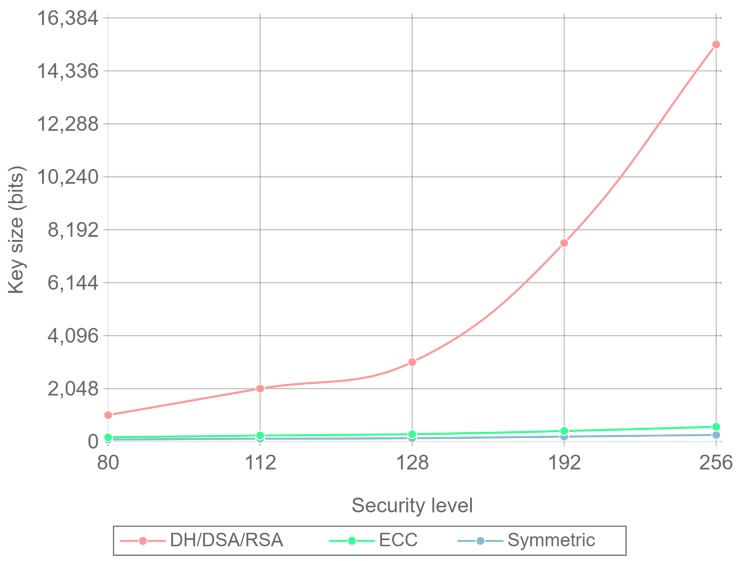
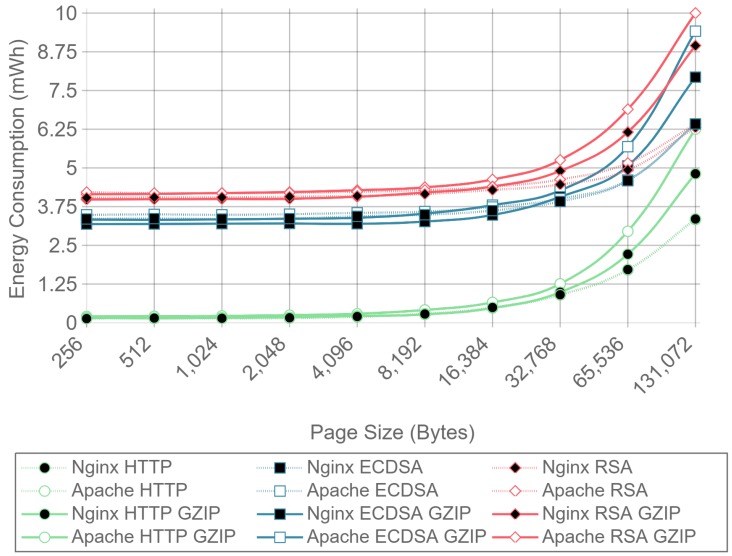
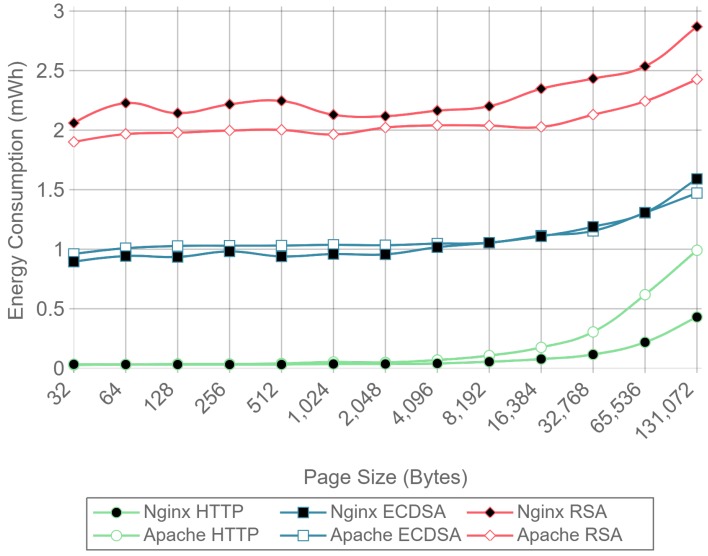
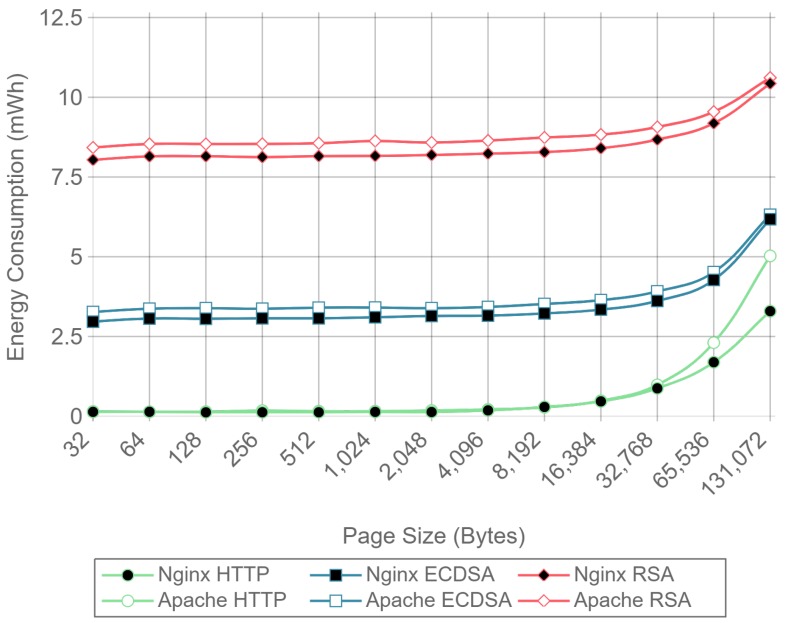
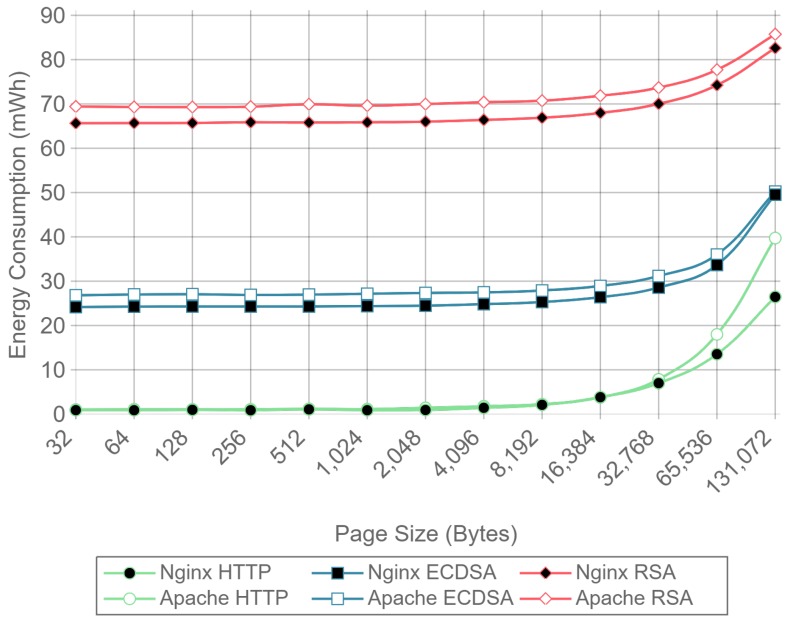
Fog computing extends cloud computing to the edge of a network enabling new Internet of Things (IoT) applications and services, which may involve critical data that require privacy and security. In an IoT fog computing system, three elements can be distinguished: IoT nodes that collect data, the cloud, and interconnected IoT gateways that exchange messages with the IoT nodes and with the cloud. This article focuses on securing IoT gateways, which are assumed to be constrained in terms of computational resources, but that are able to offload some processing from the cloud and to reduce the latency in the responses to the IoT nodes. However, it is usually taken for granted that IoT gateways have direct access to the electrical grid, which is not always the case: in mission-critical applications like natural disaster relief or environmental monitoring, it is common to deploy IoT nodes and gateways in large areas where electricity comes from solar or wind energy that charge the batteries that power every device. In this article, how to secure IoT gateway communications while minimizing power consumption is analyzed. The throughput and power consumption of Rivest-Shamir-Adleman (RSA) and Elliptic Curve Cryptography (ECC) are considered, since they are really popular, but have not been thoroughly analyzed when applied to IoT scenarios. Moreover, the most widespread Transport Layer Security (TLS) cipher suites use RSA as the main public key-exchange algorithm, but the key sizes needed are not practical for most IoT devices and cannot be scaled to high security levels. In contrast, ECC represents a much lighter and scalable alternative. Thus, RSA and ECC are compared for equivalent security levels, and power consumption and data throughput are measured using a testbed of IoT gateways. The measurements obtained indicate that, in the specific fog computing scenario proposed, ECC is clearly a much better alternative than RSA, obtaining energy consumption reductions of up to 50% and a data throughput that doubles RSA in most scenarios. These conclusions are then corroborated by a frame temporal analysis of Ethernet packets. In addition, current data compression algorithms are evaluated, concluding that, when dealing with the small payloads related to IoT applications, they do not pay off in terms of real data throughput and power consumption.
Keywords: ECC; ECDHE; ECDSA; IoT; IoT gateway; IoT security; RSA; TLS; cryptographic security; energy efficiency; fog computing; performance; power consumption.
Conflict of interest statement
The authors declare no conflict of interest. The founding sponsors had no role in the design of the study; in the collection, analyses, or interpretation of data; in the writing of the manuscript, and in the decision to publish the results.
Figures
References
-
- Markakis E.K., Karras K., Zotos N., Sideris A., Moysiadis T., Corsaro A., Alexiou G., Skianis C., Mastorakis G., Mavromoustakis C.X., et al. EXEGESIS: Extreme Edge Resource Harvesting for a Virtualized Fog Environment. IEEE Commun. Mag. 2017;55:173–179. doi: 10.1109/MCOM.2017.1600730. - DOI
-
- Bonomi F., Milito R., Zhu J., Addepalli S. Fog Computing and its Role in the Internet of Things; Proceedings of the First Edition of the MCC Workshop on Mobile Cloud Computing; Helsinki, Finland. 17 August 2012; pp. 13–16.
-
- Peralta G., Iglesias-Urkia M., Barcelo M., Gomez R., Moran A., Bilbao J. Fog computing based efficient IoT scheme for the Industry 4.0; Proceedings of the IEEE International Workshop of Electronics, Control, Measurement, Signals and their Application to Mechatronics (ECMSM); Donostia, Spain. 24–26 May 2017; pp. 1–6.
-
- Kaur N., Sood S.K. An Energy-Efficient Architecture for the Internet of Things (IoT) IEEE Syst. J. 2017;11:796–805. doi: 10.1109/JSYST.2015.2469676. - DOI
-
- Hasan M.S., Alvares F., Ledoux T., Pazat J.L. Investigating Energy Consumption and Performance Trade-Off for Interactive Cloud Application. IEEE Trans. Sustain. Comput. 2017;2:113–126. doi: 10.1109/TSUSC.2017.2714959. - DOI
LinkOut - more resources
Full Text Sources
Other Literature Sources
