


Tumor endothelial cells with high aldehyde dehydrogenase activity show drug resistance
- PMID: 28851003
- PMCID: PMC5666026
- DOI: 10.1111/cas.13388
Tumor endothelial cells with high aldehyde dehydrogenase activity show drug resistance
Abstract
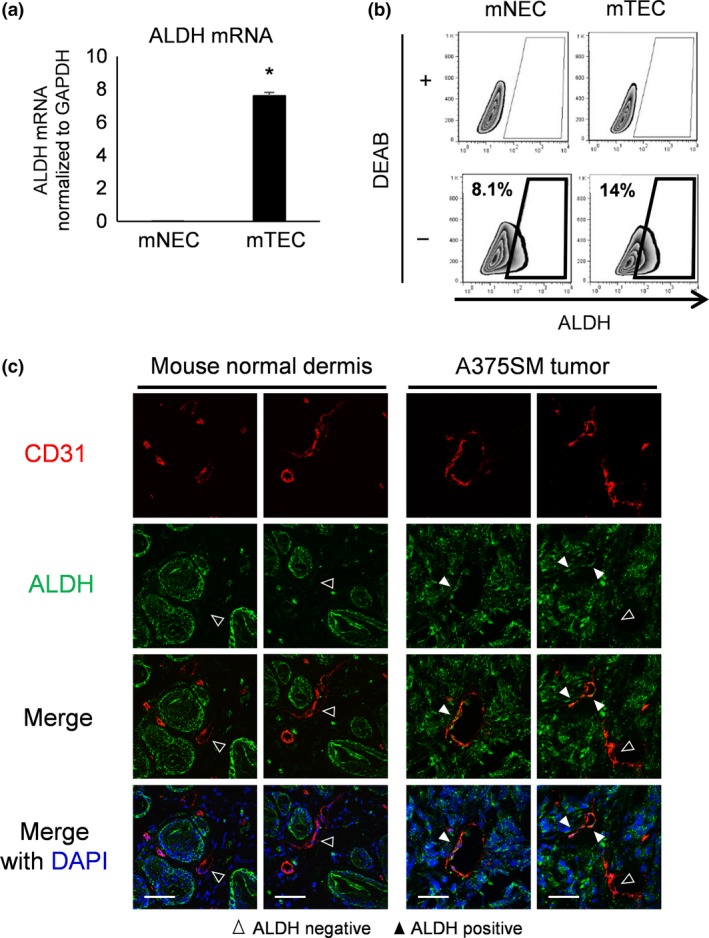
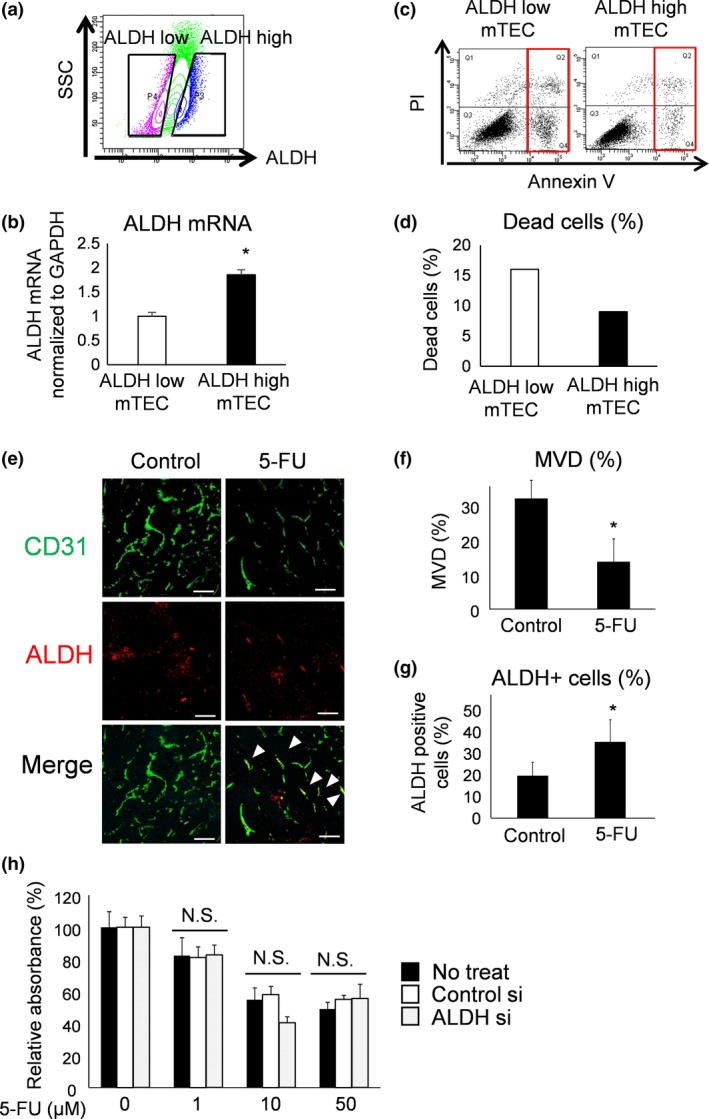
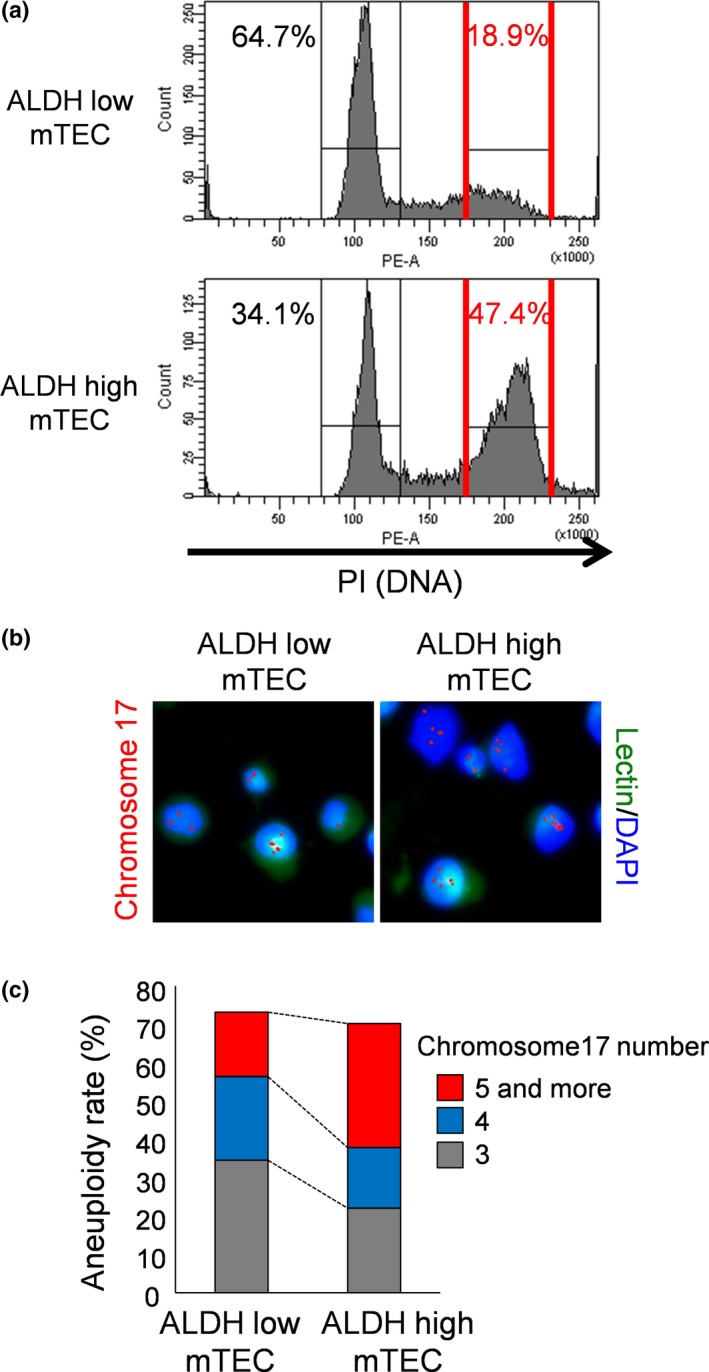
Tumor blood vessels play an important role in tumor progression and metastasis. We previously reported that tumor endothelial cells (TEC) exhibit several altered phenotypes compared with normal endothelial cells (NEC). For example, TEC have chromosomal abnormalities and are resistant to several anticancer drugs. Furthermore, TEC contain stem cell-like populations with high aldehyde dehydrogenase (ALDH) activity (ALDHhigh TEC). ALDHhigh TEC have proangiogenic properties compared with ALDHlow TEC. However, the association between ALDHhigh TEC and drug resistance remains unclear. In the present study, we found that ALDH mRNA expression and activity were higher in both human and mouse TEC than in NEC. Human NEC:human microvascular endothelial cells (HMVEC) were treated with tumor-conditioned medium (tumor CM). The ALDHhigh population increased along with upregulation of stem-related genes such as multidrug resistance 1, CD90, ALP, and Oct-4. Tumor CM also induced sphere-forming ability in HMVEC. Platelet-derived growth factor (PDGF)-A in tumor CM was shown to induce ALDH expression in HMVEC. Finally, ALDHhigh TEC were resistant to fluorouracil (5-FU) in vitro and in vivo. ALDHhigh TEC showed a higher grade of aneuploidy compared with that in ALDHlow TEC. These results suggested that tumor-secreting factor increases ALDHhigh TEC populations that are resistant to 5-FU. Therefore, ALDHhigh TEC in tumor blood vessels might be an important target to overcome or prevent drug resistance.
Keywords: Aldehyde dehydrogenase (ALDH); angiogenesis; endothelial cell; resistance; tumor.
© 2017 The Authors. Cancer Science published by John Wiley & Sons Australia, Ltd on behalf of Japanese Cancer Association.
Figures


References
-
- Folkman J. Angiogenesis: an organizing principle for drug discovery? Nat Rev Drug Discov 2007; 6: 273–86. - PubMed
-
- Auerbach R, Akhtar N, Lewis RL, Shinners BL. Angiogenesis assays: problems and pitfalls. Cancer Metastasis Rev 2000; 19: 167–72. - PubMed
-
- Kerbel RS, Yu J, Tran J et al Possible mechanisms of acquired resistance to anti‐angiogenic drugs: implications for the use of combination therapy approaches. Cancer Metastasis Rev 2001; 20: 79–86. - PubMed
-
- Krzyzanowska MK, Tannock IF, Lockwood G, Knox J, Moore M, Bjarnason GA. A phase II trial of continuous low‐dose oral cyclophosphamide and celecoxib in patients with renal cell carcinoma. Cancer Chemother Pharmacol 2007; 60: 135–41. - PubMed
MeSH terms
Substances
LinkOut - more resources
Full Text Sources
Other Literature Sources
