


Reducing radiotherapy waiting times for palliative patients: The role of the Advanced Practice Radiation Therapist
- PMID: 28851033
- PMCID: PMC5715362
- DOI: 10.1002/jmrs.243
Reducing radiotherapy waiting times for palliative patients: The role of the Advanced Practice Radiation Therapist
Abstract
Introduction: Palliative radiotherapy is effective in reducing symptom burden and improving quality of life in patients with symptomatic metastatic cancer and should be delivered in a timely manner. The aim of this study was to determine whether referring patients directly to a Palliative Advanced Practice Radiation Therapist (APRT) improves access to palliative radiotherapy and reduces time from referral to treatment.
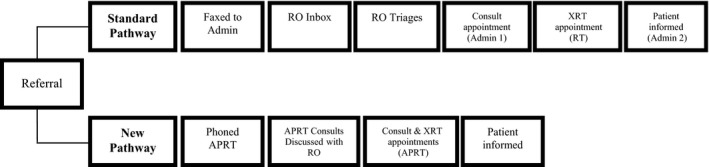
Methods: At Radiation Oncology Mater Center (ROMC) in Brisbane, Australia a new referral pathway was developed which involved patients requiring palliative radiotherapy, being referred directly to the APRT from a single external hospital medical oncology and palliative care departments. Over a 5 months period, patient demographics and time in working days from referral to treatment were compared for consecutive palliative patients seen within our department. Patients were stratified by method of referral i.e. via the new referral pathway (NP) or via standard referral pathway (SP).
Results: Between October 2014 and March 2015, a total of 150 patients were referred for palliative radiotherapy. Of these patients, 48 were referred and processed via the NP. There was a significant reduction in the number of days from referral to treatment for patients referred through the NP. Patients referred through the NP via the APRT had a mean and median wait time of 3.5 and 3 days respectively compared with 8.1 and 5 days for patients referred through the SP (P = <0.001). Patients were also more likely to have the treatment completed with less visits to the hospital (P < 0.001).
Conclusions: The new referral pathway utilising a dedicated palliative APRT decreased waiting times for patients receiving palliative radiotherapy and improved timely access to the radiotherapy service for both referrers and patients.
Keywords: Advanced practice; quality improvement; radiation therapist; referral; waiting lists.
© 2017 The Authors and State of Queensland. Journal of Medical Radiation Sciences published by John Wiley & Sons Australia, Ltd on behalf of Australian Society of Medical Imaging and Radiation Therapy and New Zealand Institute of Medical Radiation Technology.
Figures
References
-
- Bedard G. Handbook of Bone Metastases For Healthcare Professionals, 2nd edn. Odette Cancer Centre, Sunnybrook Health Sciences Centre, Toronto, 2014.
-
- Holt TR, Yau VKY. Innovative program for palliative radiotherapy in Australia. J Med Imaging Radiat Oncol 2009; 54: 76–81. - PubMed
-
- Janjan N. Palliative radiation therapy: Utilization of advanced technologies Fairchild AM. (ed). Vol 1, Nova Science Publishers, New York, 2015.
-
- Hubbard G, Maguire R, Kidd L, Kearney N, Hilliam A. Patient views of transport for cancer treatment. Eur J Oncol Nurs 2006; 10: 391–5. - PubMed
MeSH terms
LinkOut - more resources
Full Text Sources
Other Literature Sources
Medical
Miscellaneous
