


Structured physical exercise improves neuropsychiatric symptoms in acute dementia care: a hospital-based RCT
- PMID: 28851451
- PMCID: PMC5576378
- DOI: 10.1186/s13195-017-0289-z
Structured physical exercise improves neuropsychiatric symptoms in acute dementia care: a hospital-based RCT
Abstract
Background: The primary objective of this trial is to investigate the effects of a short-term exercise program on neuropsychiatric signs and symptoms in acute hospital dementia care.
Methods: Within a hospital-based randomized controlled trial, the intervention group conducted a 2-week exercise program with four 20-min exercise sessions on 3 days per week. The control group conducted a social stimulation program. Effects on neuropsychiatric signs and symptoms were measured via the Alzheimer's Disease Cooperative Study-Clinical Global Impression of Change, the Neuropsychiatric Inventory, and the Cohen-Mansfield Agitation Inventory. The antipsychotic and sedative dosage was quantified by olanzapine and diazepam equivalents.
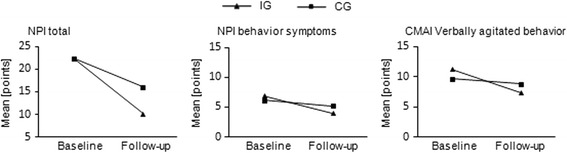
Results: Eighty-five patients were randomized via minimization to an intervention group (IG) and a control group (CG). Seventy patients (82%) (mean age 80 years, 33 females, mean Mini Mental State Examination score 18.3 points) completed the trial. As compared to the CG (n = 35), the IG (n = 35) showed significantly reduced neuropsychiatric signs and symptoms. Especially, agitated behavior and lability improved. There were no between-group differences concerning antipsychotic and benzodiazepine medication.
Conclusions: This exercise program is easily applicable in hospital dementia care and significantly reduces neuropsychiatric signs and symptoms in patients suffering from predominantly moderate stages of dementia.
Trial registration: German Clinical Trial Register DRKS00006740 . Registered 28 October 2014.
Keywords: Antipsychotic medication; Dementia; Exercise; Hospital; Neuropsychiatric signs and symptoms; Physical activity; Sedative medication; Social stimulation.
Conflict of interest statement
Ethics approval and consent to participate
This trial has been approved by the ethics committee of the Medical Chamber Northrhine (reference number: 2014216) and the ethics committee of the German Sport University Cologne. Written informed consent from the patient’s legal guardian as well as from the patient, if possible, has to be given to include a patient.
Consent for publication
Not applicable.
Competing interests
The authors declare that they have no competing interests.
Publisher’s Note
Springer Nature remains neutral with regard to jurisdictional claims in published maps and institutional affiliations.
Figures


References
-
- US Food and Drug Administration . Public Health Advisory: Deaths with Antipsychotics in Elderly Patients with Behavioral Disturbances. 2005.
-
- Department of Health. Living well with dementia: a national dementia strategy. London; 2009. https://www.gov.uk/government/publications/living-well-with-dementia-a-n....
Publication types
MeSH terms
Substances
LinkOut - more resources
Full Text Sources
Other Literature Sources
Medical
