


Empathy and well-being correlate with centrality in different social networks
- PMID: 28851835
- PMCID: PMC5604000
- DOI: 10.1073/pnas.1702155114
Empathy and well-being correlate with centrality in different social networks
Abstract
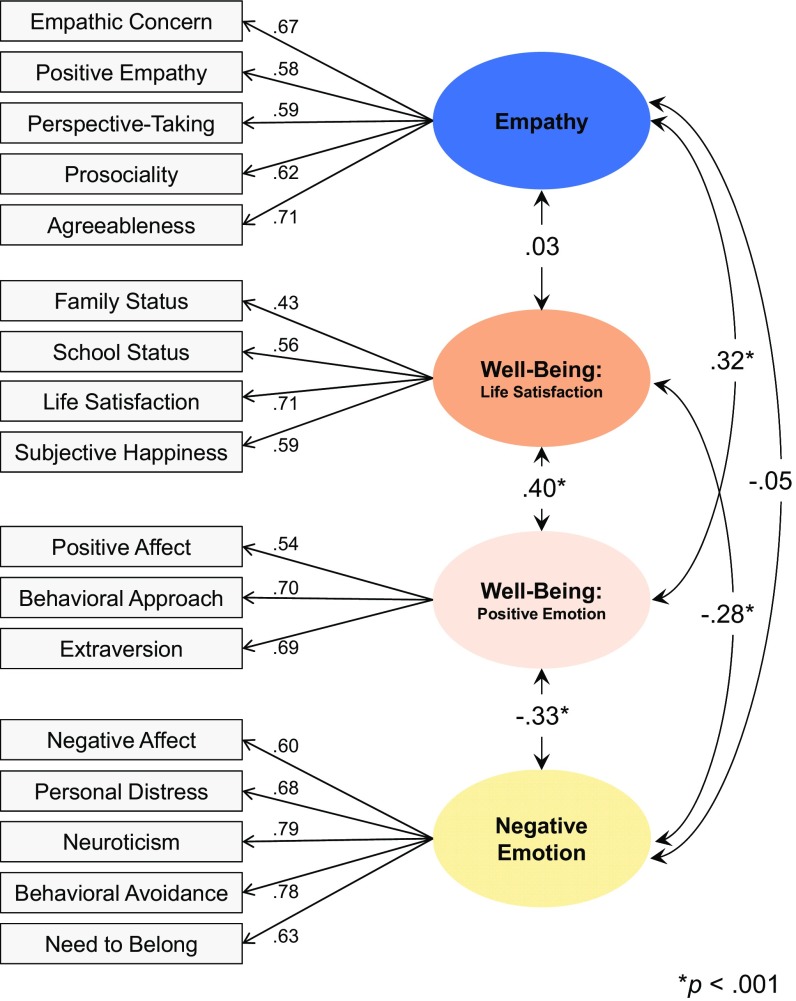
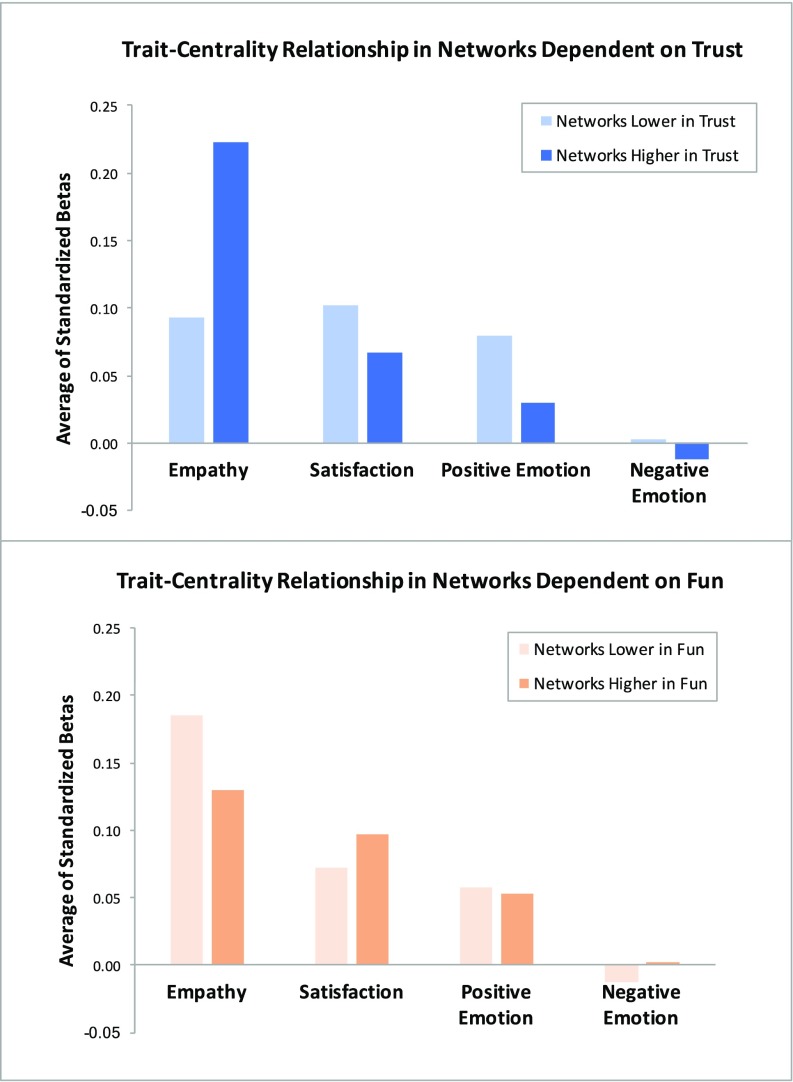
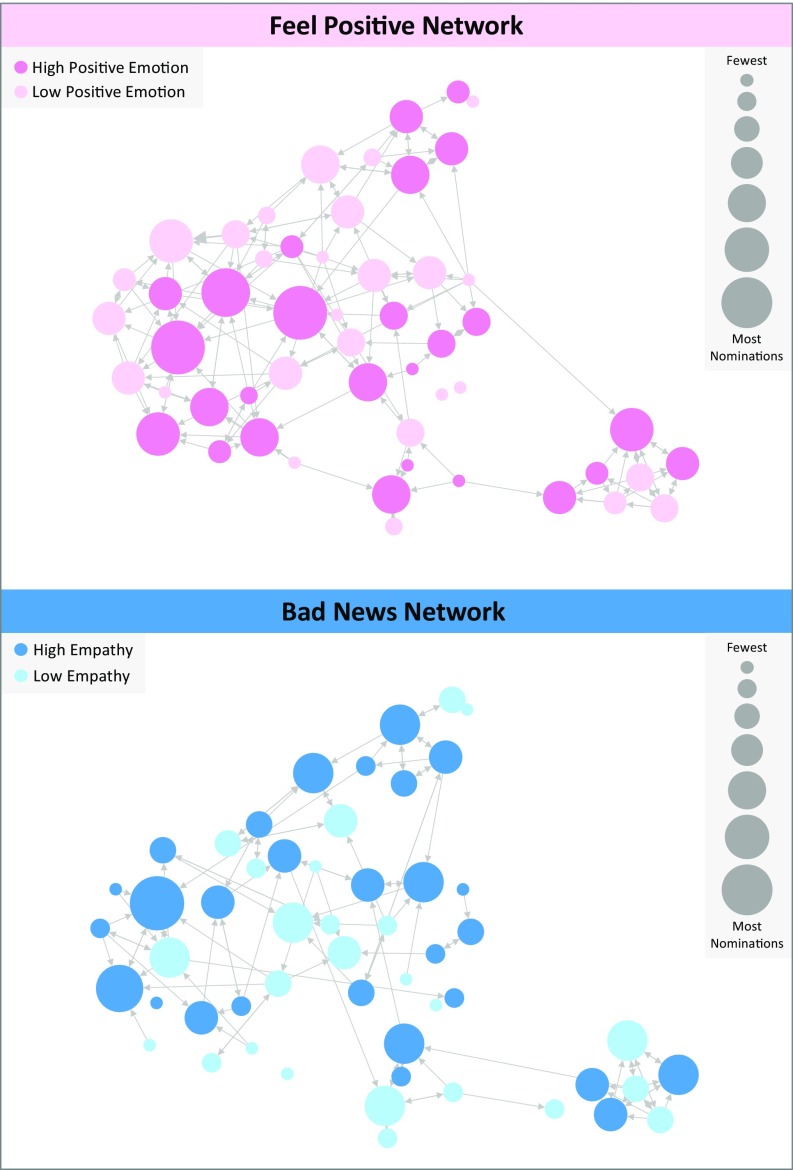
Individuals benefit from occupying central roles in social networks, but little is known about the psychological traits that predict centrality. Across four college freshman dorms (n = 193), we characterized individuals with a battery of personality questionnaires and also asked them to nominate dorm members with whom they had different types of relationships. This revealed several social networks within dorm communities with differing characteristics. In particular, additional data showed that networks varied in the degree to which nominations depend on (i) trust and (ii) shared fun and excitement. Networks more dependent upon trust were further defined by fewer connections than those more dependent on fun. Crucially, network and personality features interacted to predict individuals' centrality: people high in well-being (i.e., life satisfaction and positive emotion) were central to networks characterized by fun, whereas people high in empathy were central to networks characterized by trust. Together, these findings provide network-based corroboration of psychological evidence that well-being is socially attractive, whereas empathy supports close relationships. More broadly, these data highlight how an individual's personality relates to the roles that they play in sustaining their community.
Keywords: centrality; empathy; personality; social networks; well-being.
Conflict of interest statement
The authors declare no conflict of interest.
Figures
References
-
- Jackson MO. Social and Economic Networks. Princeton Univ Press; Princeton: 2008.
-
- Klein KJ, Lim B-C, Saltz JL, Mayer DM. How do they get there? An examination of the antecedents of centrality in team networks. Acad Manage J. 2004;47:952–963.
-
- Kilduff M, Krackhardt D. Bringing the individual back in: A structural analysis of the internal market for reputation in organizations. Acad Manage J. 1994;37:87–108.
-
- Hanneman RA, Riddle M. Introduction to Social Network Methods. University of California; Riverside, CA: 2005.
-
- Taylor SE. Oxford Handbook of Health Psychology. Oxford Univ Press; New York: 2010. Social support: A review.
Publication types
MeSH terms
Grants and funding
LinkOut - more resources
Full Text Sources
Other Literature Sources
