


Model-Based Therapy Planning Allows Prediction of Haemodynamic Outcome after Aortic Valve Replacement
- PMID: 28851875
- PMCID: PMC5575088
- DOI: 10.1038/s41598-017-03693-x
Model-Based Therapy Planning Allows Prediction of Haemodynamic Outcome after Aortic Valve Replacement
Erratum in
-
Publisher Correction: Model-Based Therapy Planning Allows Prediction of Haemodynamic Outcome after Aortic Valve Replacement.Sci Rep. 2019 Feb 26;9(1):3327. doi: 10.1038/s41598-018-36022-x. Sci Rep. 2019. PMID: 30804387 Free PMC article.
Abstract
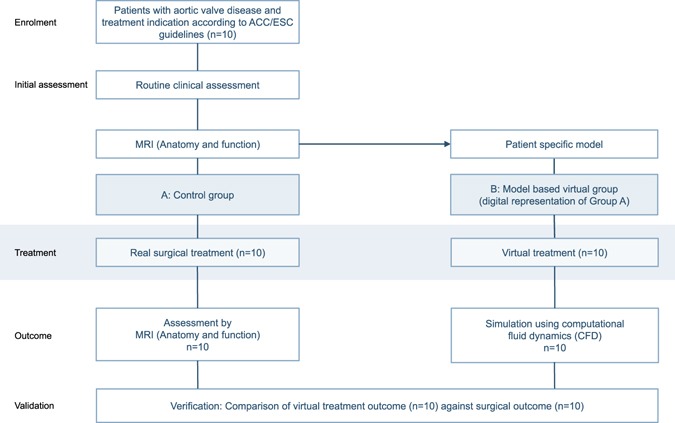
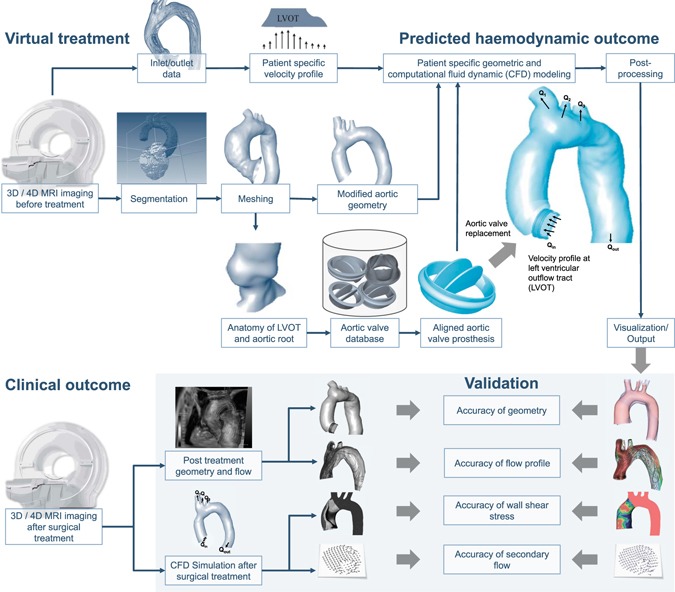
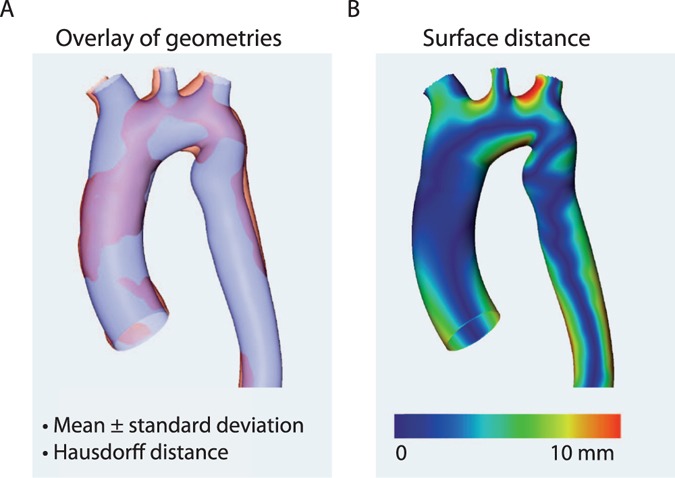
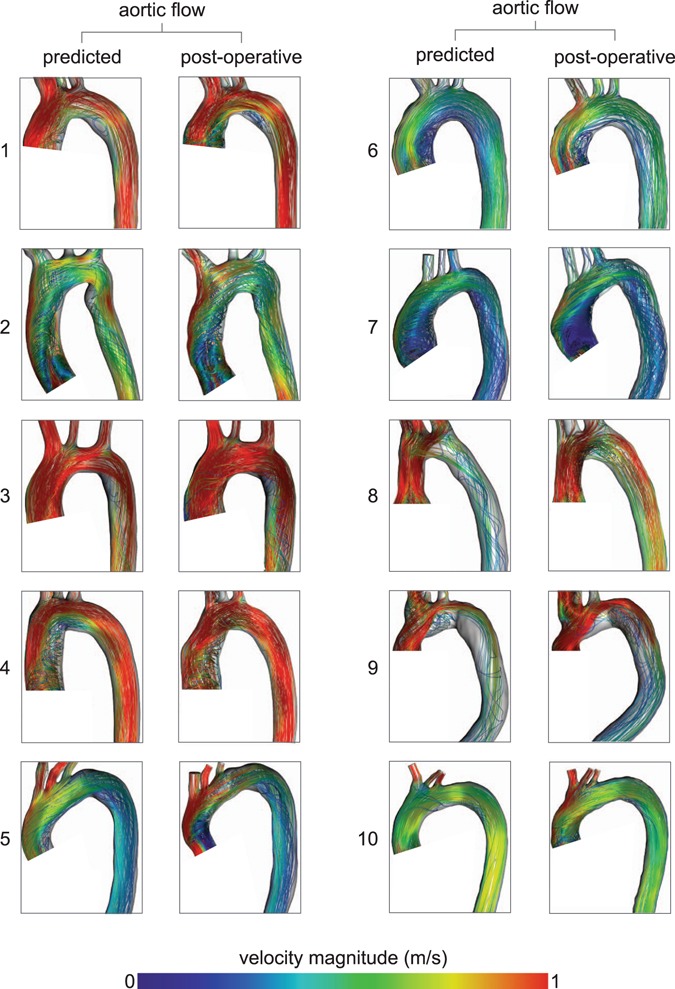
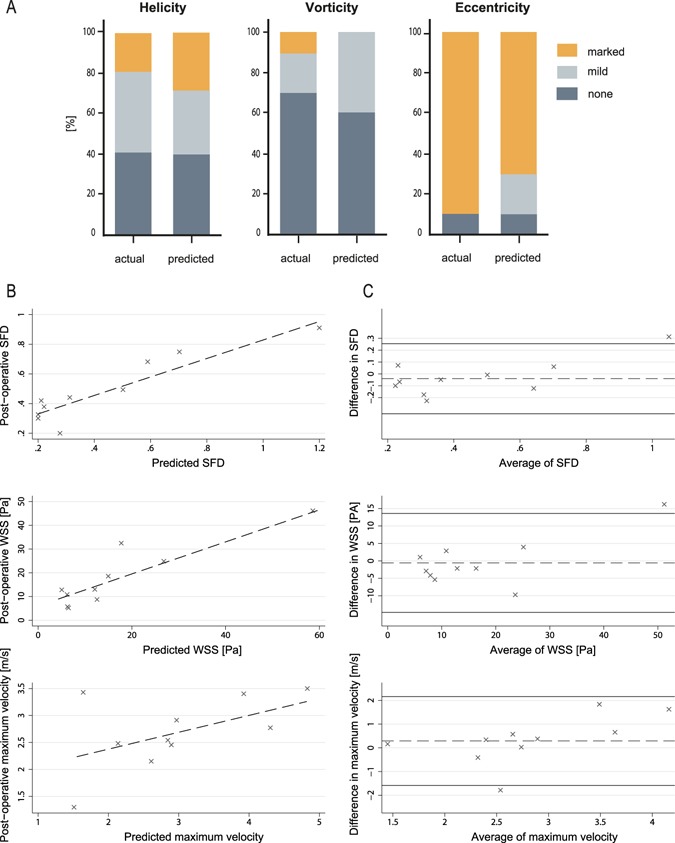
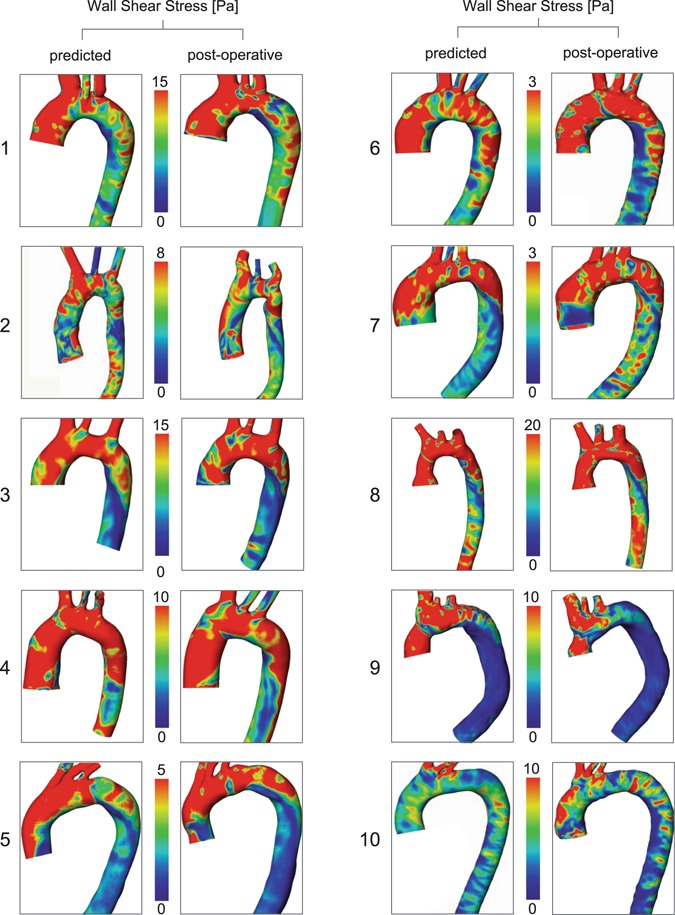
Optimizing treatment planning is essential for advances in patient care and outcomes. Precisely tailored therapy for each patient remains a yearned-for goal. Cardiovascular modelling has the potential to simulate and predict the functional response before the actual intervention is performed. The objective of this study was to proof the validity of model-based prediction of haemodynamic outcome after aortic valve replacement. In a prospective study design virtual (model-based) treatment of the valve and the surrounding vasculature were performed alongside the actual surgical procedure (control group). The resulting predictions of anatomic and haemodynamic outcome based on information from magnetic resonance imaging before the procedure were compared to post-operative imaging assessment of the surgical control group in ten patients. Predicted vs. post-operative peak velocities across the valve were comparable (2.97 ± 1.12 vs. 2.68 ± 0.67 m/s; p = 0.362). In wall shear stress (17.3 ± 12.3 Pa vs. 16.7 ± 16.84 Pa; p = 0.803) and secondary flow degree (0.44 ± 0.32 vs. 0.49 ± 0.23; p = 0.277) significant linear correlations (p < 0.001) were found between predicted and post-operative outcomes. Between groups blood flow patterns showed good agreement (helicity p = 0.852, vorticity p = 0.185, eccentricity p = 0.333). Model-based therapy planning is able to accurately predict post-operative haemodynamics after aortic valve replacement. These validated virtual treatment procedures open up promising opportunities for individually targeted interventions.
Conflict of interest statement
The authors declare that they have no competing interests.
Figures
References
Publication types
LinkOut - more resources
Full Text Sources
Other Literature Sources
