


The Role of Proinflammatory Pathways in the Pathogenesis of Colitis-Associated Colorectal Cancer
- PMID: 28852270
- PMCID: PMC5568615
- DOI: 10.1155/2017/5126048
The Role of Proinflammatory Pathways in the Pathogenesis of Colitis-Associated Colorectal Cancer
Abstract
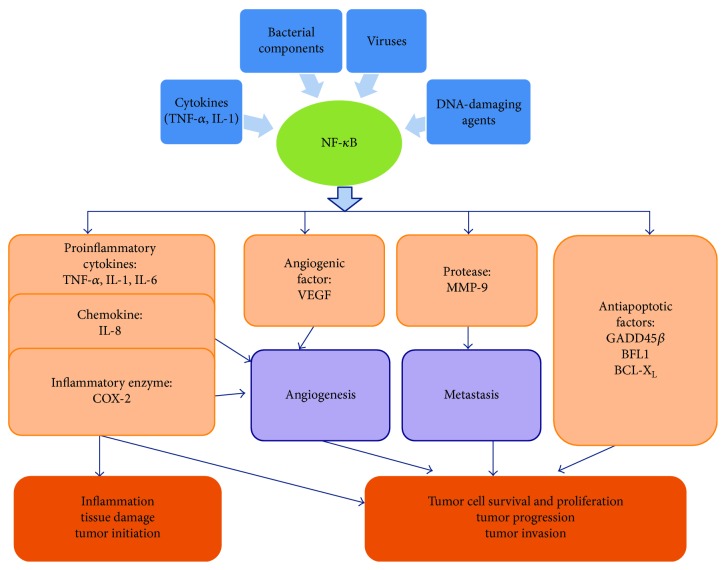
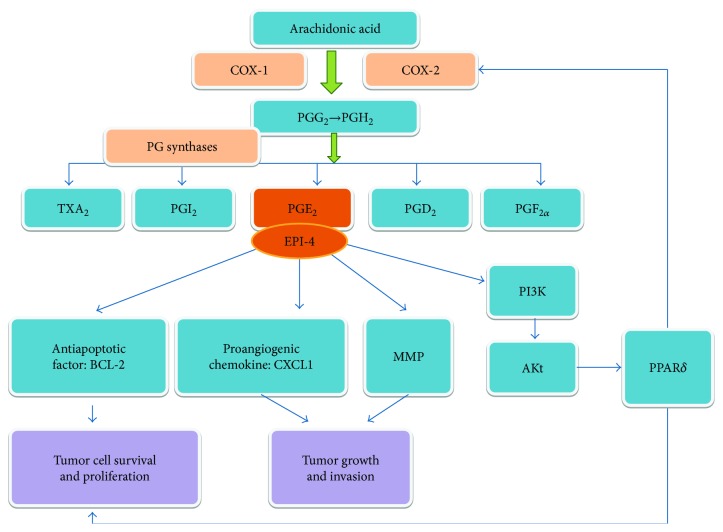
Patients with inflammatory bowel disease (IBD) are at an increased risk of developing colorectal cancer (CRC). The risk factors of CRC in IBD patients include long disease duration, extensive colitis, severe histological inflammation, and coexistence with primary sclerosing cholangitis (PSC). Several molecular pathways that contribute to sporadic CRC are also involved in the pathogenesis of colitis-associated CRC. It is well established that long-standing chronic inflammation is a key predisposing factor of CRC in IBD. Proinflammatory pathways, including nuclear factor kappa B (NF-κB), IL-6/STAT3, cyclooxygenase-2 (COX-2)/PGE2, and IL-23/Th17, promote tumorigenesis by inducing the production of inflammatory mediators, upregulating the expression of antiapoptotic genes, and stimulating cell proliferation as well as angiogenesis. Better understanding of the underlying mechanisms may provide some promising targets for prevention and therapy. This review aims to elucidate the role of these signaling pathways in the pathogenesis of colitis-associated CRC using evidence-based approaches.
Figures
References
-
- Canavan C., Abrams K. R., Mayberry J. Meta-analysis: colorectal and small bowel cancer risk in patients with Crohn’s disease. Alimentary Pharmacology & Therapeutics. 2006;23:1097–1104. - PubMed
Publication types
MeSH terms
Substances
LinkOut - more resources
Full Text Sources
Other Literature Sources
Medical
Research Materials
Miscellaneous
