


HEXANE EXTRACT OF Dacryodes edulis FRUITS POSSESSES ANTI-DIABETIC AND HYPOLIPIDAEMIC POTENTIALS IN ALLOXAN DIABETES OF RATS
- PMID: 28852729
- PMCID: PMC5566136
- DOI: 10.21010/ajtcam.v13i4.18
HEXANE EXTRACT OF Dacryodes edulis FRUITS POSSESSES ANTI-DIABETIC AND HYPOLIPIDAEMIC POTENTIALS IN ALLOXAN DIABETES OF RATS
Abstract
Background: The fruit extract of Dacryodes edulis (D. edulis), the African pear or plum, a tree indigenous to the humid tropics has been used for managing wounds, skin diseases, sickle cell anaemia, dysentery and fever in some African nations. In South Eastern Nigeria, 'herbal doctors' include its marshed fruit in decoctions administered to diabetic patients. However no scientific substantiation of their claim and use exist in literature. Hence, the need to evaluate the antidiabetic and hypolipidaemic activity of hexane extracts of D. edulis fruit in alloxanised animal model.
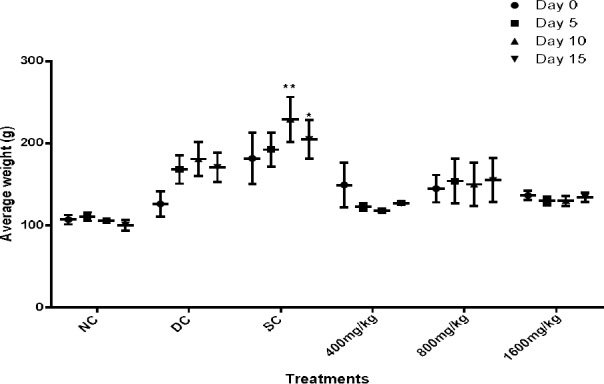
Materials and methods: Sub-toxic doses between 400 and 1600mg/kg were orally administered sub-chronically to alloxan-induced diabetic rats for 15 days and compared to glibenclamide (2.5mg/kg). The glycaemia levels, body weights, lipid profile, blood urea, creatinine and liver enzyme levels were measured. Basic histology of the pancreatic tissue was also performed to examine the effects on the pancreas as possible mechanistic lead.
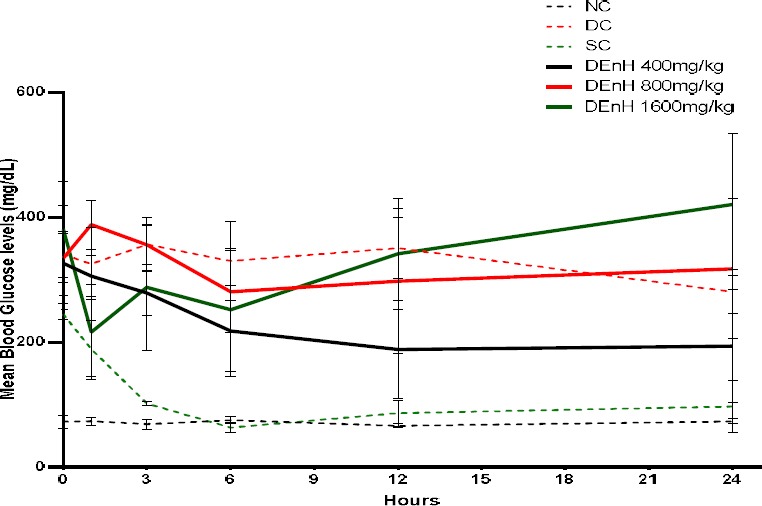
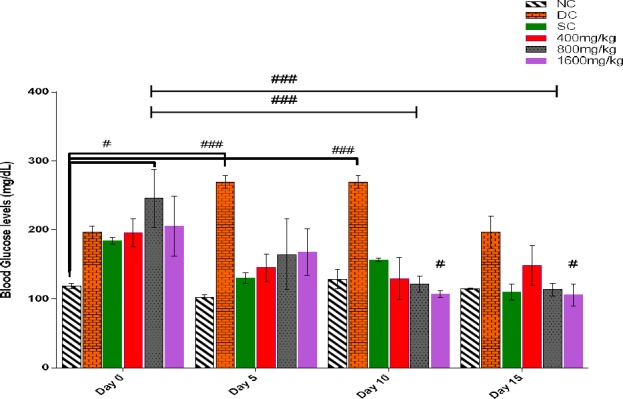
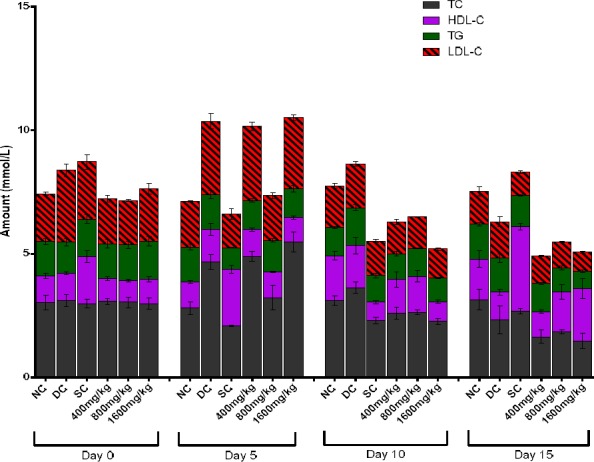
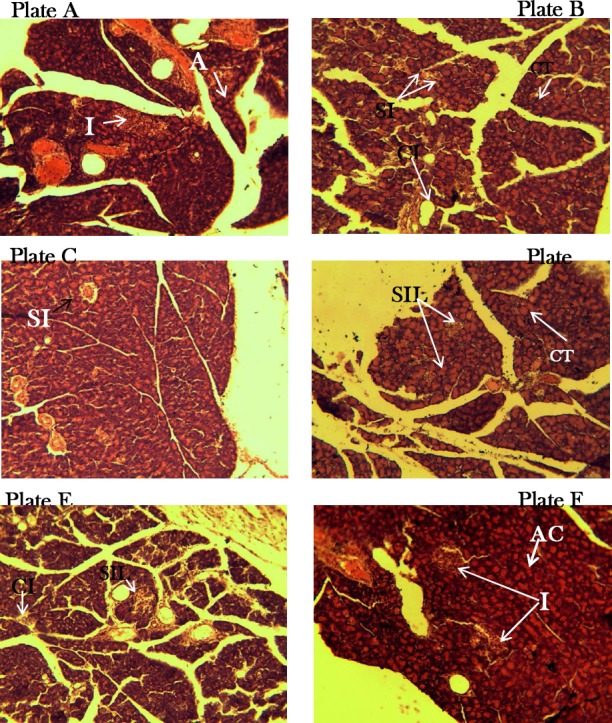
Results: Oral acute dosing of D. edulis hexane extract decreased blood glucose levels, while sub-chronic treatment of the extract down-regulated significantly hyperglycaemia, total cholesterol, triglycerides, LDL-C, ALT and ALP levels. However, the HDL-C levels increased significantly. Histopathological examination of the pancreatic tissues after sub-chronic treatment showed that glibenclamide and the highest dose of the extract 1600mg/kg restored the afore-damaged pancreatic β-cell architecture.
Conclusion: Our findings portend that D. edulis hexane fruit extract possesses hypoglycaemic and hypolipidaemic activities as well as restoration of the pancreatic architecture without any obvious untoward hepatic damages, suggesting that its use in the management of the diabetes may be valid. List of Non-standard abbreviations:D. edulis = dacryode edulis, DEnH = Dacryodes edulis n-hexane fruit extract, B.wt. = Body weight, Per os = Oral administration, NC = normal control, DC =Diabetic control, SC = Standard control, LDL-C = low density lipoprotein cholesterol, HDL-C = High density lipoprotein cholesterol, TG = Triglyceride, TC = Total cholesterol.
Keywords: Dacryodes edulis; anti-diabetic; diabetes; hypolipidaemic.
Figures
References
-
- Abbate S. L, Brunzell J. D. Pathophysiology of Hyperlipidemia in Diabetes Mellitus. Journal of Cardiovascular Pharmacology. 1990;16(Suppl 9):S1–7. - PubMed
-
- Adesokan A. A, Oyewole O. I, Turay B. M. S. Kidney and Liver Function Parameters in Alloxan-Induced Diabetic Rats Treated with Aloe Barbadensis Juice Extract. Sierra Leone Journal of Biomedical Research. 2009;1(1):33–37.
-
- Allain C. C, Poon L. S, Chan C.S.G, Richmond W.F.P.C, Fu P. C. Enzymatic Determination of Total Serum Cholesterol. Clinical Chemistry. Am Assoc Clin Chem. 1974;20(4):470–75. - PubMed
-
- Almdal T, Henrik S, Jan S. J, Henrik V. The Independent Effect of Type 2 Diabetes Mellitus on Ischemic Heart Disease, Stroke, and Death: A Population-Based Study of 13 000 Men and Women with 20 Years of Follow-Up. Archives of Internal Medicine. American Medical Association. 2004;164(13):1422–26. - PubMed
-
- Beagley J, Leonor G, Clara W, Ayesha A. M. Global Estimates of Undiagnosed Diabetes in Adults. Diabetes Research and Clinical Practice. 2014;103(2):150–60. - PubMed
MeSH terms
Substances
LinkOut - more resources
Full Text Sources
Other Literature Sources
Medical
Miscellaneous