


Comparison of rumen bacterial communities in dairy herds of different production
- PMID: 28854878
- PMCID: PMC5577838
- DOI: 10.1186/s12866-017-1098-z
Comparison of rumen bacterial communities in dairy herds of different production
Abstract
Background: The purpose of this study was to compare the rumen bacterial composition in high and low yielding dairy cows within and between two dairy herds. Eighty five Holstein dairy cows in mid-lactation (79-179 days in milk) were selected from two farms: Farm 12 (M305 = 12,300 kg; n = 47; 24 primiparous cows, 23 multiparous cows) and Farm 9 (M305 = 9700 kg; n = 38; 19 primiparous cows, 19 multiparous cows). Each study cow was sampled once using the stomach tube method and processed for 16S rRNA gene amplicon sequencing using the Ion Torrent (PGM) platform.
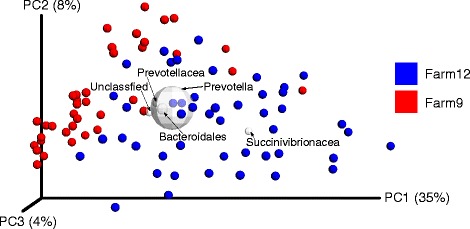
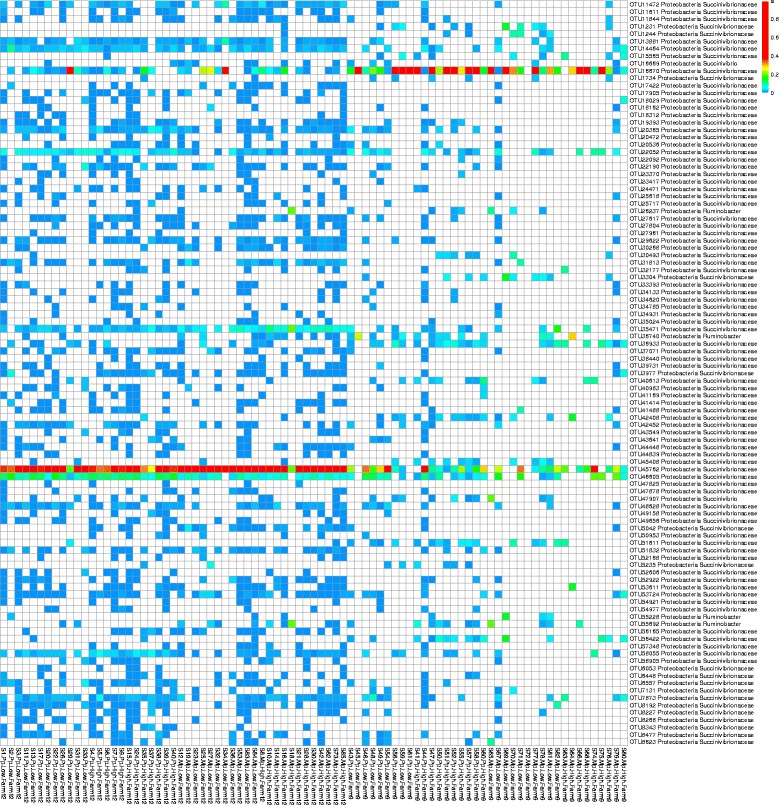
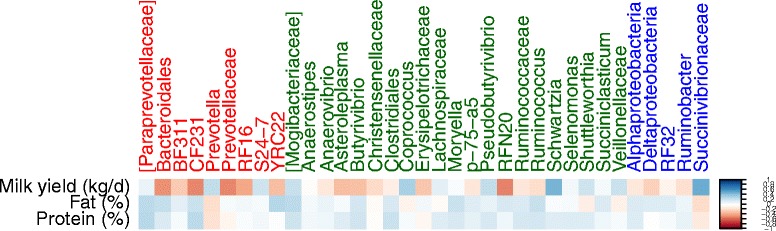
Results: Differences in bacterial communities between farms were greater (Adonis: R2 = 0.16; p < 0.001) than within farm. Five bacterial lineages, namely Prevotella (48-52%), unclassified Bacteroidales (10-12%), unclassified bacteria (5-8%), unclassified Succinivibrionaceae (1-7%) and unclassified Prevotellaceae (4-5%) were observed to differentiate the community clustering patterns among the two farms. A notable finding is the greater (p < 0.05) contribution of Succinivibrionaceae lineages in Farm 12 compared to Farm 9. Furthermore, in Farm 12, Succinivibrionaceae lineages were higher (p < 0.05) in the high yielding cows compared to the low yielding cows in both primiparous and multiparous groups. Prevotella, S24-7 and Succinivibrionaceae lineages were found in greater abundance on Farm 12 and were positively correlated with milk yield.
Conclusions: Differences in rumen bacterial populations observed between the two farms can be attributed to dietary composition, particularly differences in forage type and proportion in the diets. A combination of corn silage and alfalfa silage may have contributed to the increased proportion of Proteobacteria in Farm 12. It was concluded that Farm 12 had a greater proportion of specialist bacteria that have the potential to enhance rumen fermentative digestion of feedstuffs to support higher milk yields.
Keywords: Dairy cows; Dairy herds; Rumen microbiota.
Conflict of interest statement
Ethics approval
Dairy cows that were donors of rumen fluid were maintained according to the ethics committee and IACUC standards for the University of Pennsylvania (approval #805538).
Consent for publication
Not applicable.
Competing interests
The authors declare that they have no competing interests.
Publisher’s Note
Springer Nature remains neutral with regard to jurisdictional claims in published maps and institutional affiliations.
Figures
References
-
- Bergman E. Energy contributions of volatile fatty acids from the gastrointestinal tract in various species. Physiol Rev. 1990;70(2):567–590. - PubMed
-
- Dewhurst R, Davies D, Merry R. Microbial protein supply from the rumen. Anim Feed Sci Technol. 2000;85(1):1–21. doi: 10.1016/S0377-8401(00)00139-5. - DOI
MeSH terms
Substances
LinkOut - more resources
Full Text Sources
Other Literature Sources
