


Acquisition and clearance of multidrug resistant Acinetobacter baumannii on healthy young adults concurrently burned in a dust explosion in Taiwan: the implication for antimicrobial stewardship
- PMID: 28854887
- PMCID: PMC5575946
- DOI: 10.1186/s12879-017-2682-4
Acquisition and clearance of multidrug resistant Acinetobacter baumannii on healthy young adults concurrently burned in a dust explosion in Taiwan: the implication for antimicrobial stewardship
Abstract
Background: Information is limited about the effect of restricted carbapenem use on clearance of multi-drug resistant Acinetobacter baumannii (MDRAB). We sought to determine the time effect of antibiotic exposure on multi-drug resistant Acinetobacter baumannii (MDRAB) acquisition and clearance.
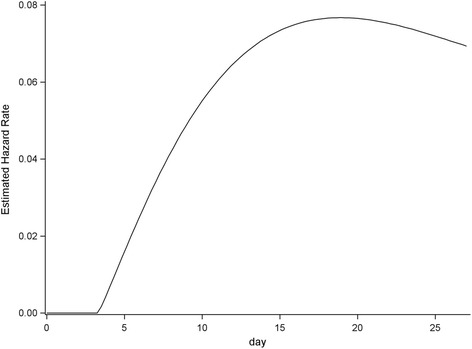
Methods: We conducted a retrospective observational study at the intensive care units of a tertiary medical center. Forty-two of a cohort of previously healthy young adults who were concurrently burned by a dust explosion was included. Cases consisted of those from whom MDRAB was isolated during hospitalization. Controls consisted of patients from whom MDRAB was not isolated in the same period. Use of antimicrobial agents was compared based on days of therapy per 1,000 patient-days (DOT/1,000PD). A 2-state Markov multi-state model was used to estimate the risk of acquisition and clearance of MDRAB.
Results: MDRAB was discovered in 9/42 (21.4%) individuals. The cases had significantly higher use of carbapenem (652 DOT/1,000PD vs. 385 DOT/1,000PD, P < 0.001) before MDRAB isolation. For the cases, clearance of MDRAB was associated with lower use of carbapenem (469 DOT/1,000PD vs. 708 DOT/1,000PD, P = 0.003) and higher use of non-carbapenem beta-lactam (612 DOT/1,000PD vs. 246 DOT/1,000PD, P <0.001). In multi-state model, each additional DOT of carbapenem increased the hazard of acquiring MDRAB (hazard ratio (HR), 1.08; 95% confidence interval (CI) 1.01-1.16) and each additional DOT of non-carbapenem beta-lactam increased the protection of clearing MDRAB (HR, 1.25; 95% CI 1.07-1.46).
Conclusions: Both acquisition and clearance of MDRAB were related to antibiotic exposure in a homogeneous population. Our findings suggest that early discontinuation of carbapenem could be an effective measure in antibiotic stewardship for the control of MDRAB spreading.
Keywords: Acinetobacter Baumannii; Antibiotic resistance; Antibiotic stewardship; Burn patients; Carbapenem.
Conflict of interest statement
Ethics approval and consent to participate
This retrospective study was approved by institutional review boards of Chang Gung Memorial Hospital (Number: 1049356B). The ethics committee granted a waiver for informed consent to be obtained.
Consent for publication
Not applicable
Competing interests
The authors declare that they have no competing interests.
Publisher’s Note
Springer Nature remains neutral with regard to jurisdictional claims in published maps and institutional affiliations.
Figures
References
Publication types
MeSH terms
Substances
LinkOut - more resources
Full Text Sources
Other Literature Sources
Medical
