


Sini-san improves duodenal tight junction integrity in a rat model of functional dyspepsia
- PMID: 28854971
- PMCID: PMC5577804
- DOI: 10.1186/s12906-017-1938-2
Sini-san improves duodenal tight junction integrity in a rat model of functional dyspepsia
Abstract
Background: Recent reports have demonstrated that impaired barrier function and local microinflammation in the duodenal mucosa contribute to the pathogeneses of functional dyspepsia (FD). Thus, restoring normal barrier integrity becomes a potential therapeutic strategy in the treatment of FD. Sini-San (SNS) is a traditional Chinese prescription that exhibits therapeutic effects in FD, but the underlying mechanisms remain not well understood.
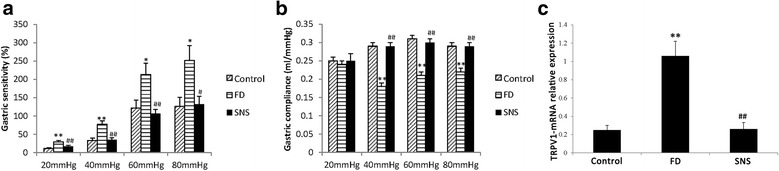
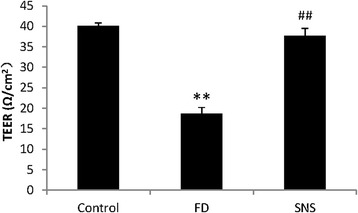
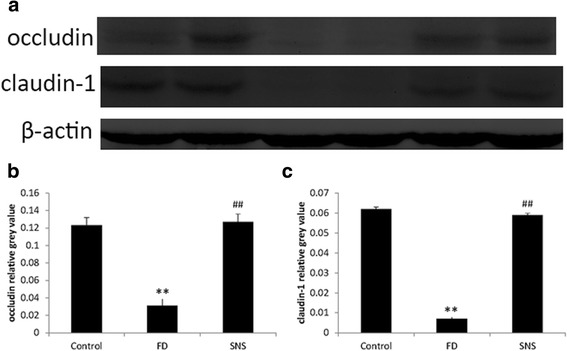
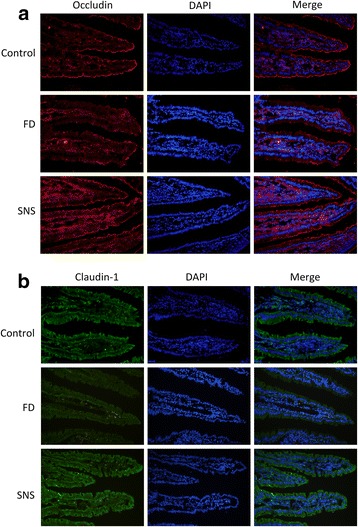
Methods: FD rats were established by tail clamping method and the therapeutic effect of SNS was evaluated by measuring the visceral sensitivity and gastric compliance. Transepithelial electrical resistance (TEER) that reveals epithelial barrier integrity was measured by Ussing chamber. The expression of tight junction (TJ) proteins, occludin and claudin-1, in the duodenum was determined by Western blot and immunofluorescence. The amount of tumor necrosis factor alpha (TNF-α) and interferon gamma (INF-γ) in duodenal mucosa was detected by enzyme-linked immune sorbent assay (ELISA). The mRNA level of transient receptor potential vanilloid type 1 (TRPV1) was measured by quantitative real time-polymerase chain reaction (qPCR).
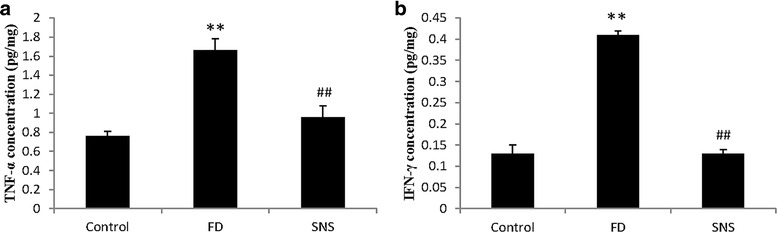
Results: SNS could improve gastric compliance and attenuate visceral hypersensitivity (VH) in FD rats. TEER was decreased in FD rats, but treatment with SNS restored normal level of TEER and the expression of occludin and claudin-1 in FD rats. In addition, SNS administration ameliorated FD-associated increase in the production of TNF-α, IFN-γ and the expression of TRPV1.
Conclusions: The therapeutic effect of SNS on FD is at least partially through improvement of TJ integrity and attenuation of FD-associated low-grade inflammation in the duodenum. Our findings highlight the molecular basis of SNS-based treatment of FD in human patients.
Keywords: Duodenum; Functional dyspepsia; Pro-inflammatory cytokine; Sini-san; Tight junction.
Conflict of interest statement
Ethics approval
This Animal experiment was performed in accordance with the Guide for the Care and Use of Laboratory Animals published by the National Institutes of Health (NIH Publications No. 85–23, revised 1996) and approved by the Animal Care and Use Committee of China Academy of Traditional Chinese Medicine.
Consent for publication
Not applicable
Competing interests
The authors declare that they have no competing interests.
Publisher’s Note
Springer Nature remains neutral with regard to jurisdictional claims in published maps and institutional affiliations.
Figures
References
-
- Jin ZH, Duan JH, Zhao HC. Clinical study on colonic transmission time and the effect of sini powder on it in functional constipation patients. Chin J Integr Trad West Med. 2006;26(10):896–898. - PubMed
MeSH terms
Substances
LinkOut - more resources
Full Text Sources
Other Literature Sources
Medical
