


Sex differences in Alzheimer risk: Brain imaging of endocrine vs chronologic aging
- PMID: 28855400
- PMCID: PMC5652968
- DOI: 10.1212/WNL.0000000000004425
Sex differences in Alzheimer risk: Brain imaging of endocrine vs chronologic aging
Abstract
Objective: This observational multimodality brain imaging study investigates emergence of endophenotypes of late-onset Alzheimer disease (AD) risk during endocrine transition states in a cohort of clinically and cognitively normal women and age-matched men.
Methods: Forty-two 40- to 60-year-old cognitively normal women (15 asymptomatic perimenopausal by age [CNT], 13 perimenopausal [PERI], and 14 postmenopausal [MENO]) and 18 age- and education-matched men were examined. All patients had volumetric MRI, 18F-fluoro-2-deoxyglucose (FDG)-PET (glucose metabolism), and Pittsburgh compound B-PET scans (β-amyloid [Aβ] deposition, a hallmark of AD pathology).
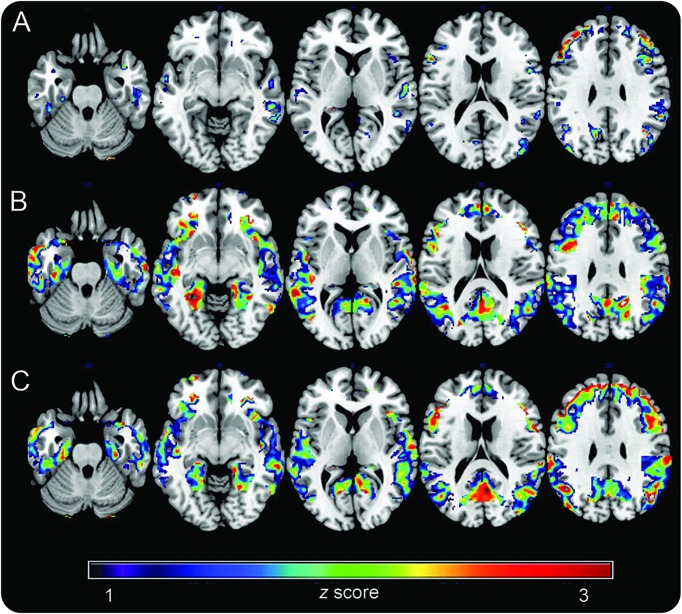
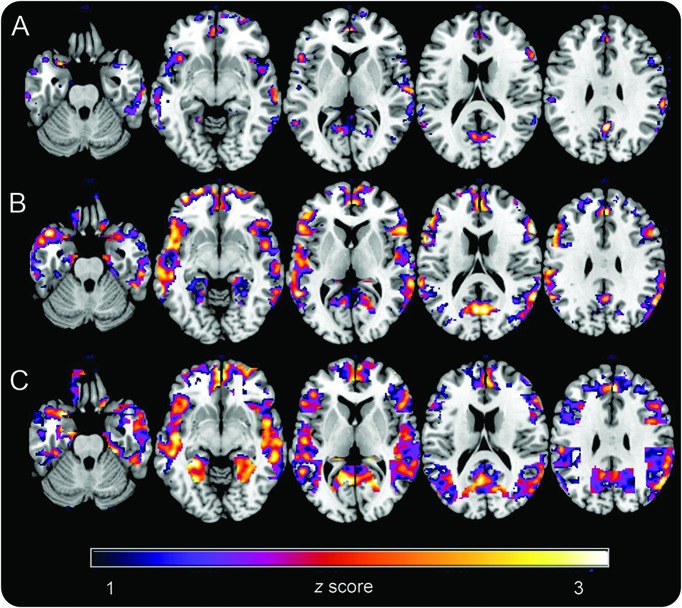
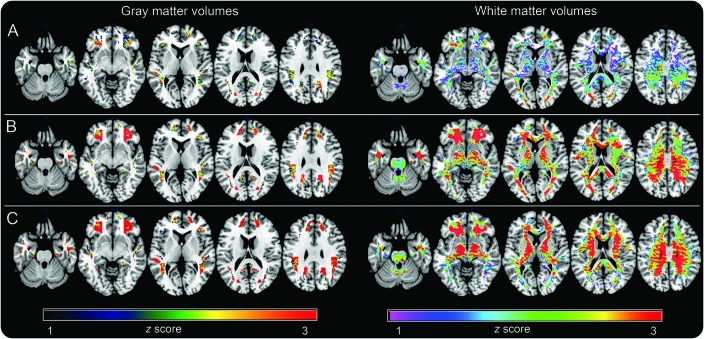
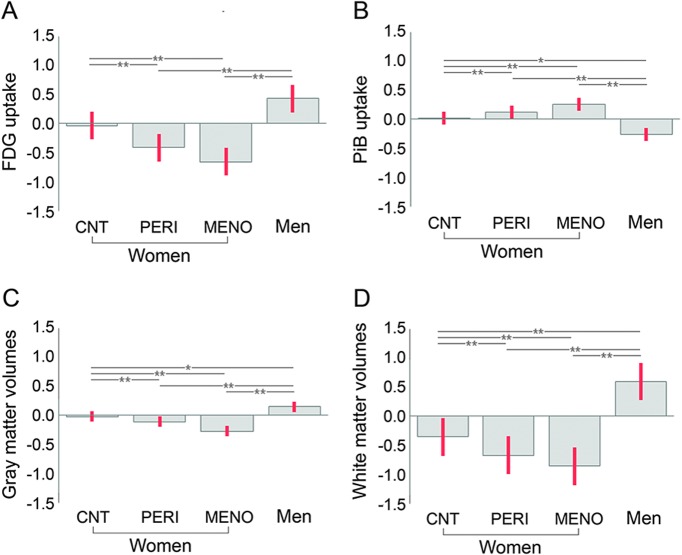
Results: As expected, the MENO group was older than the PERI and CNT groups. Otherwise, groups were comparable on clinical and neuropsychological measures and APOE4 distribution. Compared to CNT women and to men, and controlling for age, PERI and MENO groups exhibited increased indicators of AD endophenotype, including hypometabolism, increased Aβ deposition, and reduced gray and white matter volumes in AD-vulnerable regions (p < 0.001). AD biomarker abnormalities were greatest in MENO, intermediate in PERI, and lowest in CNT women (p < 0.001). Aβ deposition was exacerbated in APOE4-positive MENO women relative to the other groups (p < 0.001).
Conclusions: Multimodality brain imaging indicates sex differences in development of the AD endophenotype, suggesting that the preclinical AD phase is early in the female aging process and coincides with the endocrine transition of perimenopause. These data indicate that the optimal window of opportunity for therapeutic intervention in women is early in the endocrine aging process.
© 2017 American Academy of Neurology.
Figures
References
-
- Farrer LA, Cupples LA, Haines JL, et al. Effects of age, sex, and ethnicity on the association between apolipoprotein E genotype and Alzheimer disease: a meta-analysis: APOE and Alzheimer Disease Meta Analysis Consortium. JAMA 1997;278:1349–1356. - PubMed
-
- Vina J, Lloret A. Why women have more Alzheimer's disease than men: gender and mitochondrial toxicity of amyloid-beta peptide. J Alzheimers Dis 2010;20(suppl 2):S527–S533. - PubMed
-
- Alzheimer's Association. 2016 Alzheimer's disease facts and figures. Alzheimers Dement 2016;12:459–509. - PubMed
Publication types
MeSH terms
Substances
Grants and funding
LinkOut - more resources
Full Text Sources
Other Literature Sources
Medical
Molecular Biology Databases
